

Raja Ampat Right Now
Wayag area closed due to ongoing local community protests related to nickel mining concessions. Wayag, Wofoh, and Aljui Bay are inaccessible.
Interest in travel to Raja Ampat fell 11% from a year ago, suggesting demand is cooling off.
Best time to visit Raja Ampat
Good time to visit
September brings frequent rain, with fewer visitors than peak season. Visibility for diving can be reduced by rain, so plan for indoor activities or shorter boat trips.
SCORE BY MONTH
The best time to visit is October through April for calmer seas and better diving visibility. You'll deal with rain almost every day, but it's usually brief. Avoid September through May if you dislike consistent rain; it's consistently wet year-round.
Day-to-day in Raja Ampat
Walkability
19/100
Walking in Raja Ampat is for beaches, jetties, and village lanes, not errands. Most useful movement is by boat.
Sidewalks are basically absent; expect sand, jetties, dirt paths, and road edges.
Island bases are scattered; shops, reefs, and homestays rarely link into walkable circuits.
Village roads are narrow, dark, and shared with scooters, pickups, and pedestrians.
Climate works against walking for much of the year. Plan around weather windows.
Need to Know
- Population
- 70,810 BPS · 2024
- International visitors
- 36,983 (2025) +48.3% YoY BPS Raja Ampat · Last updated: 2026
- Annual visitors per resident
- 0.52× Annual international visitors divided by the population
Annual visitor arrivals
- 2025 36,983 +48.3%
- 2024 24,934 +54.4%
- 2023 16,153 +182.1%
- 2022 5,725
- 2021 4,339 COVID
Show fewer Show 2 more
- 2020 2,600 COVID
- 2019 46,375
International visitor arrivals. COVID years (2020-2021) are included for completeness. Source: BPS Raja Ampat · Last updated: 2026
- Currency
- Indonesian rupiah (IDR)
- Language
- Indonesian; English limited outside dive operators and tourist homestays
- Tap water
- Not safe
- Time zone
- WIT (UTC+9)
- Power plug
- Type C / F, 230V
- Dialing code
- +62
- Driving side
- Left
- Tipping
- Not customary in homestays; liveaboard and dive crews appreciate pooled tips.
- Internet
- Telkomsel has the best reach, but island 4G and Wi-Fi are slow, patchy, and weather-sensitive.
- Emergency
- 112 all services; 110 police, 113 fire, 118 or 119 ambulance.
When not to go
-
Skip the windy sea window
May – SepThis is the wrong window if Raja Ampat means mantas, easy boat days, and reliable access to farther sites. Wind and rougher seas can limit diving, make transfers uglier, and push liveaboards away from southern routes like Misool. Go in the calmer diving season, or pick a different Indonesian water trip.
Upcoming Events & Holidays in Raja Ampat
Upcoming events, next 30 days
On the horizon
Public holidays & observances, next 12 months
Dates are researched and checked, but events move. Always confirm with the official source before you book anything around them.
Getting To Raja Ampat
-
From Domine Eduard Osok (SOQ)
15 min by road to Sorong ferry port
SOQ is the air gateway for Raja Ampat, but it is still on the mainland side of the trip. Land early if you want the same-day ferry to Waisai, because a late arrival usually means a Sorong overnight.
Direct flights to Raja Ampat
There are no direct flights to the Raja Ampat islands. You fly to Sorong (SOQ) on the Papuan mainland, then continue by ferry or speedboat.
Serves 11 direct destinations, all domestic, about 20 flights a day.
Within Indonesia 11- Makassar UPG
 Lion Air
  Sriwijaya Air 5/day
 - Manokwari MKW
 Batik Air Lion Air
  Super Air Jet 3/day
 - Manado MDC Lion Air
 TransNusa 1-2/day
 - Jakarta CGK Batik Air
 Garuda Indonesia 1-2/day
 - Timika TIM Lion Air TransNusa 1-2/day
- Fakfak FKQ
 Wings Air 1-2/day
 - Ambon City AMQ Lion Air ~1/day
- Jayapura DJJ Lion Air Sriwijaya Air ~1/day
- Kaimana KNG Wings Air ~1/day
- Nabire NBX Sriwijaya Air ~1/day
- Biak BIK Wings Air 2/week
Nonstop routes only. Flights per day are an average, each way. Data: AeroDataBox, updated July 2026.
Visa rules apply at the country level. See the full Indonesia visa guide, with every visa and its official do-it-yourself cost. -
-
From Sorong ferry port
About 2 hr fast ferry to Waisai
The public ferry to Waisai is the normal way into Raja Ampat, but sailing days and holiday interruptions matter. Buy at the port counter, choose VIP if you want air-conditioning, and have your homestay or resort arrange the boat onward from Waisai.
Safety Advice
Raja Ampat is generally considered safe for travelers, but it is a remote area with limited medical facilities. Be aware of potential health risks like malaria and sunburn, and take precautions against insect bites. While violent incidents have occurred in the broader Indonesian Papua region, the Raja Ampat Regency itself is an exception to advisories to avoid non-essential travel to Papua.
Seismically active region
Earthquakes
Raja Ampat sits in a seismically active region. Most days you'll never notice it, but strong earthquakes do occur from time to time. It's worth knowing your accommodation's emergency exits and following local instructions if an earthquake occurs.
See the 5 strongest nearby earthquakes
- M6.62015 · 107 km · Sorong
- M5.82010 · 125 km · Sorong
- M5.82019 · 199 km · Sofifi
- M5.62025 · 142 km · Sorong
- M5.32026 · 75 km · Waisai
Source: U.S. Geological Survey · Updated August 2026
Common Scams in Raja Ampat
-
Unsafe dive operators
HIGH RISKTrigger:A cheap dive is offered without clear safety checks
Some informal operators sell dives without proper tank records, emergency oxygen, surface support, or a decompression plan. In Raja Ampat that is not a small corner cut, because evacuation to Sorong takes hours in good seas.
How to avoid: Dive with operators that brief currents, carry oxygen on boats, and show a real emergency plan. Walk away if tanks look old or staff brush off safety questions.
-
Boat trip fee squeeze
MEDIUM RISKTrigger:A boatman says a reef or island needs extra cash
Extra payments can appear mid-trip around popular islands or dive sites, framed as village fees, landing fees, or access charges. The problem is not local fees themselves, it is being told after departure when you have no leverage.
How to avoid: Confirm boat, fuel, guide, landing, and permit costs before leaving shore. Pay through your homestay or operator and get the full inclusion list in writing.
-
Money changer short-changing
LOW RISKTrigger:A Sorong changer counts rupiah fast and distracts you
The risk sits in Sorong before the islands, not in village homestays where exchange counters barely exist. Fast counting, small-note swaps, and distraction leave you short before a cash-heavy trip.
How to avoid: Use bank ATMs or official bank counters in Sorong. Count the full stack before leaving and reject any last-second recount.
Mistakes to Avoid
-
Underestimating dive currents
SERIOUS CONSEQUENCERaja Ampat currents can separate divers and strong snorkelers from the group fast. Down currents and tide changes turn a pretty reef into a rescue problem.
Fix: Use a local guide who checks current before entry. Be blunt about your level and skip sites above it.
-
Not carrying enough cash
SERIOUS CONSEQUENCEMost homestays, small shops, and boat providers run on cash. ATMs are limited to Sorong and Waisai, and a failed withdrawal can leave you stuck.
Fix: Withdraw Indonesian rupiah in Sorong before the ferry. Carry a buffer for boats, permits, meals, and weather delays.
-
Expecting constant connectivity
MINOR CONSEQUENCEWi-Fi is thin outside Waisai and many homestays run electricity only at set hours. A work call can die because the generator, tower, or weather says no.
Fix: Buy Telkomsel in Sorong and bring a power bank. Download maps, booking details, and ferry notes before leaving town.
-
Contributing to plastic waste
Raja Ampat has weak waste disposal, and plastic does not vanish because the water looks clean. Bottled-water habits become beach trash fast.
Fix: Carry a reusable bottle and refill from homestay drinking-water containers. Pack out anything your host cannot realistically dispose of.
-
Inappropriate village dress
Villages are living communities, not resort decks. Swimwear and bare torsos away from the water read as disrespectful.
Fix: Cover shoulders and knees in villages and public areas. Keep beach clothes for boats, jetties, and swim spots.
-
Not packing reef-safe sunscreen
Standard sunscreen adds another small stress to reefs that already carry heavy visitor pressure. Reef-safe options are hard to replace once you are on the islands.
Fix: Bring reef-safe sunscreen from home and use a rashguard first. Less lotion in the water is the cleaner answer.
Money & Payments
Bring rupiah cash, use cards only with bigger operators, and always pay in IDR.
-
Cash runs the islands
Outside Waisai, assume homestays, small shops, boat crews, and village stops want Indonesian rupiah cash. Carry enough for accommodation balances, meals, boat transfers, permits, and a weather-delay buffer.
-
Last ATMs in Waisai
Sorong has the better banking safety net before the ferry, while Waisai has Mandiri, BRI, and BNI ATMs. Smaller islands have no cash access, and BCA is a Sorong-only fallback.
-
ATM limits bite
Indonesian ATMs often dispense about IDR 2,500,000-3,000,000 (USD 153-184) per transaction. Make withdrawals in Sorong or Waisai before your boat day, not after you are short on an island.
-
Cards are limited
Some larger resorts, dive centers, and busier homestays take Visa or Mastercard, often through Mandiri card facilities. Small homestays and local boats usually do not, and card surcharges are common.
-
Two official fees
Foreign visitors should budget for the Marine Park Entry Card and the separate Raja Ampat Visitor Entry Ticket, with current published fees around IDR 700,000 (USD 43) and IDR 1,000,000 (USD 61). Check SIPARI and the Raja Ampat marine-park office before travel, because fee wording and collection points change.
-
Exchange in Sorong
Change money or withdraw cash in Sorong before the ferry. Raja Ampat itself has no useful money-changer scene, and banks often prefer clean, recent USD 100 notes for cash exchange.
-
Transfers need backup
Some homestays accept Wise-style bank transfers, and a few can take cards if arranged in advance. Do not rely on this from the islands, because weak signal and power cuts can turn a simple payment into a wasted afternoon.
-
International Transfers
To send money to a bank account in Indonesia, for things like rent or day-to-day expenses, services like Wise or Remitly usually offer better rates than traditional banks and faster delivery.
You'll typically need the recipient's full name, account number, and SWIFT/BIC code. Some banks may also require a local address.
Costs in Raja Ampat
While Indonesia is generally very affordable, Raja Ampat's remote location means that getting around and staying here will be more expensive than elsewhere in the country. Local communities are also keen to preserve the unspoiled environment, which contributes to higher costs for visitors.
Save money?
Sign up for our guide on how to save money on your next trip.
SIM Cards & Data
Best option for most travelers: an eSIM you set up before you arrive. You'll be online the moment you land, with no airport line and no tourist pricing.
Travel eSIMs Connect the second you land. Zero hassle. Skip the airport line and paperwork. Activate before you fly and land connected. Find the best eSIM →Prefer a local SIM?
Buy and register a local SIM in Sorong before the ferry, with Telkomsel the safest bet for Raja Ampat. Signal is strongest around Sorong, Waisai, and villages with towers; boat transfers, smaller islands, and bad weather still mean dropouts, slow data, or no service. Use it for maps and messaging, not dependable video calls.
What Raja Ampat is Like

Raja Ampat is not the untouched fantasy some travel writing still sells. The sharper story now is the fight over what belongs in a marine tourism area: conservation, nickel, village livelihoods, resort money, and the global appetite for battery metals. Several mining permits in the archipelago have been revoked after public backlash, while PT Gag Nikel's permit on Gag Island remains the awkward unresolved case, watched closely by officials and campaigners. Most visitors will still spend their days over coral walls and mangrove channels, but the old image of a sealed-off wilderness falls apart once you look past the drone shot.
Getting here is a commitment, not a casual hop. The trip usually funnels through Sorong, then a ferry to Waisai, then a smaller boat to whichever island is actually taking you in. From there, the map starts costing you time, fuel, and patience. Distances between islands are big, sea state matters, and a plan that looks tidy on a screen can turn into a long wait on a jetty while someone finds a boatman, fuel, or both. People who squeeze Raja Ampat into four or five days often spend too much of it in transit.
Daily life on the outer islands revolves around your accommodation, usually a family-run homestay or a dive resort built over the water. Meals are simple and repetitive in a way that can wear thin after several days: rice, fish, instant coffee, and whatever arrived by boat or came out of the water. Outside Waisai, there is barely a restaurant scene to duck into when you want a change, and on many islands your homestay kitchen is the only place to eat. Anyone who needs cafes, nightlife, or casual choice will run out of patience quickly.
Connectivity is unreliable enough that most people eventually stop fighting it. Outside Sorong and Waisai, electricity often depends on generators, and mobile data can drop from usable to dead between one village and the next. Some higher-end dive resorts now use satellite internet, but many homestays still spend large chunks of the day offline or close to it. The first day without a signal can feel noble. The third day exposes the people who were secretly planning to work.
The underwater world still earns the effort. Dampier Strait remains one of Southeast Asia's serious dive corridors, with manta cleaning stations, dense fish schools, wobbegong sharks under coral ledges, and reefs that still feel alive at a scale that is getting harder to find. The catch is that tourism pressure is no longer theoretical: more liveaboards, more waste, more boats, and more demand moving through the same sensitive channels. Raja Ampat can still stop you cold underwater, but it does not feel untouched anymore.
Reef Beauty

The best moments in Raja Ampat happen when the boat engine cuts and the water stops looking like scenery. Slip in near a reef wall and the whole place starts moving at once: anthias flicker over soft coral, parrotfish grind at bommies, and deeper below, shapes slide in and out of blue like they have somewhere better to be. This is not the clean aquarium beauty people imagine from resort photos. It is busy, layered, slightly intimidating, and alive in every direction.
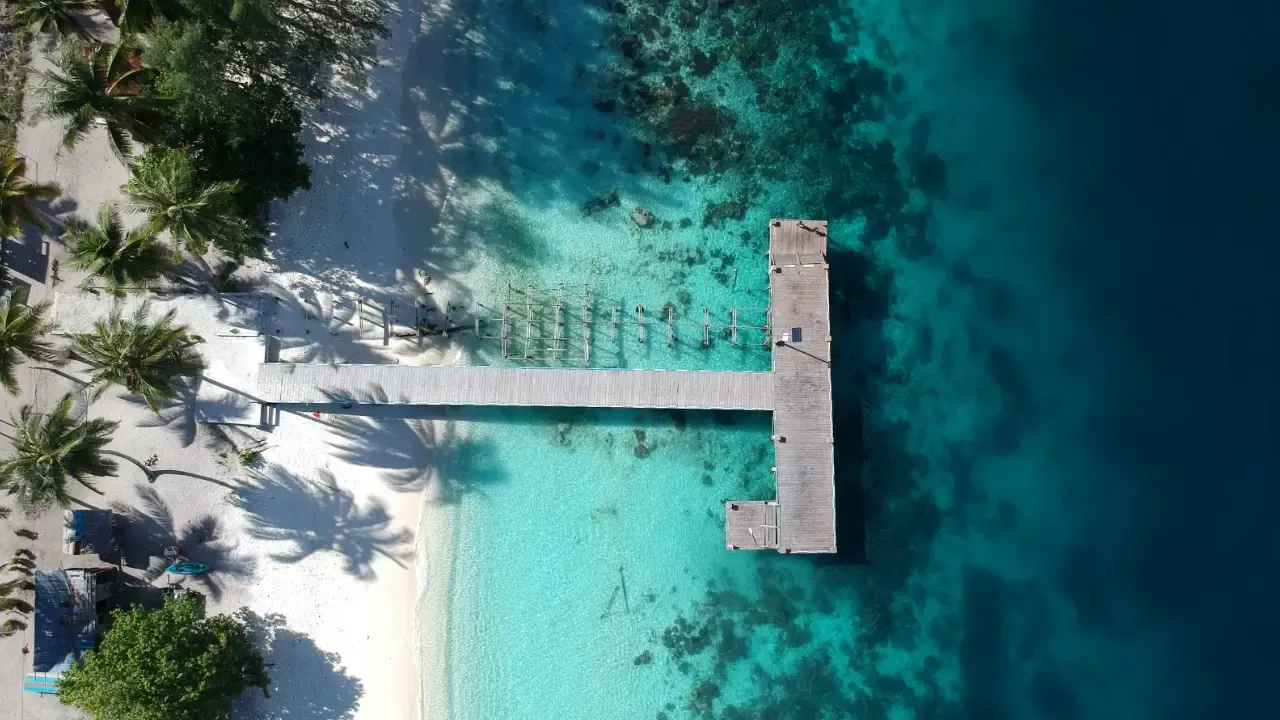
The reefs look beautiful because they are working, not because they are arranged for visitors. Current feeds the coral and brings the fish in tight, which is why the same site can feel generous one hour and hard work the next. Around jetties and reef corners, the color is often less postcard-blue than practical: ropes, boat shadows, flashing baitfish, sand kicked up by fins, then a sudden wall of coral that makes everyone go quiet. Weak swimmers should not mistake that beauty for gentleness.
The sales pitch usually flattens Raja Ampat into clear water and mantas, which misses the stranger pleasure of the place. A good reef day is not just seeing one headline animal; it is watching the small machinery of the reef keep going while you float above it, slightly useless and trying not to kick anything. The cost, the transfers, the basic rooms, the damp gear hanging everywhere, all of it starts to make sense when the reef is on. That is the honest reason to come.
Where to Stay in Raja Ampat
- Remote diving, lagoons, resorts
Misool
Misool is the far-south commitment, not a casual add-on from the Dampier Strait. Bases here put serious divers near some of Raja Ampat's richest reefs, limestone lagoons, and more isolated boat days, but getting in and out takes planning. Accommodation splits between basic homestays and expensive conservation-minded resorts, with fewer chances to fix a bad booking once you arrive.
Good for: Advanced diving, remote lagoons, long-stay reef trips.
Skip if: You get seasick easily or need constant power, signal, and choice.
- Karst views, remote, island hopping
Pianemo
Pianemo is a remote Fam Islands base for travelers who want the karst seascape on their doorstep instead of as a rushed day trip. Homestays here put you closer to the viewpoints, lagoons, and nearby reef stops, but they also leave you far from easy backup plans. Boat timing, food, and comfort depend heavily on the host, and the famous view can feel busy when tour boats arrive.
Good for: Karst viewpoints, island hopping, remote homestays.
Skip if: You want easy errands, flexible dining, or quick access to Waisai.
- Village, snorkeling, mantas
Arborek Island
Arborek Island is a small village base with more traveler rhythm than most outer-island stops. The jetty is the draw, with schooling fish under the planks and easy boat access toward manta sites when conditions cooperate. It has less jungle depth than Gam and less space to wander, so the appeal is reef access and village life rather than solitude.
Good for: Jetty snorkeling, village stays, manta trips.
Skip if: You want jungle walks, privacy, or lots of room to roam.
- Diving, snorkeling, homestays
Dampier Strait
Dampier Strait is the easiest place to build a proper Raja Ampat trip without disappearing into the far south. Bases around Kri, Mansuar, Gam, and nearby islands put reefs, jetties, manta sites, and dive boats within realistic reach. The water is not a lazy lagoon; current is part of the deal, and weaker snorkelers need local guidance before jumping in.
Good for: Diving, snorkeling, first Raja Ampat stays.
Skip if: You want calm swimming water and simple resort-style logistics.
- Birding, reefs, jungle
Gam Island
Gam Island gives Raja Ampat a land side, which many reef-focused visitors forget exists. Homestays sit close enough to snorkeling and boat trips, but the island also has forest, village tracks, and early walks for birds of paradise. It feels less tidy than Arborek and less direct than Kri, with patchy signal and power that can fade into the background or ruin your work plan.
Good for: Birdwatching, quiet homestays, mixed reef and jungle days.
Skip if: You need stable internet, polished rooms, or a reef-only schedule.
- Transit, supplies, ferries
Waisai
Waisai is Raja Ampat's practical capital, where ferries land, errands happen, and island plans get rescued. Stay here when you need a night before or after a boat transfer, not because it gives you the reef trip people picture. Hotels and warungs are basic, the waterfront is functional, and the best reason to linger is sorting cash, permits, fuel, or onward transport.
Good for: Ferry connections, supplies, late arrivals.
Skip if: You want beaches, reef access, or an unplugged island stay.
Frequently Asked Questions
Planning & moving around
-
How many days do you need in Raja Ampat?
Five to seven days is the minimum that makes the transfer chain feel worthwhile. A week gives you time for the Dampier Strait and one bigger boat day, while longer trips let you add Misool or Wayag without turning the whole trip into a transport exercise. Anything under five days is mostly ferry, boat, and regret.
-
Which boat trips are worth planning in Raja Ampat?
Pianemo is the classic viewpoint trip, with karst islets, stairs, and a busy boat circuit when conditions are good. Wayag is the bigger commitment, with longer boat time, higher fuel costs, and less room for a sloppy schedule. Dampier Strait reefs and jetties are the smarter choice if you want more water time and less transit.
-
Are Grab or Gojek available in Raja Ampat?
No, ride-hailing apps are not the way Raja Ampat works. In Waisai, use local ojeks, taxis, or accommodation pickups for short hops. For island movement, boats are arranged through homestays, resorts, or local boat owners.
-
Where can you store luggage in Raja Ampat?
There is no proper luggage-storage system. Ask your Waisai hotel or guesthouse to hold bags around ferry timing, or leave them with your homestay host if you are returning there. In Sorong, airport-area hotels are the safer fallback.
-
Is Raja Ampat good for digital nomads?
No. Internet is weak, electricity can be limited, coworking is absent, and monthly rentals are not a normal market outside informal homestay arrangements. Come here to disconnect, not to pretend remote work will behave.
-
What is the biggest first-timer mistake in Raja Ampat?
Trying to do too much in too little time is the classic mistake. Raja Ampat punishes tight plans with ferry timing, boat costs, current, weather, and long transfers. Build the trip around one base or one region first.
Safety & medical
-
Do you need travel insurance for Raja Ampat?
Yes, and it needs to cover diving, boat transfers, evacuation, and remote medical care. A serious dive injury or fall on an island is not solved by calling a city ambulance. Cheap insurance that excludes diving is close to useless here.
-
What happens if you get sick in Raja Ampat?
On a remote island, you start with your host, basic first aid, and a boat plan. Waisai has a public hospital and pharmacies for simpler problems, but serious cases usually move toward Sorong or farther. Divers should not assume reliable hyperbaric treatment is available on demand in Waisai.
-
Are there areas in Raja Ampat you should avoid?
There is no normal crime district to avoid like in a big city. The places to avoid are remote industrial zones, mining areas, and islands where your operator or host has no clear reason to take you. Stick to established homestay islands, dive routes, and recognized boat stops.
-
Can you drink the tap water in Raja Ampat?
No. Use bottled, boiled, or filtered water, and refill from the large drinking-water containers many homestays provide. Brushing your teeth with tap water is a personal risk call, but drinking it is a bad idea.
-
Is Raja Ampat safe for solo women?
It is usually low-crime, but solo women should plan around remoteness rather than nightlife danger. Book established homestays, avoid arriving after dark, and arrange boats through hosts instead of improvising at the port. Isolation is the risk multiplier.
-
Can beginners snorkel safely in Raja Ampat?
Only in the right places and with local advice. Jetties, reef corners, and passes can have strong current even when the water looks calm. Beginners should start on sheltered house reefs and skip driftier sites.
Laws & local norms
-
What are the drug laws in Raja Ampat?
Indonesia's drug laws apply fully in Raja Ampat, and they are severe. Possession can mean prison, and trafficking can carry the death penalty. Do not treat remoteness as privacy.
-
Do you need a license to rent a scooter in Raja Ampat?
You need the correct license and an International Driving Permit with motorcycle coverage to ride legally. Informal rentals may not check, but that does not protect your insurance after a crash. Roads around Waisai and villages can be rough, dark, and bad for casual riders.
-
What etiquette matters in Raja Ampat villages?
Dress modestly in villages and Waisai, especially away from beaches and boats. Ask before photographing people, keep swimwear for the water, and remove shoes when entering homes. Public displays of affection read badly in conservative villages.
Money & costs
-
Do you need the Raja Ampat marine permit?
Yes. The conservation permit and local visitor fees are part of the normal cost of visiting reef areas, and operators can ask for proof. Save the receipt offline because mobile signal is not something to trust.
-
Is Raja Ampat expensive?
Yes, for remote Indonesia. Simple homestays can look cheap at first, but boats, fuel, permits, diving, and bad-weather buffers push the real cost up. The expensive part is movement, not coffee or rice.
Culture & etiquette
-
Which markets are worth visiting in Raja Ampat?
Waisai's market is the only real market stop most travelers will use. Go in the morning for fish, produce, snacks, and the practical side of island life before supplies scatter outward. Smaller islands usually have small home shops, not markets.
-
What do tourists get wrong about Raja Ampat?
They think it is a beach holiday with diving attached. The real trip is built around reefs, boats, homestays, currents, and patience. If you want restaurants, shopping, and easy backup plans, the postcard has misled you.
-
How much English is spoken in Raja Ampat?
English is workable with dive operators, some resorts, and tourist-facing homestays. It drops fast in villages, markets, small boats, and local transport. Learn a few Indonesian basics and keep booking details written down.
Food & drink
-
What local food should you try in Raja Ampat?
Expect grilled fish, rice, sambal, simple vegetables, and sago-based Papuan staples rather than a restaurant-hopping scene. On the islands, the food is usually whatever your homestay cooks that day. Waisai has more warungs, but nobody comes here for culinary variety.
-
Is Raja Ampat vegan-friendly?
Raja Ampat is hard work for vegans. Homestay meals usually revolve around fish, eggs, chicken, rice, and vegetables, and kitchens do not always understand strict vegan rules. Tell your host early and bring protein-heavy snacks from Sorong.
-
Is Raja Ampat good for halal travel?
Yes, halal travel is straightforward in most villages and in Waisai. Fish and chicken are common, pork is not the default, and prayer facilities are present in many communities. Alcohol exists at some resorts, but it is not central to local food life.
-
Where do locals eat in Raja Ampat?
Outside Waisai, most locals eat at home and travelers eat at their homestay. In Waisai, look around the market area and main roads for warungs serving rice, fried noodles, fish, and chicken. The food is simple, cheap enough, and not dressed up for travelers.
Families & kids
-
Is Raja Ampat good for kids?
Raja Ampat can work with older, water-confident kids who can handle boats, basic rooms, and slow days. It is hard with toddlers or children who need reliable medical backup, easy snacks, and predictable transport. Bring patience. Anyone hoping to recreate a resort holiday will be disappointed.
-
What accommodation works best for families in Raja Ampat?
Homestays with meals included are the simplest option if your family can handle basic rooms and shared routines. Larger dive resorts can work better for families who need more structure, but they cost more and still sit far from serious medical care. Choose shallow-water access over a prettier view.
-
What works for a half-day with young kids?
Keep it close to your homestay: shallow snorkeling, beach time, short village walks, or a nearby picnic stop by boat. Long viewpoint or dive-boat days are built around adults and get tiring fast. The best family plan here is boring on paper and calmer in real life.
-
What if a child gets sick in Raja Ampat?
A sick child on a remote island usually means a boat to Waisai first, then Sorong if it is serious. Bring children's medicine, rehydration salts, a thermometer, and proper travel insurance. Do not assume the nearest clinic has paediatric supplies.
-
Is Raja Ampat manageable with a stroller?
No, a stroller is the wrong tool here. Island paths are sand, boards, jetties, steps, and broken road edges, and even Waisai is not stroller-friendly. Use a carrier if you are traveling with a small child.
Staying longer
-
Where should you stay in Raja Ampat?
Stay around the Dampier Strait if this is your first trip, especially Kri, Mansuar, Gam, or Arborek. Waisai is useful for ferry timing, cash, and supplies, but it is not the reef base people imagine. Misool is for divers building the whole trip around the far south.
After dark
-
Can you eat late at night in Raja Ampat?
Not really. Outer-island homestays serve dinner early, and kitchens usually shut down with the evening routine. Waisai has a few warungs that run later, but this is not a place where you wander out at night and find options.
-
What changes after dark in Raja Ampat?
The islands go quiet. Generator hours, dim paths, early dinners, and shared homestay tables shape the evening more than bars or restaurants. Waisai has a little more movement, but not enough to call it nightlife.
-
Is it safe to walk at night in Raja Ampat?
Crime is not the main concern. The problem is darkness, uneven paths, wet jetties, sand, and steps you cannot see. Carry a torch or phone light, and do not wander village paths barefoot after rain.