
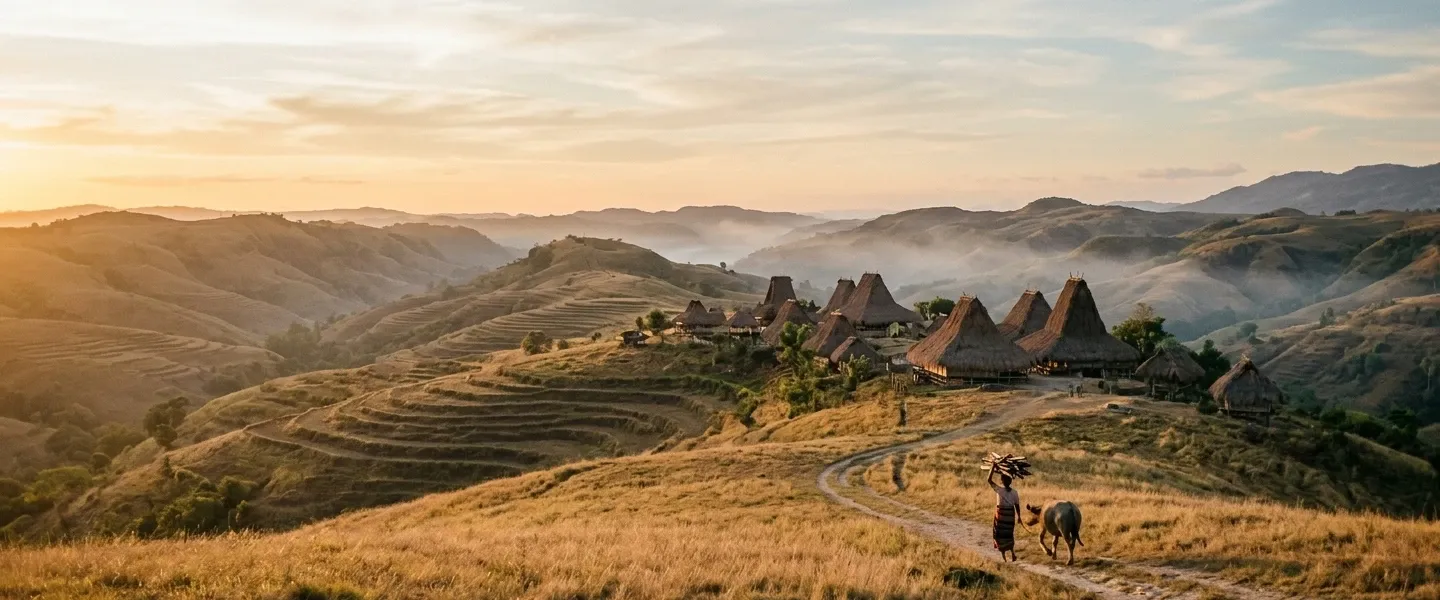
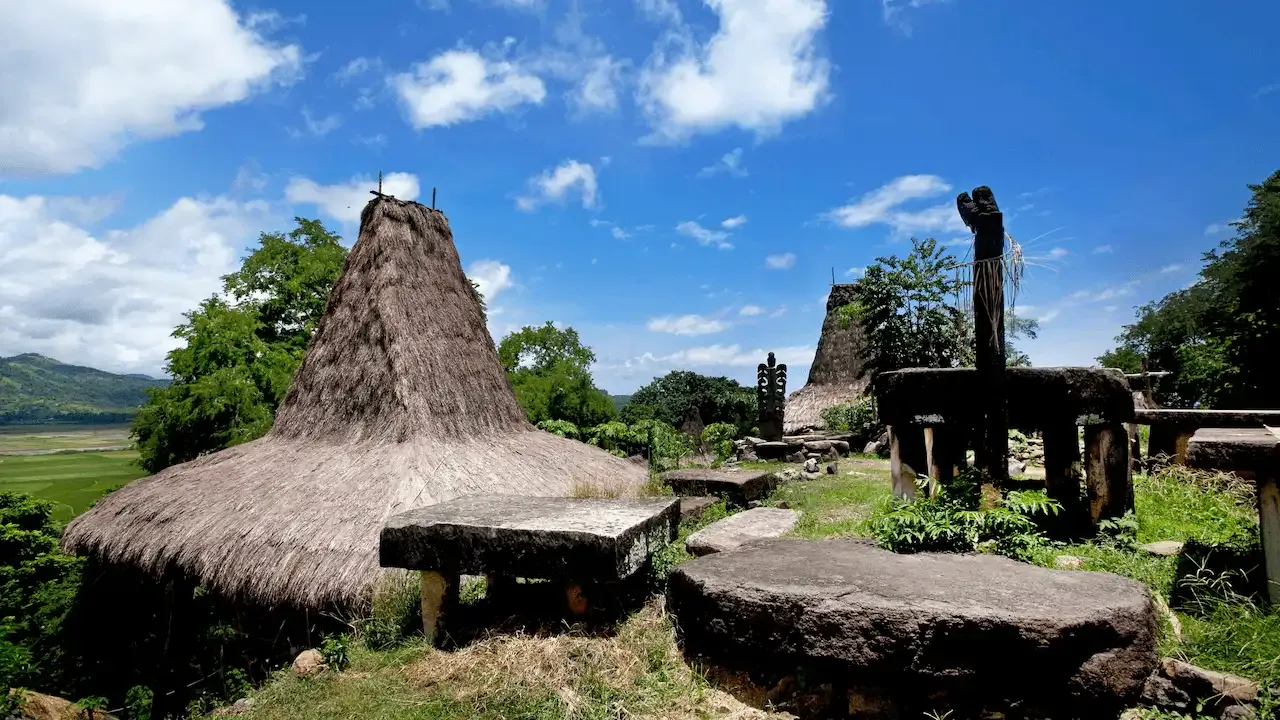
Sumba Right Now
Earthquake tremors were felt in East Sumba on September 8, following a 5.2 magnitude earthquake centered near Ruteng, Manggarai.
Visiting Storyteller: Nadine Schwengenbecher · NIHI Sumba, Wanokaka
Visiting Photographer: Jason Child · NIHI Sumba, Wanokaka
Interest in travel to Sumba fell 12% from a year ago, suggesting demand is cooling off.
Best time to visit Sumba
Great time to visit
September offers excellent weather with minimal rain, making it a great time to visit before the peak season crowds arrive. Pack light clothing and be prepared for strong sun, as shade can be scarce in many areas.
SCORE BY MONTH
Visit Sumba between May and October for the best weather. It's drier then, with fewer rainy days, making it ideal for beaches, surfing, and exploring. Avoid December through February due to heavy rainfall and the risk of flooding.
Day-to-day in Sumba
Walkability
25/100
Sumba is not a walking destination; short town errands work, but beaches, villages, and guesthouses usually require wheels.
Sidewalks are rare outside town cores, with dusty shoulders, broken edges, and parked scooters.
Villages, beaches, guesthouses, and basic shops sit too far apart for useful walking.
Narrow roads, scooters, trucks, and loose animals leave pedestrians exposed on road shoulders.
Climate works against walking for much of the year. Plan around weather windows.
Need to Know
- Population
- 843,051 BPS · 2024
- Currency
- Indonesian rupiah (IDR)
- Language
- Indonesian; English limited outside hotels, surf stays, and main towns
- Tap water
- Not safe
- Time zone
- WITA (UTC+8)
- Power plug
- Type C / F, 230V
- Dialing code
- +62
- Driving side
- Left
- Tipping
- Not expected; round up for drivers, guides, and good restaurant service.
- Internet
- Usable 4G in Waingapu and Tambolaka; rural villages, beaches, and inland roads often drop signal.
- Emergency
- 112 all services, 110 police, 113 fire, 118 or 119 ambulance.
When not to go
-
Avoid peak wet-season road trips
Dec – Mar · peaks Jan – FebDo not plan a first Sumba trip around remote beaches and village loops in peak wet season. Main roads still function, but dirt approaches to waterfalls, south-coast beaches, and traditional villages turn slow or impassable after heavy rain. Go when the roads are firmer, or choose a place where rain does not break the whole route.
Go here instead:
- Yogyakarta Culture-heavy trip with easier logistics when rain hits.
- Koh Samui Better beach base once the Gulf rain eases.
- Raja Ampat Water-focused trip with less road dependence.
Upcoming Events & Holidays in Sumba
Upcoming events, next 30 days
Public holidays & observances, next 12 months
Dates are researched and checked, but events move. Always confirm with the official source before you book anything around them.
Getting To Sumba
-
From Tambolaka Airport (TMC)
Main airport for West Sumba and Waikabubak.
Use TMC for Waikabubak, Weekuri, Ratenggaro, and most west-coast beach stays. Do not count on Grab or Gojek at the airport; book a hotel pickup or driver before landing and agree the route before leaving.
Direct flights to Sumba
Serves 3 direct destinations, all domestic, about 6 flights a day.
Within Indonesia 3- Bali DPS
 Batik Air
  Nam Air Sriwijaya Air 4/day
 - Kupang KOE Nam Air
 Wings Air 1-2/day
 - Surabaya SUB Nam Air 3/week
Nonstop routes only. Flights per day are an average, each way. Data: AeroDataBox, updated July 2026.
Visa rules apply at the country level. See the full Indonesia visa guide, with every visa and its official do-it-yourself cost. -
-
From Waingapu Airport (WGP)
East Sumba airport, about 5 to 10 min from Waingapu.
Use WGP for Waingapu, Wairinding Hill, Walakiri, and east-coast trips. The airport is close to town, but onward transport thins quickly once you leave Waingapu, so arrange a driver for any same-day hill or beach run.
-
From Benoa Port by PELNI
Slow passenger ship from Bali to Waingapu.
This is the budget sea route, not the easy way to Sumba. PELNI sailings are useful if time matters less than cost, but schedules shift and the trip eats a full day or more, so check PELNI directly before building plans around it.
Safety Advice
Sumba is generally considered safe for travelers, with locals being warm and welcoming. However, environmental risks like rough roads and limited healthcare facilities are present, and malaria is a concern, so mosquito repellent is essential. Travel between locations can be long and roads may be poorly lit after dark, making it advisable to hire a car.
Seismically active region
Earthquakes
Sumba sits in a seismically active region. Most days you'll never notice it, but strong earthquakes do occur from time to time. It's worth knowing your accommodation's emergency exits and following local instructions if an earthquake occurs.
See the 5 strongest nearby earthquakes
- M7.72026 · 191 km · Ende
- M6.32016 · 189 km · Dompu
- M6.32016 · 95 km · Waingapu
- M6.32019 · 161 km · Waingapu
- M62009 · 172 km · Waingapu
Source: U.S. Geological Survey · Updated August 2026
Common Scams in Sumba
-
Forced village donations
HIGH RISKTrigger:Someone offers photos or guiding inside a traditional village
After you hand over a phone or follow an unsolicited guide, the ask turns into payment for photos, guiding, or a village donation. Around high-profile villages such as Ratenggaro, the pressure feels sharper because you are far from town and surrounded.
How to avoid: Do not hand over your phone or camera. Agree any guide fee or village contribution before entering, and walk away from anyone who starts the service without asking.
-
Inflated transfer fares
MEDIUM RISKTrigger:A driver quotes a loose price after you land
Tambolaka and Waingapu airports do not work like Bali, with easy app fares and constant taxis. A vague airport quote can grow once luggage is loaded or the driver adds fuel, waiting time, or beach detours.
How to avoid: Book through your hotel or agree the full route and price before bags go in the car. For cross-island days, confirm fuel, waiting time, entrance stops, and return timing in advance.
Mistakes to Avoid
-
Riding without a helmet
SERIOUS CONSEQUENCERiding without a helmet is illegal in Indonesia, and Sumba's broken shoulders, livestock, trucks, and long rural roads make crashes ugly. The legal fine is minor beside the hospital and insurance risk.
Fix: Wear a proper helmet every time, including as a passenger. Use a driver for long beach, village, and cross-island days instead of treating Sumba like a short-hop scooter island.
-
Drinking tap water
SERIOUS CONSEQUENCETap water in Sumba is not safe to drink. One careless bottle refill can turn a remote beach or village day into a stomach problem with limited clinics nearby.
Fix: Drink bottled, boiled, or properly filtered water. Use safe water for brushing teeth, especially outside hotels.
-
Riding without proper license
SERIOUS CONSEQUENCEA home license alone is not enough for legal scooter riding in Indonesia. Police trouble is annoying, but the bigger problem is insurance refusing a road-injury claim.
Fix: Carry an international driving permit with the motorcycle category if you ride. If you do not have it, hire a driver instead.
-
Driving after dark
SERIOUS CONSEQUENCENight driving on Sumba is a bad bargain: weak lighting, livestock, broken shoulders, and long gaps between towns raise the crash risk. A late beach sunset can become a tense rural drive back.
Fix: Plan long transfers for daylight and stay near the coast if you want sunset. Tell drivers you want to return before dark.
-
Swimming rough surf beaches
SERIOUS CONSEQUENCEMany Sumba beaches look swimmable from shore but have strong surf, reef, and rip currents. Remote beaches often have no lifeguards and slow emergency response.
Fix: Ask locally before swimming and treat south-coast surf beaches as walking or surf-viewing stops. Swim in calmer lagoons or protected sections only.
-
Not carrying enough cash
MINOR CONSEQUENCEATMs are limited outside Waingapu, Tambolaka, and larger towns, and card payments fail when signal drops. Small warungs, village fees, drivers, and beach stops often run cash-only.
Fix: Withdraw before leaving town and carry smaller rupiah notes. Split cash between bags so one lost wallet does not kill the day.
-
Dressing badly in villages
Traditional villages in Sumba are lived-in places, not beach extensions. Revealing clothing around elders, tombs, and ceremonial houses reads as disrespect, not relaxed island style.
Fix: Cover shoulders and knees in villages and religious spaces. Keep a light sarong or shirt in the car.
-
Arriving empty-handed
In some traditional Sumbanese visits, sirih pinang, or betel nut, is a small sign of respect. Arriving empty-handed is not a disaster, but it marks you as someone treating the village like a set.
Fix: Ask your driver or guide what is appropriate before visiting. Bring betel nut or a modest agreed contribution when local custom calls for it.
-
Photographing without permission
Traditional villages, tombs, ceremonies, and elders are not open sets. Taking close photos without asking causes offense and can turn into a tense payment demand.
Fix: Ask before photographing people, interiors, tombs, or rituals. Use a local guide when visiting ceremonial villages.
Money & Payments
Carry rupiah for villages, use cards at resorts, and always pay in IDR.
-
Cash Runs Sumba
Carry Indonesian rupiah for villages, beach stops, warungs, drivers, and small guesthouses. Keep smaller notes because change for IDR 100,000 bills can be awkward outside Waingapu, Tambolaka, Waitabula, and Waikabubak.
-
Use Town ATMs
ATMs cluster in Waingapu, Tambolaka, Waitabula, and Waikabubak, with Mandiri, BNI, and BRI the banks to look for. Withdrawal limits depend on the machine and your card, and Mandiri foreign-card withdrawals carry a listed IDR 50,000 (USD 3) access fee.
-
Cards Stop At Resorts
Cards work mainly at larger resorts, some hotels, and a few higher-end restaurants. Do not rely on card readers for drivers, village fees, warungs, or rural stays because signal drops can kill the transaction.
-
Exchange Before Sumba
Change money in Bali, Jakarta, or another major city before flying in. Sumba has few reliable money-changing options, and wasting half a day hunting rupiah is a bad use of the island.
-
Reject Home Currency
At ATMs and card terminals, choose Indonesian rupiah, not your home currency. Dynamic Currency Conversion gives the machine or merchant a worse exchange rate, so pay in IDR and let your bank convert.
-
Wallets Are Patchy
QRIS and local wallets are common in bigger Indonesian cities, but Sumba is still cash-first for most traveler spending. Bring cash for anything outside hotels, resorts, and larger town businesses.
-
International Transfers
To send money to a bank account in Indonesia, for things like rent or day-to-day expenses, services like Wise or Remitly usually offer better rates than traditional banks and faster delivery.
You'll typically need the recipient's full name, account number, and SWIFT/BIC code. Some banks may also require a local address.
Costs in Sumba
Sumba is significantly more affordable than Bali for budget travelers, with local meals costing very little. However, the island's remoteness and developing tourism infrastructure mean that transport and accommodation can be more expensive than you might expect, especially for those seeking mid-range comfort.
Save money?
Sign up for our guide on how to save money on your next trip.
SIM Cards & Data
Best option for most travelers: an eSIM you set up before you arrive. You'll be online the moment you land, with no airport line and no tourist pricing.
Travel eSIMs Connect the second you land. Zero hassle. Skip the airport line and paperwork. Activate before you fly and land connected. Find the best eSIM →Prefer a local SIM?
Local SIMs on Sumba are mainly for 4G data in Waingapu, Tambolaka, Waitabula, and Waikabubak. Telkomsel is the safest pick before rural drives, but beaches, inland roads, and traditional villages still drop signal. Buy and activate the SIM in Bali or another major city if you want less counter friction; 5G is not something to plan around here.
What Sumba is Like
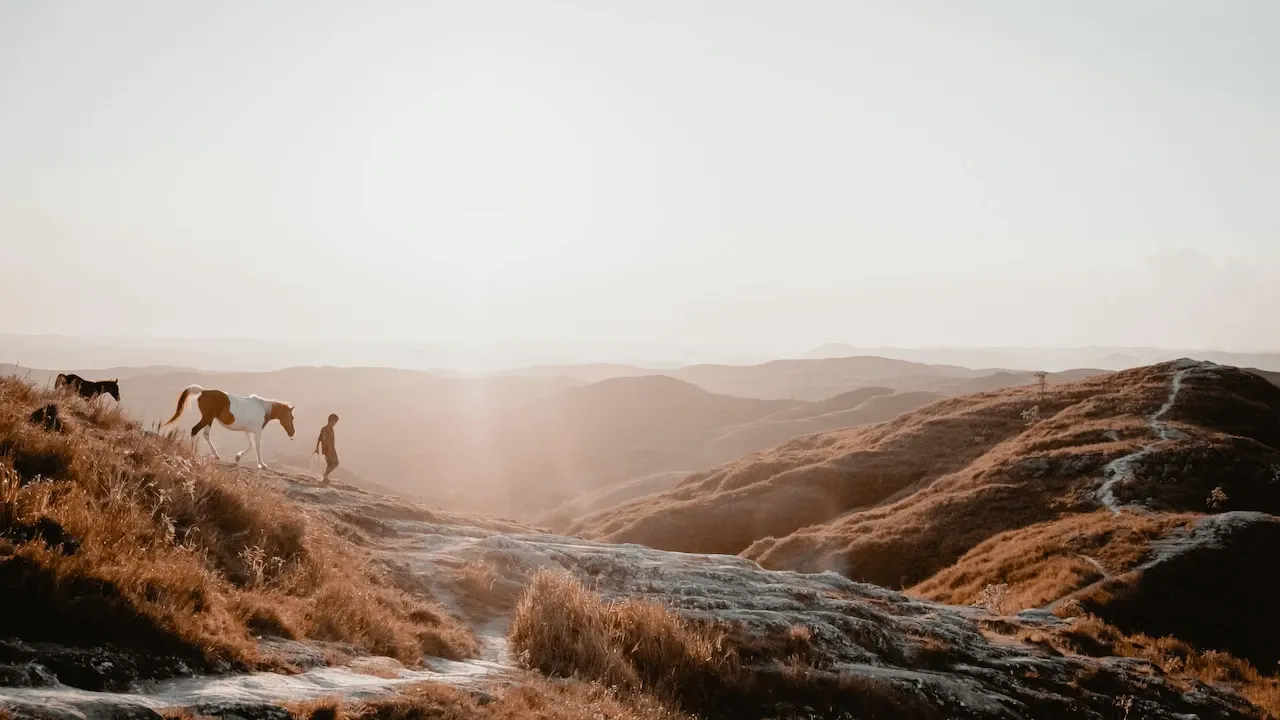
Sumba is not Bali, and that is the first thing to understand. You land in a place where villages like Ratenggaro still gather around megalithic tombs, where horses graze beside empty roads, and where daily life is not arranged around your itinerary. The island is large, dry in places, green in others, and quiet in a way that can feel either freeing or slightly inconvenient depending on your tolerance for gaps. Petrol still appears in old bottles at roadside stalls, and a buffalo can do more to slow traffic than any junction. That is the charm, if you are built for it.
Getting around is the part most first-timers underestimate. The main road between Waingapu and Tambolaka is paved enough to make cross-island travel possible, but the roads that matter for beaches, waterfalls, villages, and hill viewpoints still take patience. Lapopu, Weekuri, south-coast beaches, and inland village detours can turn a short-looking map line into a slow, jolting drive. Public transport is not a useful traveler tool here, and Google Maps is better at drawing lines than judging road quality. Hire a driver and stop pretending this is a scooter island.
West Sumba and East Sumba do not feel like different neighborhoods of the same trip. The west carries the heavier visitor gravity: Ratenggaro, Praijing, Weekuri Lagoon, surf beaches, and the expensive resort corridor around Nihi and Cap Karoso. East Sumba opens wider and drier, with Wairinding Hill, Walakiri, Prailiu, and long stretches of pale grassland that feel closer to horse country than tropical island fantasy. Most travelers spend more time in the west because the stops are denser and the lodging is easier. Go east if you want the emptier half.
Food is where Sumba reminds you that tourism still has thin roots here. In Waingapu and Waikabubak, you can find simple warungs, grilled fish, rice, soup, instant coffee, and the occasional cafe doing its best for visitors with laptops. Outside the towns and resorts, meals are about what is open, what has rice left, and whether your driver knows a better place than the obvious roadside stop. Do not come for a restaurant scene. Come ready to eat plainly and move on.
Nightlife barely exists, which is either a relief or a deal-breaker. Evenings are usually dinner, generator hum, dark roads, insects hitting the light, and an early bed because the next place is farther away than it looked. The beach resorts can manufacture a softer version of that quiet with cocktails and linen, but most of the island goes dark early. If you need bars, late kitchens, easy company, and plans after dinner, this is the wrong island. Sumba runs on daylight.
The strange tension now is that Sumba is both rough-edged and increasingly expensive at the top end. A few high-design resorts have put serious money into places that still sit beside villages, dry fields, and roads where children wave at passing cars. Done well, that money brings jobs, better logistics, and a reason to keep local craft visible; done badly, it turns working coastline into a private backdrop. The island has not been flattened by tourism yet, but it is no blank canvas either. Travel like a guest, not a scout.
Pasola week
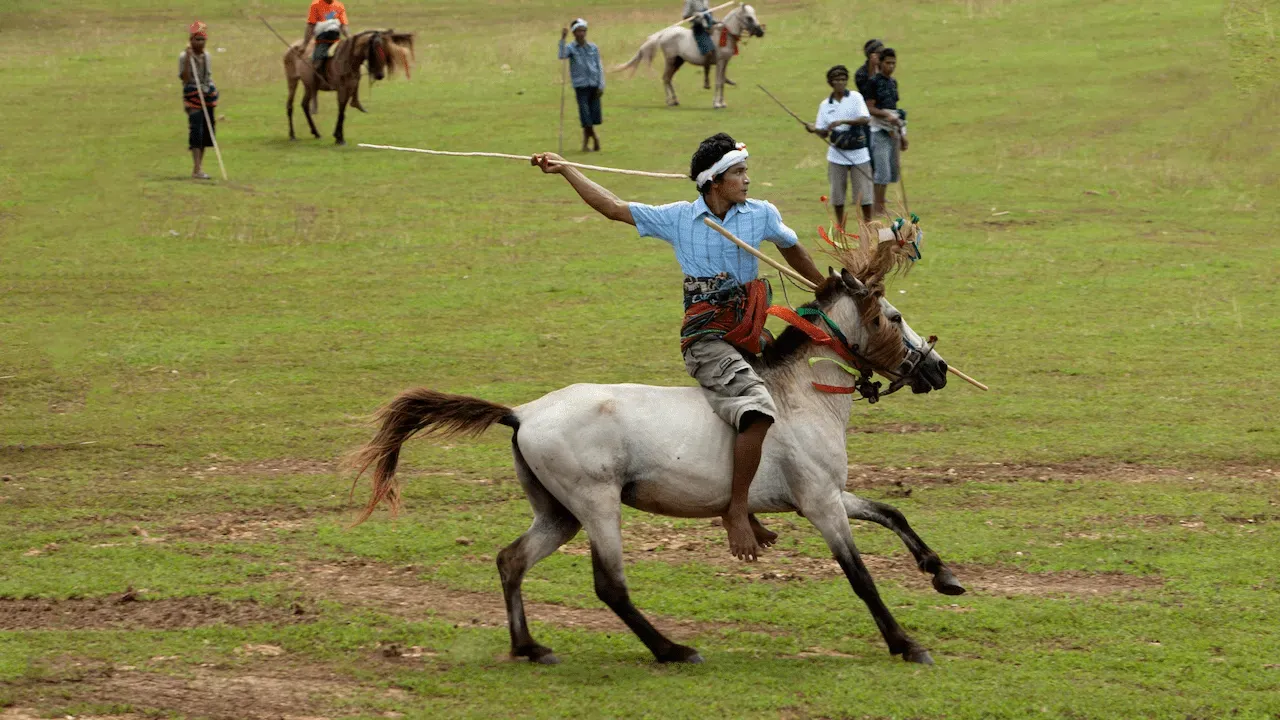
Pasola is not a festival you casually drop into between lagoon swims and beach photos. In West Sumba, riders charge across open fields and throw blunt wooden spears in a ritual tied to Marapu belief, harvest timing, and village prestige. The action is loud, dusty, and tense, with horses cutting across the field while crowds push close enough to feel part of it rather than safely above it. Kodi, Wanokaka, Gaura, and Lamboya are the names to know. Treat it like a serious cultural event, not entertainment laid on for visitors.
The hard part is not watching Pasola, it is planning around it. The dates fall around February and March, but they are set through local ritual timing rather than a tidy tourism calendar, so transport and rooms tighten before many travelers realize the exact day. Drivers get booked, village roads clog, and the best-located stays stop being casual choices. This is the wrong week to land at Tambolaka and negotiate everything from scratch. Decide early, stay on the west side, and let a local fixer handle the moving parts.
Pasola is worth the trouble if you accept that you are a guest at something older and messier than a scheduled show. Blood can be drawn, tempers run hot, and the crowd energy is part of the point, not a flaw to be managed away. Bring patience, sun cover, and the ability to stand back when the field tightens. The reward is not polished access. It is seeing Sumba refuse to flatten itself for visitors.
Where to Stay in Sumba
- Surf, resorts, remote coast
Kodi
Kodi is the southwest coast choice for travelers who want beach time, surf, and expensive resort comfort instead of a town base. Cap Karoso anchors the higher-end side of the area, while the wider region gives access to wild beaches, villages, and long empty roads. Independent exploring takes planning because distances are awkward and services thin out fast.
Good for: Surf breaks, resort stays, southwest coast access.
Skip if: You are trying to keep costs low or eat independently every night.
- Airport access, west Sumba, services
Tambolaka
Tambolaka is the practical landing base for West Sumba, especially if your flight arrives late or you want the shortest hop from the airport. The town is useful rather than interesting, with banks, fuel, simple hotels, and enough food to reset before heading deeper west. Weekuri Lagoon, Ratenggaro, and Kodi are still driver days from here, not casual strolls.
Good for: Airport arrivals, driver setup, first-night logistics.
Skip if: You want beach frontage, nightlife, or a town worth lingering in.
- Traditional villages, culture, town base
Waikabubak
Waikabubak is the best inland base if you want traditional villages without sleeping inside a resort bubble. Tarung and Praijing sit close enough for short visits, and the town has more daily texture than Tambolaka. Food and shops are basic, evenings go quiet, and anything beyond nearby villages still needs a driver.
Good for: Village visits, megalithic tombs, west Sumba day trips.
Skip if: You need polished hotels, varied restaurants, or easy beach access.
- East Sumba, savanna, ikat
Waingapu
Waingapu is the working base for East Sumba, with the island's stronger town services and the easiest access to the airport and port. Stay here for Wairinding Hill, Walakiri Beach, Prailiu, and the drier grassland side of the island. The town is practical and plain, with more business traffic than beach-holiday energy.
Good for: East Sumba drives, ikat shopping, airport and port access.
Skip if: You want lush scenery, resort comfort, or west-coast villages nearby.
Frequently Asked Questions
Planning & moving around
-
How many days do I need in Sumba?
Five to seven days is the workable minimum if you want both west and east without living in the car. A shorter trip should stay on one side, usually West Sumba for villages, Weekuri, and the southwest coast. Ten days gives the island room to breathe.
-
Do you need a license to rent a scooter in Sumba?
You need a motorcycle license and an international driving permit with the correct category to ride legally. Some rental places may still hand over a scooter, but that does not fix insurance, police, or hospital problems after a crash. For long routes, hire a driver.
-
Can you use Grab or Gojek in Sumba?
No, not in any reliable trip-planning sense. Use hotel pickups, prearranged drivers, local taxis, or ojeks in town. Agree the route, waiting time, fuel, and return plan before leaving.
-
What are the best day trips in Sumba?
Think in loops from your base, not classic day trips off the island. From Waikabubak, nearby villages such as Tarung and Praijing are easy, while Weekuri and Ratenggaro need a proper driver day. From Waingapu, Wairinding Hill, Prailiu, and Walakiri fit better than trying to force the west coast.
-
Is Sumba good for digital nomads?
Sumba is a poor fit for most digital nomads. There is no real coworking scene, monthly rentals are thin, and internet drops hard once you leave the main towns or resorts. Come to work lightly, not to build a routine around calls.
-
What mistake do first-time visitors make in Sumba?
They try to see too much from one base. Sumba looks manageable on a map, then a beach road, village stop, fuel stop, or weather delay eats the day. Split the island into west and east, or accept that you are choosing depth over coverage.
-
When is Pasola in Sumba?
Pasola usually falls around February and March in parts of West Sumba, but the exact timing is set through local ritual calendars. That makes it a bad event to plan casually at the last minute. Book rooms and drivers early, then confirm locally as the date approaches.
-
Should I fly into Tambolaka or Waingapu?
Fly into Tambolaka for West Sumba, including Waikabubak, Kodi, Weekuri, and Ratenggaro. Fly into Waingapu for East Sumba, including Wairinding, Walakiri, Prailiu, and the drier grassland side. Open-jaw routing saves backtracking if flights line up.
-
Should I buy a local SIM for Sumba?
Yes, if you care about maps and driver contact. Telkomsel is the safest local choice for rural drives, but beaches and inland roads still lose signal. Buy and register the SIM in Bali or another major city if you want less friction.
Safety & medical
-
Is Sumba safe for solo female travelers?
Sumba is workable for solo female travelers, but it is not a place to improvise transport after dark. The main issue is isolation: long drives, quiet roads, limited lighting, and few late services outside Waingapu and Waikabubak. Book drivers through your stay and avoid arriving at remote accommodation at night.
-
What happens if I get sick in Sumba?
Minor problems can be handled at clinics, pharmacies, or public hospitals in towns such as Waingapu and Waikabubak. Serious illness, a bad scooter crash, or anything surgical usually means evacuation to Bali or another larger medical center. Do not treat remote beach days as low-risk just because the island feels quiet.
-
Do I need travel insurance for Sumba?
Yes, and the policy needs medical evacuation cover. Sumba has long roads, rough surf, limited emergency response, and basic hospitals, so a serious injury becomes a logistics problem fast. If you ride a scooter, your license and helmet situation also matters for claims.
-
How LGBTQ+ friendly is Sumba?
Sumba is socially conservative and has no visible LGBTQ+ scene. Same-sex couples are unlikely to face open hostility in normal hotel or driver interactions, but public affection will draw attention in villages and small towns. Keep it low-key outside resort spaces.
-
Can you drink the tap water in Sumba?
No. Drink bottled, boiled, or properly filtered water, and use safe water for brushing your teeth. Ice in decent hotels and resorts is usually made for guests, but small roadside places are a judgment call.
-
Are Sumba beaches safe for swimming?
Some are, many are not. South-coast beaches can have strong surf, reef, and rip currents, often with no lifeguards nearby. Ask locally before swimming and treat rough surf beaches as walking or viewing stops.
Laws & local norms
-
What are the drug laws in Sumba?
Indonesia's drug laws apply in Sumba and the penalties are severe. Cannabis, recreational drugs, and many CBD products can lead to prison, deportation, or worse for trafficking cases. Do not test the line here.
-
What etiquette matters in Sumba villages?
Dress modestly, ask before photographing people or tombs, and do not walk into ceremonial spaces as if they are museum sets. In some villages, sirih pinang, or betel nut, is part of polite visiting. A local guide or driver can tell you when a small contribution is expected and when someone is simply pressing you.
Money & costs
-
Where can I store luggage in Sumba?
Use your accommodation. Dedicated luggage storage desks and app-based storage are not a real thing at Tambolaka or Waingapu airports. If you have a late flight, arrange bag storage with your hotel before checkout.
Culture & etiquette
-
Which markets in Sumba are worth visiting?
Pasar Waingapu and Pasar Waikabubak are the useful ones, especially in the morning when produce, fish, spices, and textiles are moving. They are working markets, not tidy souvenir halls. Go early, carry small notes, and treat photography as permission-first.
-
What do tourists get wrong about Sumba?
Many arrive expecting a quieter version of Bali. Sumba is not built around cafes, scooters, day clubs, and easy last-minute logistics. It is a working island where villages, tombs, horses, fields, and ritual calendars shape the trip more than tourism does.
-
How much English is spoken in Sumba?
English is limited outside resorts, surf stays, and a few tourism-facing drivers or guides. In Waingapu, Waikabubak, and local villages, Indonesian is the useful language. Download offline translation and keep place names written down.
Food & drink
-
Where do locals eat in Sumba?
Look around the markets and town centers of Waingapu and Waikabubak for warungs, grilled fish, nasi campur, bakso, and simple rice dishes. The setup is usually plastic chairs, quick service, and food cooked for locals rather than travelers. Outside towns, your driver often knows better than online maps.
-
What local foods should I try in Sumba?
Try kaparak, a corn-based Sumbanese staple, if you can find it prepared locally. Se'i sapi, smoked beef, also turns up around East Nusa Tenggara food traditions, though availability varies by town. Grilled fish is the safer everyday bet on the coast.
-
Can you eat late at night in Sumba?
Late food is limited to a few town warungs, hotel kitchens, and resort restaurants. Outside Waingapu, Waikabubak, and resort areas, kitchens close early and the roads get dark. Eat before the island shuts down for the night.
Families & kids
-
Is Sumba a good place to travel with kids?
Sumba can work with older kids who handle long car days, rough roads, and simple meals. It is harder with toddlers because shade, smooth walking paths, kid-focused food, and quick medical backup are limited. Resort stays soften the edges, but they do not change the island's distances.
-
Is Sumba manageable with a stroller?
A stroller is mostly dead weight outside resorts and airports. Sidewalks are rare, roads are dusty or broken, and village paths are uneven. A baby carrier or backpack carrier works far better.
-
What if a child gets sick in Sumba?
For mild illness, use pharmacies or clinics in the main towns. For serious fever, dehydration, injury, or breathing trouble, expect a move to better care off-island. Families should travel with insurance that covers evacuation and bring basic child medicines.
Staying longer
-
Where should I stay in Sumba?
Stay in Waikabubak for West Sumba villages, Tambolaka for airport logistics, Kodi for resort coast and surf, or Waingapu for East Sumba. None of these bases works for everything, because the island is too spread out. Pick the side of the island first, then book the room.
After dark
-
What changes after dark in Sumba?
The island gets quiet fast after dinner. Shops close, roads lose light, and most social life sits inside guesthouses, homes, or resort bars. Plan evenings near where you sleep.
-
Is it safe to walk around Sumba at night?
Short walks in central Waingapu or Waikabubak are usually fine, but night walking is not a good plan outside town cores. The danger is less street crime and more darkness, dogs, holes, traffic, and no easy ride back. Use transport after dinner.
-
Where do nights go wrong for travelers in Sumba?
Nights go wrong when travelers assume they can find food, signal, and a ride home after dark. Rural roads are poorly lit, drivers need arranging, and beach stays can feel very far from the nearest town. Lock in dinner and transport before sunset.
-
Are there nightlife areas in Sumba?
No, not in the usual travel sense. You may find drinks at resort bars or a hotel restaurant in Waingapu, but there is no club strip or late bar district. If nightlife matters, Sumba is the wrong island.