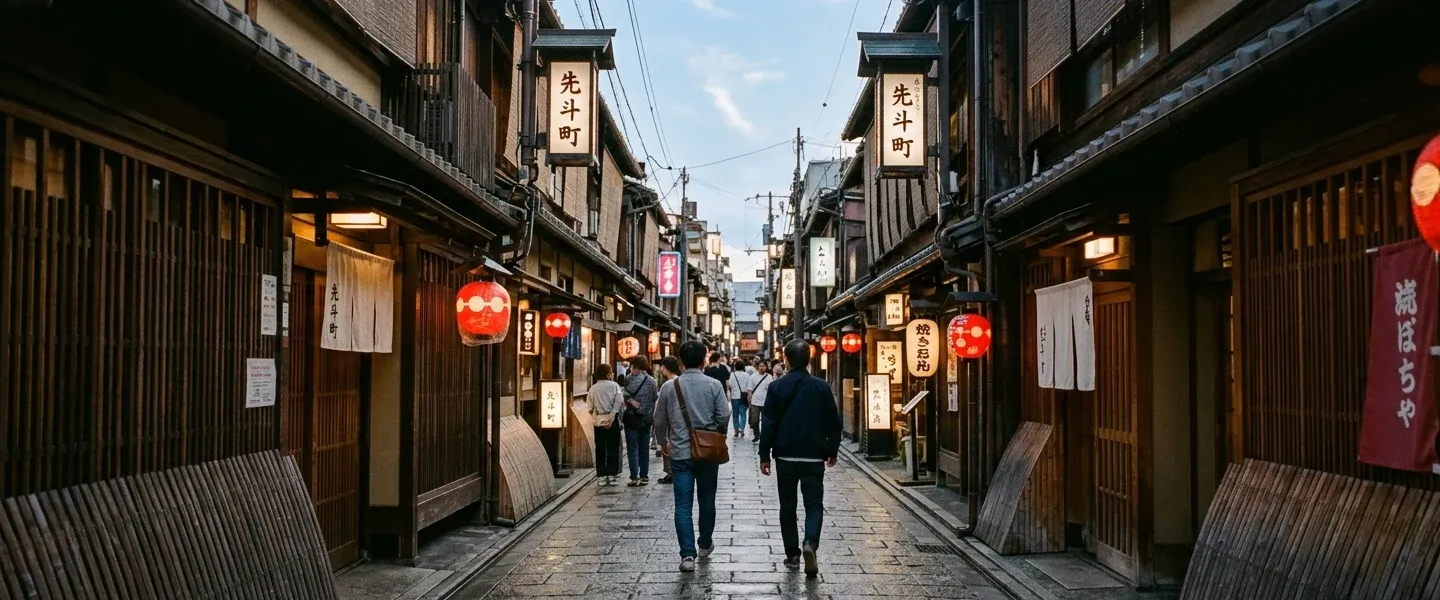
Buying is the easy part in Japan; renting is the gauntlet. Foreigners can buy freehold with no strings, yet most people rent, at least at first, and the way in costs more and asks more of you than almost anywhere else on this list.
The move-in bill is the first shock. You typically pay key money (礼金), a non-refundable gift to the landlord of one to two months, on top of a refundable deposit (敷金) of one to two months. Add an agent fee of about a month, fire insurance and a lock-change fee, and the total lands at four to six months' rent before you carry a box through the door. You will also almost certainly need a guarantor company, since most foreigners have no personal guarantor; it charges 50 to 100% of a month's rent to start, plus a small yearly renewal.
Some landlords simply will not rent to foreigners. It is common enough to shape a search, and the way around it is to filter for listings marked foreigner-friendly (外国人OK) and to use bilingual agencies, which pre-screen for owners who accept foreign tenants and set up the guarantor company for you. Agencies like GTN, Able and MiniMini handle a lot of foreign renters. For a cheaper, lower-hassle start, public UR rentals charge no key money, no agent fee and no guarantor, and share-house operators such as Oakhouse and Sakura House rent furnished rooms by the month.
Two things surprise newcomers. Apartments are small, often a single room (a 1R or 1K) measured in tatami mats, so a Tokyo one-bedroom that would feel cramped at home is normal here. And pets are frequently barred outright, so if you have a cat or dog, the pet-friendly filter narrows the market sharply before you start.
Buying, by contrast, is one of the few in Asia a foreigner can do outright. You can buy land and buildings freehold, with the same rights as a Japanese citizen: no residency, visa, approval or minimum spend, and it is genuine ownership. Budget two lots of cost. At purchase, taxes and agent fees come to roughly 6 to 8% of the price. Then you pay an annual fixed-asset tax of about 1.4% of the assessed value for as long as you hold it. Financing is the catch: most Japanese banks want permanent residency, but a handful (SMBC Prestia, SBI Shinsei, Suruga, Tokyo Star) lend to non-PR residents with a 20 to 30% deposit and a higher rate, and buyers purchasing from abroad usually pay cash. From April 2026 foreign buyers also file a short post-purchase report, paperwork rather than a restriction. This is why Niseko (ski chalets and strong seasonal rental yields) and central Tokyo (stable values and steady rent) draw most of the foreign money.
The big portals are in Japanese, so use a translation tool or a bilingual agent:
- Property portals. Suumo, Homes and At Home list most of the market, almost all in Japanese. Filter for 外国人OK if you search yourself.
- Foreigner-friendly agencies. Bilingual agencies (see the names above) set up the guarantor and steer you to willing landlords, and are worth the fee for a first apartment.
- Lower-cost routes. Public UR rentals (no key money, agent fee or guarantor) and share houses are the cheapest ways in while you settle and build a local record.