


Cebu Right Now
Air quality in Metro Cebu remains unhealthy for sensitive groups due to haze from Indonesian forest fires.
Clair Marlo & Rick Price Live in Cebu · Waterfront Cebu City Hotel & Casino, Cebu City
Governor's Cup Under-18 Basketball Tournament · Mandaue City Cultural and Sports Complex, Mandaue City
Interest in travel to Cebu remained about the same as a year ago, suggesting demand is holding steady.
Best time to visit Cebu
Good time to visitTyphoon seasonHeavy rain and flooding
One of the wetter months of the year, when heavy downpours can disrupt outdoor plans and reduce visibility offshore.
SCORE BY MONTH
February through May is the sweet spot for Cebu, with the driest weather, calmer seas and the best conditions for island hopping, diving and beach time. June through December brings more frequent downpours, rougher seas and a higher chance of ferry delays or cancelled boat trips, especially later in the year. Christmas and New Year are festive but busy, with heavier domestic travel and fuller hotels across the region.
Day-to-day in Cebu
Walkability
40/100
Walking works reasonably well inside IT Park, Cebu Business Park and a few commercial districts, but breaks down quickly once you leave them. Short errands on foot are practical from the right base, yet most visitors still rely heavily on taxis, Grab and motorcycles.
IT Park has decent sidewalks, but many streets are blocked, broken or missing sidewalks entirely.
IT Park and Cebu Business Park cover daily needs on foot, but the wider city sprawls.
Wide roads, fast traffic and limited crossings make walking stressful outside major business districts.
Climate works against walking for much of the year. Plan around weather windows.
-
Monthly cost
$876 / month
AFFORDABLESolo mid-range stay including rent, daily eating out, groceries, and routine costs.
-
TROPICAL DIVING
Diving shapes a lot of long-stay life in Cebu. Weekend trips to Moalboal for the sardine run or Malapascua for thresher sharks are common, and many visitors end up structuring their schedule around dive conditions and boat departures.
-
Coworking
$89 / month
VERY AFFORDABLEMost remote workers end up around IT Park, where spaces like The Company Cebu and Enspace sit within walking distance of cafes and apartments. Internet is reliable by Philippine standards and the biggest challenge is often noise from calls rather than connectivity. Outside Cebu City, dedicated coworking options thin out quickly.
-
Gym
$22 / month
VERY AFFORDABLEIf fitness is part of your routine, Cebu is easy. IT Park, Lahug and Cebu Business Park have the best concentration of gyms, including Anytime Fitness, Gold's Gym and several local strength-focused facilities. Equipment quality is usually good in the business districts and noticeably weaker in smaller neighborhood gyms.
Need to Know
- Population
- 3,325,385 PSA · 2020 Census
- Currency
- Philippine peso (PHP)
- Language
- Cebuano and Filipino; English widely spoken in tourism, business, and government
- Tap water
- Not safe to drink
- Time zone
- PHT (UTC+8)
- Power plug
- Type A / B / C, 220V
- Dialing code
- +63
- Driving side
- Right
- Tipping
- Not expected, but rounding up or leaving a small tip for good service is common.
- Internet
- Fast 4G and 5G coverage across Cebu City and Mactan; connections are less reliable on smaller islands and in remote coastal areas.
- Emergency
- 911 (national emergency), 166 (police), 160 (fire), 161 (ambulance)
When not to go
-
Typhoon Season Island Plans
Jul – Nov · peaks Aug – OctSkip Cebu during peak typhoon season if your trip revolves around ferries, diving and island hopping. Cebu often avoids direct hits, but rough seas, cancelled boat departures and poor underwater visibility can quickly dismantle an itinerary built around Malapascua, Moalboal and the smaller islands. If marine activities are the whole point of your trip, choose a destination with a more reliable weather window.
-
Don't Come For Beaches
Skip Cebu if your idea of a tropical holiday is a walkable beach town with long sandy shores outside your hotel. Much of the coastline is rocky, developed, industrial or geared toward diving rather than swimming and lounging. The people happiest here are usually divers and island hoppers. Beach-focused travelers are often happier elsewhere.
Upcoming Events & Holidays in Cebu
Upcoming events, next 30 days
On the horizon
Public holidays & observances, next 12 months
Dates are researched and checked, but events move. Always confirm with the official source before you book anything around them.
Getting To Cebu
-
From Mactan-Cebu International Airport (CEB)
Main gateway on Mactan Island, roughly 30 to 60 minutes from Cebu City.
CEB handles most international and domestic arrivals to Cebu. International flights primarily use Terminal 2, while most domestic flights use Terminal 1, connected by a short covered walk. Travel times to Cebu City vary sharply with traffic, especially during rush hour and around the bridges linking Mactan and the mainland.
Direct flights to Cebu
Serves 36 direct destinations, 12 international and 24 domestic, about 121 flights a day.
International 12- Tokyo NRT Japan
 Cebu Pacific Air
  Philippine Airlines
  United Airlines 4/day
 - Hong Kong HKG Hong Kong
 Cathay Pacific Cebu Pacific Air 3/day
 - Seoul ICN South Korea Cebu Pacific Air
 Jeju Air
  Jin Air
  Korean Air 3/day
 - Singapore SIN Singapore Cebu Pacific Air
 Scoot
Scoot  Singapore Airlines 3/day
- Taipei TPE Taiwan
 China Airlines
  EVA Air
  Starlux Airlines 3/day
 - Kuala Lumpur KUL MalaysiaF Firefly
 Philippines AirAsia 1-2/day
 - Busan PUS South Korea
 Air Busan Jin Air 1-2/day
 - Osaka KIX Japan Cebu Pacific Air Philippine Airlines ~1/day
- Bangkok DMK Thailand Cebu Pacific Air 5/week
- Shanghai PVG China
 China Eastern Airlines 4/week
 - Hanoi HAN Vietnam
 Vietnam Airlines 3/week
 - Quanzhou JJN China
 Xiamen Airlines 2/week
Within Philippines 24
- Manila MNL Cebu Pacific Air Philippine Airlines Philippines AirAsia 30/day
- Davao City DVO Cebu Pacific Air Philippine Airlines 9/day
- Del Carmen IAOA Atlantis European Airways Cebgo Philippine Airlines 9/day
- Coron USUA Atlantis European Airways Cebgo Philippine Airlines 7/day
- Cagayan de Oro CGY Cebu Pacific Air Philippine Airlines 5/day
- Bacolod City BCD Cebgo Philippine Airlines 4/day
- Butuan City BXU Cebgo Philippine Airlines 4/day
- Malay MPH Cebu Pacific Air Philippine Airlines 4/day
- Angeles City CRK Cebgo Cebu Pacific Air
 Emirates 3/day
 - Tacloban City TAC Cebgo Philippine Airlines 3/day
- Zamboanga City ZAM Cebu Pacific Air Philippine Airlines Philippines AirAsia 1-2/day
- Puerto Princesa PPS Cebu Pacific Air Philippine Airlines 1-2/day
- General Santos GES Cebu Pacific Air Philippine Airlines 1-2/day
- Iloilo City ILO Cebu Pacific Air 1-2/day
- Ozamiz OZC Cebgo 1-2/day
- Dipolog City DPL Cebgo 1-2/day
- Legazpi DRP Cebgo 1-2/day
- Dumaguete DGT Cebgo 1-2/day
- Surigao City SUG Cebgo 1-2/day
- Calbayog City CYP Cebgo 1-2/day
- Pagadian City PAG Cebgo ~1/day
- Catarman CRM Philippine Airlines 3/week
- Masbate MBT Cebgo 3/week
- Cotabato City CBO Philippine Airlines 1/week
Nonstop routes only. Flights per day are an average, each way. Data: AeroDataBox, updated July 2026.
Visa rules apply at the country level. See the full The Philippines visa guide, with every visa and its official do-it-yourself cost. -
-
From Cebu Port (Cebu City)
Major ferry hub linking Cebu with Bohol, Negros and other Visayas islands.
Cebu Port is the main sea gateway for travelers arriving from nearby islands. Fast ferries and RoRo services operate throughout the day, but schedules change during rough weather. If you booked online, allow extra time for terminal procedures and ticket validation.
Safety Advice
Traffic is the biggest risk in Cebu, especially on scooters and busy urban roads. Petty theft, taxi overcharging and tourist scams happen occasionally in crowded areas, while typhoons and heavy rain can disrupt ferries and island trips during the wetter months.
Seismically active region
Earthquakes
Cebu sits in a seismically active region. Most days you'll never notice it, but strong earthquakes do occur from time to time. It's worth knowing your accommodation's emergency exits and following local instructions if an earthquake occurs.
See the 5 strongest nearby earthquakes
- M7.12013 · 55 km · Sagbayan
- M6.92025 · 97 km · Calape
- M6.72012 · 82 km · Jimalalud
- M6.62020 · 192 km · San Pedro
- M6.52017 · 177 km · Mabua
Source: U.S. Geological Survey · Updated August 2026
Common Scams in Cebu
-
ATM Skimming and Card Swapping
HIGH RISKTrigger:An ATM looks tampered with or someone offers help
Criminals occasionally fit skimming devices to ATMs or distract users while swapping cards. Losing access to your bank cards during a trip can cause major disruption and significant financial loss.
How to avoid: Use ATMs inside banks, malls or staffed locations. Cover the keypad, inspect the card slot and refuse help from strangers.
-
Fake Online Hotel Bookings
HIGH RISKTrigger:A resort requests payment to a personal account
Fake social media pages and cloned booking profiles advertise accommodation in places such as Bantayan and Moalboal. Payment is collected through personal bank or e-wallet accounts and the booking never exists.
How to avoid: Book through official hotel channels or established booking platforms. Contact the property directly if a deal looks unusually cheap.
-
Fake Island Tour Operators
MEDIUM RISKTrigger:A guide demands full payment before departure details
Unlicensed operators advertise island-hopping trips online, collect deposits and then cancel or disappear. This is most common through social media messaging.
How to avoid: Book through established operators with verifiable reviews and a physical office. Avoid transfers to personal accounts.
-
Taxi Overcharging
MEDIUM RISKTrigger:A driver refuses the meter and quotes a flat fare
Some airport and tourist-area drivers quote inflated prices instead of using the meter. The loss is usually limited to a single journey but can be several times the normal fare.
How to avoid: Use Grab where available or insist on the meter before the trip starts. Walk away if the driver refuses.
-
Bar and Nightlife Theft
MEDIUM RISKTrigger:A stranger becomes unusually friendly in a crowded bar
Phone and wallet theft happens in nightlife areas around Mango Avenue and some entertainment districts. The distraction is often social rather than forceful.
How to avoid: Keep valuables in front pockets, do not leave drinks unattended and avoid displaying expensive phones or cash.
-
Attraction is Closed Touts
LOW RISKTrigger:Someone claims your destination is closed today
A driver or tout tries to redirect you to a different attraction, shop or tour operator where they receive a commission. The usual outcome is wasted time and an overpriced purchase.
How to avoid: Check opening hours yourself and stick to your original destination. Ignore unsolicited advice from people connected to the sale.
Mistakes to Avoid
-
Drinking Tap Water
SERIOUS CONSEQUENCETap water is not considered safe for most visitors. Stomach illness can derail several days of a short trip.
Fix: Use bottled or properly filtered water for drinking. Be cautious with ice from unknown sources.
-
Skipping a Helmet
SERIOUS CONSEQUENCEMotorcycle and scooter crashes are one of the biggest risks visitors face in Cebu. Riding without a helmet increases the chance of serious injury and can lead to fines.
Fix: Wear a properly fitted helmet every time, including as a passenger. If a rental shop cannot provide one, use a different shop.
-
Ignoring Plastic Restrictions
MINOR CONSEQUENCESome local governments restrict plastic bags and other single-use items. The usual result is inconvenience, refused service or a small fine.
Fix: Carry a reusable shopping bag and expect rules to vary between cities and municipalities.
-
Ignoring Church Dress Codes
Major churches including Santo Niño Basilica expect modest clothing. Inappropriate clothing often results in being turned away at the entrance.
Fix: Cover shoulders and knees before entering churches. Carry a light layer if you plan to visit religious sites.
Money & Payments
Carry pesos for transport and small businesses, use cards at larger venues, and always pay in pesos to avoid DCC.
-
Cash for Daily Spending
You need Philippine Pesos for jeepneys, tricycles, public markets and many local eateries. Carry PHP 20, 50 and 100 notes because small vendors often struggle to break PHP 500 or PHP 1,000 bills.
-
Cards Work, Check Surcharges
Visa and Mastercard are accepted at most hotels, malls and chain restaurants in Cebu City and Mactan. Some smaller businesses add a card surcharge, while American Express acceptance remains limited.
-
Skip Airport Exchanges
Exchange counters at Mactan Airport and inside resorts often offer weak rates. Withdraw pesos from a bank ATM or compare rates at established city money changers instead.
-
ATMs Are Easy to Find
BPI, BDO and Metrobank ATMs are common in malls, business districts and tourist areas. Withdrawal limits often range from PHP 10,000 to PHP 20,000 per transaction, and local ATM fees are commonly around PHP 250.
-
Decline Currency Conversion
Always choose Philippine Pesos when an ATM or card terminal offers a currency choice. Dynamic Currency Conversion gives a worse exchange rate and is designed to extract extra money from foreign cardholders.
-
Local Wallets Are Limited
GCash and Maya dominate local QR payments, but registration is aimed at Philippine users and can be difficult for short-term visitors. Do not assume you can pay everywhere by QR code even if locals can.
-
No Extra Exit Taxes
Cebu does not charge a separate tourist tax for most visitors, and international terminal fees are normally included in airline tickets. Unexpected departure charges are uncommon.
-
International Transfers
To send money to a bank account in The Philippines, for things like rent or day-to-day expenses, services like Wise or Remitly usually offer better rates than traditional banks and faster delivery.
You'll typically need the recipient's full name, account number, and SWIFT/BIC code. Some banks may also require a local address.
Costs in Cebu
A comfortable mid-range trip in Cebu typically runs about USD 60-120 per person per day including a decent hotel, meals, local transport and a few activities. Day-to-day costs are reasonable, but island-hopping tours, diving trips and beach resorts in places like Mactan can push budgets up quickly, especially around Christmas, New Year and major holiday weekends.
Save money?
Sign up for our guide on how to save money on your next trip.
SIM Cards & Data
Best option for most travelers: an eSIM you set up before you arrive. You'll be online the moment you land, with no airport line and no tourist pricing.
Travel eSIMs Connect the second you land. Zero hassle. Skip the airport line and paperwork. Activate before you fly and land connected. Find the best eSIM →Prefer a local SIM?
Physical SIMs are easy to buy at Mactan-Cebu International Airport from Globe and Smart counters, as well as mobile phone shops throughout Cebu City. Tourist eSIMs are also widely available, but local SIMs remain a straightforward option if your phone supports them. SIM registration is mandatory and requires a passport. Globe performs well in Cebu City and many populated areas, while Smart often has stronger coverage on smaller islands and in more remote parts of the region.
What Cebu is Like
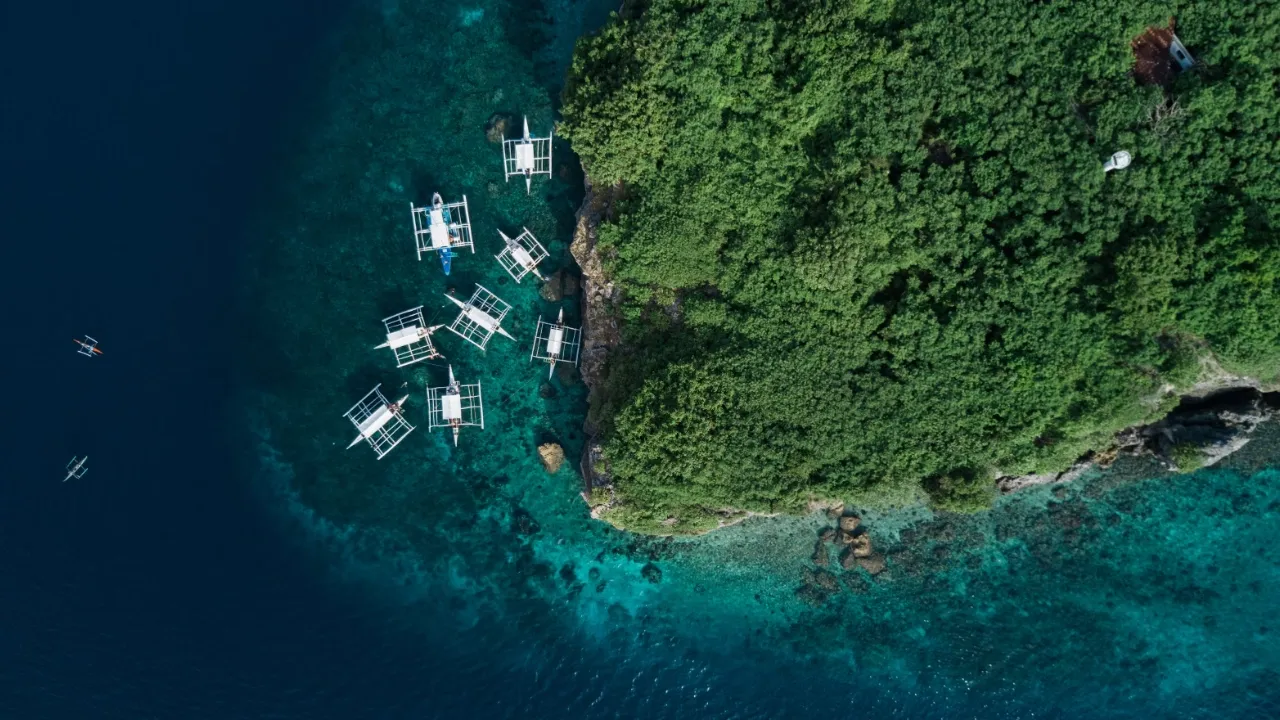
Landing in Mactan quickly dispels the fantasy of a quiet tropical island. Outside the resort compounds, the gateway area is a mix of airports, bridges, industrial estates, warehouses and relentless traffic. Crossing into Cebu City brings you past lechon stalls with charcoal smoke hanging over the roadside, while churches, markets and giant shopping malls compete for space in the same crowded streets. The city functions more as a commercial engine and transport hub than a holiday destination in its own right. Most travelers pass through it rather than linger. Fair enough.
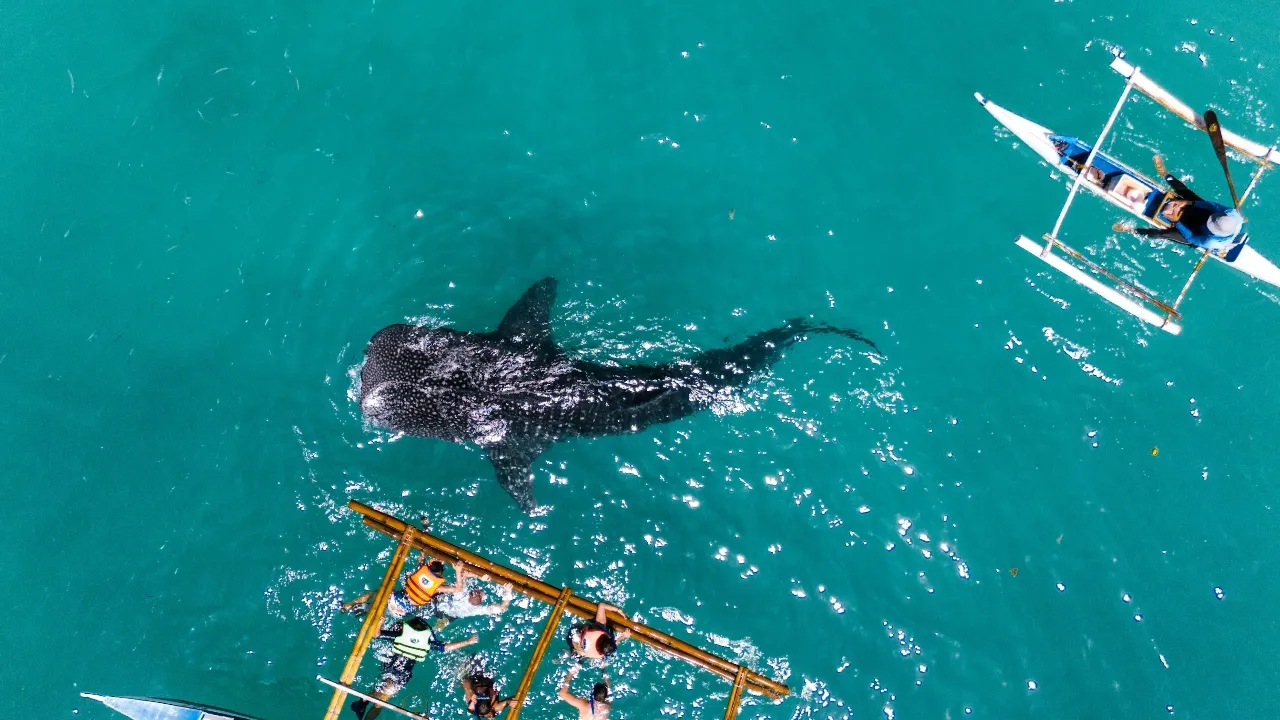
Heading south along the coast reveals the main reason people come. In Moalboal, enormous sardine schools gather close enough to shore that snorkelers can swim through them without stepping onto a boat. Further south in Oslob, whale shark encounters operate on an industrial scale that divides opinion even among regular visitors. Offshore, Malapascua draws divers out before sunrise in search of thresher sharks rising from deep water. The marine life is exceptional. The tourism infrastructure around it often feels improvised.
Moving between those places introduces the defining frustration of Cebu. The South Bus Terminal is a noisy churn of buses, food vendors and passengers heading in every direction, yet once you leave the city much of the province still depends on a single coastal road. Distances that look trivial on a map regularly consume half a day behind trucks, tricycles and slow traffic. Ferry schedules, weather and roadworks all have a habit of reshaping plans.
This is not the place for travelers looking for a walkable beach town where everything sits within a few minutes of their hotel. Large stretches of coastline are rocky, developed, industrial or geared toward diving rather than lounging on sand. It lacks the polished cafe culture of parts of Bali and the tourist infrastructure that makes places like Phuket easy on first-time visitors. Cebu works best for divers, island hoppers and people who enjoy figuring things out as they go. If you need predictable comfort, look elsewhere.
Sardines vs Sharks
The most surprising thing about Moalboal's sardine run is how ordinary the start feels. You walk past dive shops, step into the water near Panagsama Beach, swim a few minutes over coral rubble, and suddenly the sea turns dark. Millions of sardines move as a single mass, folding, twisting and opening around shafts of sunlight. There is no briefing room, no line to join, no boats circling overhead. Just fish. That simplicity is exactly why so many people leave talking about it more than the whale sharks.
Oslob delivers the bigger animal and the bigger photo, but it also comes with a production line. Boats move out in sequence, visitors gather in dense clusters, and everyone points their cameras toward the same shark at the same time. The encounter can still be impressive. A whale shark is a whale shark. Yet the memory often ends up being about the crowd rather than the animal. In Moalboal, the sardines remain the main character.
There is also a sustainability argument that is difficult to ignore. The sardine run exists because the fish choose to be there, and visitors enter their environment without fundamentally changing the animals' behavior. Oslob's whale shark industry relies on feeding, which has attracted criticism from marine scientists and conservation groups for years. Reasonable people can disagree about the balance between tourism income and wildlife management. The difference is that one experience feels observed, while the other feels staged.
That does not mean the sardine run is some untouched underwater wilderness. On busy mornings the water fills with snorkelers, dive students and underwater photographers trying to claim the same patch of ocean. The difference is scale. A school of sardines can absorb a surprising number of people and still feel wild, especially when a predator suddenly cuts through the bait ball and the entire formation explodes into motion. Those moments cannot be scheduled.
If you only have time for one marine experience in Cebu, the sardines are the easier recommendation. They are available year-round, require less planning, cost less, and create fewer ethical questions. More importantly, they still contain an element of unpredictability that wildlife encounters should have. You enter the water not quite knowing what will happen next. That uncertainty is part of the appeal.
Where to Stay in Cebu
- Diving, snorkeling, adventure
Moalboal
Moalboal is built around the sardine run, dive boats and easy access to southern Cebu's waterfalls and canyoneering trips. Panagsama is the center of activity, with dive shops and restaurants lining a rocky shoreline rather than a classic beach. Days revolve around the water and evenings stay relaxed. Divers rarely regret staying longer.
Good for: Diving, snorkeling, outdoor activities.
Skip if: You want long white-sand beaches outside your hotel.
- Whale sharks, waterfalls, south Cebu
Oslob (Tan-awan)
Oslob is primarily a functional base for whale shark trips and exploring southern Cebu rather than a destination in its own right. Most people arrive early, join the morning activity, then continue to waterfalls, Sumilon Island or other parts of the south. The coastline is scenic but quiet once day-trippers leave. Stay here for the location, not the atmosphere.
Good for: Whale shark trips, southern Cebu exploration.
Skip if: You want nightlife, shopping or a beach holiday base.
- Beaches, relaxation, island life
Bantayan Island
Bantayan Island revolves around Santa Fe, a beach town with calm water, sandy roads and a slower pace than most of Cebu. Visitors spend their days cycling, swimming and moving between beach bars rather than ticking off attractions. It feels disconnected from the busy parts of the province. That is exactly the appeal.
Good for: Beach downtime, couples, relaxed island trips.
Skip if: You want a packed itinerary or extensive nightlife.
- Mountains, views, food
Busay
Busay sits in the hills above Cebu City, where cooler air, viewpoints and mountain roads replace traffic-choked urban streets. Restaurants and cafés cluster around the ridgeline, especially near Tops and the surrounding highlands. Getting anywhere else requires transport, particularly after dark. Stay here if city views matter more than convenience.
Good for: Mountain scenery, cooler weather, short retreats.
Skip if: You want to walk to shops, nightlife and daily services.
- History, markets, local life
Colon Street
Colon Street sits in the heart of old Cebu and offers a version of the city far removed from malls and business parks. Markets, churches, department stores and heavy traffic define daily life here. The area has historic significance but is not polished, and few leisure travelers choose it for a long stay. Come for the city, not comfort.
Good for: History, local culture, urban exploration.
Skip if: You want a quiet area with modern hotels.
- Shopping, business, dining
Ayala Center Cebu / Cebu Business Park
Ayala Center Cebu / Cebu Business Park revolves around the city's largest shopping and office district. Streets are cleaner and calmer than downtown Cebu, with restaurants, hotels and services clustered around Ayala Center. It works well as a practical base but feels corporate after dark. Most visitors choose it for convenience rather than character.
Good for: City breaks, shopping, business travel.
Skip if: You want local markets, nightlife or historic Cebu.
- Digital nomads, nightlife, food
Cebu IT Park
Cebu IT Park is the easiest part of Cebu City to navigate on foot, with cafés, coworking spaces, bars and everyday services packed into a compact area. Most visitors staying in the city end up here sooner or later because it removes much of the hassle of getting around. It feels more like a modern business district than the Philippines people imagine. Convenience is the reason to stay here.
Good for: Remote work, dining, urban stays.
Skip if: You want heritage sights, beaches or a traditional city atmosphere.
- Beaches, resorts, airport
Mactan Island
Mactan Island is where most visitors spend their first or last night thanks to the airport and the concentration of beach resorts along the eastern coast. The water is good for island-hopping trips and beginner diving, but much of the shoreline is tied up by private resorts rather than public beaches. Traffic between Mactan and Cebu City regularly eats into the day. Stay here for the sea, not for exploring the city.
Good for: Beach time, short stays, early departures.
Skip if: You want walkable local neighborhoods and street life.
- Diving, island life, beaches
Malapascua Island
Malapascua Island attracts divers from around the world for early-morning thresher shark dives and a slower pace of life. Most accommodation clusters around Bounty Beach, where sandy lanes replace traffic and dive shops dominate the waterfront. Getting here takes effort and weather occasionally disrupts transport. The diving is the reason people come.
Good for: Advanced diving, island stays, slow travel.
Skip if: You need reliable transport links or city comforts.
Frequently Asked Questions
Planning & moving around
-
How many days should I spend in Cebu?
Five to seven days is the sweet spot for most first-time visitors. That gives you time for Cebu City, one marine destination such as Moalboal or Malapascua, and some flexibility for weather or transport delays. Trying to squeeze everything into three days usually means spending more time on buses and ferries than in the water.
-
What's the best way to get from Mactan-Cebu International Airport to Cebu City?
Grab is usually the easiest option because pricing is fixed and you avoid taxi negotiations. White metered taxis are also common and often cheaper than airport taxis if traffic is light. The MyBus service works if you're traveling light, but it is slower and less useful if your hotel is not near a major stop.
-
What are the best day trips from Cebu City?
The most popular options are Moalboal's sardine run, Kawasan Falls and the whale shark tours in Oslob. The challenge is distance rather than choice. Many advertised day trips involve several hours on the road, so start early and avoid trying to combine too much into a single day.
-
What are the best ride-hailing apps to use in Cebu?
Grab dominates for cars and airport transfers. Angkas, JoyRide and Move It are popular motorcycle taxi apps that can save a lot of time when traffic locks up the main roads. They are fast, but not ideal if you're carrying luggage.
-
Do you need a license to rent a scooter in Cebu?
Yes. To ride legally, foreign visitors should have the appropriate motorcycle entitlement on their home license plus an international driving permit. Rental shops may hand over the keys anyway, but that does not help if you crash or need to make an insurance claim.
-
What are the internet speeds like in Cebu for digital nomads?
Internet in Cebu City is usually fast enough for video calls, remote work and streaming. Fibre connections are common in newer apartments, coworking spaces and business districts. Speeds become less predictable on smaller islands and in more remote coastal towns.
-
What's the most common mistake first-time visitors make in Cebu?
Trying to cover Cebu City, Moalboal, Oslob, Malapascua and the northern islands in a single short trip. Distances look manageable on a map but transport is slower than many travelers expect. Pick one region and explore it properly.
-
What does almost every tourist get wrong about Cebu?
Many visitors assume Cebu is a single beach destination. In reality it is a transport hub connected to dive towns, islands, cities and resort areas that can feel completely different from each other. Choosing the wrong base is often what creates disappointment.
Safety & medical
-
Is it safe to walk alone at night in Cebu?
In areas such as IT Park, Cebu Business Park and most of Mactan's resort zones, many travelers feel comfortable walking after dark. Downtown areas around Colon and quieter side streets deserve more caution, especially late at night. Ride-hailing apps are often the simplest option once the bars start closing.
-
Can you drink the tap water in Cebu?
No. Most residents and visitors rely on bottled, filtered or delivered water for drinking. Ice from reputable restaurants is usually fine, but drinking straight from the tap is a common way to ruin the first few days of a trip.
Laws & local norms
-
What are the drug laws in Cebu for tourists?
Drug laws are strict and enforcement can be aggressive. Serious offenses can lead to lengthy prison sentences and major legal problems. There is no sensible reason for a visitor to take risks in this area.
-
Is vaping allowed in Cebu?
Vaping is legal but regulated. Many places that ban smoking also ban vaping, including numerous indoor public spaces. Follow local signage and do not assume rules are enforced the same way they are at home.
-
What is the dress code for visiting churches and religious sites in Cebu?
Shoulders and knees should be covered at major churches such as the Basilica Minore del Santo Niño. Staff may refuse entry if you're dressed for the beach. A light shirt or scarf solves the problem.
Money & costs
-
Is it better to use cash or card in Cebu?
Cards work well in malls, chain restaurants, hotels and many dive shops. Cash is still needed for jeepneys, markets, small eateries and many local transport services. Carrying some pesos every day saves a lot of hassle.
-
What are common scams in Cebu that tourists should watch out for?
Taxi overcharging remains the most common issue, especially around transport hubs. Fake accommodation pages and unofficial tour operators also catch people who pay through personal bank accounts or e-wallets. Book through established platforms and use Grab whenever possible.
-
What is the tipping etiquette in Cebu?
Tipping is appreciated but not expected in the way it is in some countries. Rounding up a taxi fare or leaving a small amount for good restaurant service is normal. Check the bill first because some restaurants already include a service charge.
Culture & etiquette
-
Is Cebu LGBTQ+ friendly?
Cebu is one of the more accepting parts of the country, particularly in younger and urban circles. Same-sex couples are unlikely to attract much attention in tourist areas, IT Park or major malls. Legal recognition still lags behind social acceptance.
-
What is the general cultural etiquette in Cebu?
Politeness goes a long way. Respect for family, elders and religious traditions remains important, and people tend to avoid direct confrontation. Asking before photographing strangers is appreciated, especially outside tourist areas.
Food & drink
-
What are the must-try dishes in Cebu?
Lechon is the obvious starting point and Cebu's version has a strong reputation even within the Philippines. Also look for sutukil seafood meals, ngohiong, humba and puso, the woven rice packets sold with grilled food. These are the dishes locals actually eat, not just tourist menu fillers.
-
Where do locals eat in Cebu for authentic food?
Lechon restaurants such as Rico's Lechon and Zubuchon are popular with locals as well as visitors. Larsian remains a classic spot for grilled food, while ngohiong stalls around university areas offer a more everyday side of Cebu's food scene. The best meals are often the least polished ones.
-
Are there vegetarian food options in Cebu?
Yes, although traditional Cebuano cooking leans heavily toward pork and seafood. Vegetarian-friendly cafés are common in Cebu City, IT Park and some tourist towns. Outside those areas you may need to explain your dietary requirements clearly.
Families & kids
-
Is Cebu a good destination for families with young children?
Yes, provided you choose the right base. Mactan's resorts, large malls and easy airport access work well with younger children, while older kids often enjoy island hopping and snorkeling trips. The biggest challenge is the amount of time spent traveling between attractions.
-
Are strollers practical for getting around Cebu?
They work well inside malls, airports and larger resorts. Outside those environments, uneven sidewalks, traffic and crowded streets quickly become frustrating. Many parents find a baby carrier more useful for day-to-day sightseeing.
Staying longer
-
What are the best areas to stay in Cebu for a first-time visitor?
Choose Cebu City if you want restaurants, nightlife and easy transport connections. Stay on Mactan if you want a resort near the airport, Moalboal if diving and snorkeling are the priority, and Malapascua if you are coming specifically for thresher shark diving. The right base matters more here than in many destinations because travel times are longer than they look.
After dark
-
What are the best areas for nightlife in Cebu City?
IT Park is the easiest area for most visitors, with bars, restaurants and late-night food within walking distance of each other. Mango Avenue still attracts party crowds but has a rougher reputation and a more traditional nightclub scene. Hotel rooftop bars are a calmer alternative.
-
What is the dating scene like in Cebu for foreigners?
Dating apps such as Tinder and Bumble are widely used, and meeting locals is not unusual. Family ties and long-term intentions often carry more weight than many visitors expect. Approaching dating with respect and realistic expectations goes a long way.