


Bali Right Now
Air quality is poor in some areas due to ongoing trash burning following landfill restrictions.
Bali International Airshow · I Gusti Ngurah Rai International Airport area, Badung
Interest in travel to Bali remained about the same as a year ago, suggesting demand is holding steady.
Best time to visit Bali
Great time to visit
September offers pleasant weather with minimal rain, though it's a busier time so popular spots will be crowded. Book accommodations and tours in advance to secure your preferred options.
SCORE BY MONTH
June to September is the dry season and the best of the year: lower humidity, calm water for diving, and reliable surf on the west coast. July and August are also the most crowded and expensive months. January and February are the wettest, with heavy afternoon downpours that flood the small roads in the south.
Visitor data: BPS-Statistics Bali, monthly foreign visitor arrivals (Jul-Dec 2025, Jan-Jun 2026)
Day-to-day in Bali
Walkability
36/100
Walking here means dodging motorbikes on narrow, often absent sidewalks, with drivers showing little patience. Reaching even basic amenities often requires a scooter or taxi due to poor pedestrian infrastructure.
Sidewalks are often broken, blocked by motorbikes and vendors, and disappear entirely on many main roads.
Basic services like food and groceries are often a significant walk away, requiring transport even in popular areas.
Motorbike density is extreme, drivers show little regard for pedestrians, and safe crossings are rare.
Climate works against walking for much of the year. Plan around weather windows.
-
Monthly cost
$1,153 / month
AFFORDABLESolo mid-range stay including rent, daily eating out, groceries, and routine costs.
-
SURF
Waves all year, but where you surf swaps with the season: the west coast from April to October, the east and the Nusa islands the rest of the year. Kuta and Canggu are the beginner beach breaks. Uluwatu is not.
-
Coworking
$151 / month
AFFORDABLEHuge scene, mostly in Canggu, Uluwatu and Ubud. Over a dozen dedicated spaces make finding a desk easy any day of the week.
-
Gym
$57 / month
AFFORDABLEGyms are cheap, with monthly memberships from about $30. The luxury clubs are a different market: Omni and Body Factory charge upwards of $250 a month.
Need to Know
- Population
- 4,317,404 BPS · 2020 Census
- International visitors
- 6,948,754 (2025) +9.7% YoY BPS Bali · Last updated: May 2026
- Annual visitors per resident
- 1.6× Annual international visitors divided by the population
Top visitor markets
- Australia 23.4%
- India 8.2%
- China 7.7%
- South Korea 5.0%
- United Kingdom 4.6%





Show fewer Show 5 more
- France 4.0%
- United States 4.0%
- Malaysia 3.6%
- Singapore 3.0%
- Japan 3.0%





Source: BPS Bali · 2025
Annual visitor arrivals
- 2025 6,948,754 +9.7%
- 2024 6,333,360 +20.1%
- 2023 5,273,258 +144.6%
- 2022 2,155,747
- 2021 51 COVID
Show fewer Show 2 more
- 2020 1,069,473 COVID
- 2019 6,275,210
International visitor arrivals. COVID years (2020-2021) are included for completeness. Source: BPS Bali · Last updated: May 2026
- Currency
- Indonesian Rupiah (IDR)
- Language
- Indonesian, widespread English in tourist zones
- Tap water
- Not safe to drink
- Time zone
- GMT+8 (WITA)
- Power plug
- Type C / F, 230V
- Dialing code
- +62
- Driving side
- left
- Tipping
- Tipping is not mandatory but appreciated. A 5% tip is common if a service charge isn't included, or you can round up the bill.
- Internet
- 4G covers the whole island. 5G is limited to parts of Denpasar and the southern tourist strip.
- Emergency
- 112 (all services), 110 (police), 118 or 119 (ambulance), 113 (fire)
When not to go
-
Nyepi locks you in place
Do not plan your arrival or departure around Nyepi. The airport is closed for 24 hours and once you are in, you are confined to your hotel with no transport, no beach access, and minimal lighting at night. If this doesn't sound like a good time, stay elsewhere for that date and come back after. The date moves every year, and Nyepi sometimes falls in the same week as Idul Fitri, which makes that week the worst transport window of the year.
Go here instead:
- Lombok Nearby island where daily life continues, a lot of people escape here for Nyepi.
-
Skip Bali in January
January is peak wet season. Expect long downpours most days, canceled fast boats, and west coast beaches covered in trash washed in by monsoon currents. Go May through September instead, or shift to Raja Ampat for far better conditions.
Go here instead:
- Thailand Most destinations in Thailand have more consistent sun during this period.
-
The Lebaran exodus
Avoid the days before and after Lebaran at the end of Ramadan. Millions of people travel home for pulang kampung (the yearly trip back to the family village), and routes to the west like Gilimanuk back up for hours with ferries and roads gridlocked. Either stay put during that window or travel well before it peaks.
Upcoming Events & Holidays in Bali
Upcoming events, next 30 days
On the horizon
Public holidays & observances, next 12 months
Dates are researched and checked, but events move. Always confirm with the official source before you book anything around them.
Getting To Bali
-
Ngurah Rai International Airport (DPS)
13 km south of Denpasar, serving all of Bali
DPS is Bali's only airport, so all international arrivals land here. Official airport taxis are available, but ride-hailing apps Grab and Gojek are also present, though you'll need to walk to a designated 'Online Taxi Lounge' in the parking area for pickup. Avoid unofficial drivers who approach you in the terminal. Every foreign visitor also pays the Bali tourist levy, 150,000 rupiah per person and children included, once per trip. Pay it at lovebali.baliprov.go.id before you fly and save the QR code; the airport counter is slower and the lookalike sites charge more.
Direct flights to Bali
Serves 58 direct destinations, 40 international and 18 domestic, about 208 flights a day.
International 40- Singapore SIN Singapore
 Garuda Indonesia
  Jetstar
  KLM
KLM  Saudi Arabian Airlines
  Scoot
Scoot  Singapore Airlines
  TransNusa 18/day
 - Kuala Lumpur KUL Malaysia
 AirAsia
  Malaysia Airlines
  Malindo Air 15/day
 - Perth PER Australia Batik Air Indonesia AirAsia Jetstar Malindo Air TransNusa 12/day
- Melbourne MEL Australia Garuda Indonesia Jetstar Malindo Air
 Qantas V Virgin Australia 9/day
- Sydney SYD Australia Garuda Indonesia Jetstar Malindo Air Qantas V Virgin Australia 6/day
- Brisbane BNE Australia Jetstar Malindo Air V Virgin Australia 4/day
- Hong Kong HKG Hong Kong
 Cathay Pacific H Hong Kong Airlines 3/day
 - Seoul ICN South Korea
 Jeju Air
  Korean Air 3/day
 - Ho Chi Minh City SGN Vietnam
 VietJetAir
  Vietnam Airlines 3/day
 - Guangzhou CAN China
 China Southern Airlines TransNusa 3/day
 - Manila MNL Philippines
 Cebu Pacific Air
  Philippine Airlines 3/day
 - Bangkok BKK Thailand
 Thai Airways International 1-2/day
 - Doha DOH Qatar
 Qatar Airways 1-2/day
 - Dubai DXB United Arab Emirates
 Emirates 1-2/day
 - Shanghai PVG China
 China Eastern Airlines
  Juneyao Airlines 1-2/day
 - Taipei TPE Taiwan
 China Airlines
  EVA Air 1-2/day
 - Abu Dhabi AUH United Arab Emirates
 Etihad Airways 1-2/day
 - Adelaide ADL Australia Jetstar 1-2/day
- Dili DIL Timor-LesteA Angel Air
 Citilink 1-2/day
 - Gold OOL Australia Jetstar V Virgin Australia 1-2/day
- Istanbul IST Türkiye
 Turkish Airlines 1-2/day
 - New Delhi DEL India
 Air India 1-2/day
 - Auckland AKL New ZealandA Air New Zealand1-2/day
- Phuket HKT Thailand Indonesia AirAsia ~1/day
- Tokyo NRT Japan Garuda Indonesia ~1/day
- Xiamen XMN China
 Xiamen Airlines ~1/day
 - Bangalore BLR India
 IndiGo ~1/day
 - Bangkok DMK Thailand Thai AirAsia
 Thai Lion Air ~1/day
 - Hanoi HAN Vietnam VietJetAir ~1/day
- Port Darwin DRW Australia Jetstar 5/week
- Williamtown NTL Australia Jetstar 5/week
- Busan PUS South Korea
 Air Busan 4/week
 - Cairns CNS Australia Jetstar 4/week
- Chengdu TFU ChinaS Sichuan Airlines4/week
- Maroochydore MCY Australia Jetstar 4/week
- Moscow SVO Russia
 Aeroflot 4/week
 - Bhubaneswar BBI India IndiGo 3/week
- Canberra CBR AustraliaV Virgin Australia3/week
- Chennai MAA India IndiGo 3/week
- Cheongju CJJ South Korea
 T'Way Air 2/week
Within Indonesia 18
- Jakarta CGK Batik Air F Fly Arystan Garuda Indonesia Indonesia AirAsia Lion Air
 Nam Air
  Pelita Air Sriwijaya Air TransNusa 35/day
 - Surabaya SUB Batik Air Citilink Garuda Indonesia Lion Air
 Super Air Jet 14/day
 - Lombok LOP Lion Air TransNusa
 Wings Air 11/day
 - Labuan Bajo LBJ Batik Air Indonesia AirAsia 7/day
- Makassar UPG Batik Air Citilink Lion Air Sriwijaya Air 5/day
- Yogyakarta YIA Garuda Indonesia Super Air Jet 4/day
- Sumba (west) TMC Batik Air Nam Air 1-2/day
- Kupang KOE Batik Air Super Air Jet 1-2/day
- Semarang SRG Super Air Jet 1-2/day
- Bima BMU TransNusa Wings Air 1-2/day
- Jakarta (Halim) HLP Citilink 1-2/day
- Banjarmasin BDJ Lion Air ~1/day
- Balikpapan BPN Lion Air ~1/day
- Solo SOC Super Air Jet ~1/day
- Sumbawa SWQ Wings Air ~1/day
- Manado MDC TransNusa ~1/day
- Timika TIMF Fly Arystan Garuda Indonesia ~1/day
- Pontianak PNK Super Air Jet 5/week
Nonstop routes only. Flights per day are an average, each way. Data: AeroDataBox, updated July 2026.
Staying longer or working remotely? See the full Bali visa guide, with the airport VOA, extensions and every visa's official cost. -
Safety Advice
Bali is one of the safer destinations in Southeast Asia, but the biggest risks aren't what most travelers expect. Scooter accidents, tourist scams, Bali belly and strong ocean currents cause far more trouble than violent crime. Knowing what to watch for makes avoiding them surprisingly easy.
Common Scams in Bali
Money & Payments
Cards work almost everywhere tourists go, but cash is still useful for markets, small warungs and drivers. Paying in rupiah and using the right ATM can easily save you more than the visible fees.
-
Cards, cash and QR payments
Visa and Mastercard are accepted in most hotels, restaurants and supermarkets. Cash is still needed for smaller businesses, while QRIS is becoming increasingly common across Bali.
-
High exchange rate fees
Poor exchange rates and dynamic currency conversion cost you more than the ATM fee does. Using the right ATM and always paying in rupiah saves you several percent on every trip.
Sending money to Indonesia from abroad? These price one currency against a live rate:
Costs in Bali
Bali is still good value, but the days of ultra-budget travel are fading as demand from remote workers has driven up rental prices in popular areas. You can still eat cheap at local warungs for a few dollars, but imported goods and Western-style cafes can get expensive.
Save money?
Sign up for our guide on how to save money on your next trip.
SIM Cards & Data
Best option for most travelers: an eSIM you set up before you arrive. You'll be online the moment you land, with no airport line and no tourist pricing.
Travel eSIMs Connect the second you land. Zero hassle. Skip the airport line and paperwork. Activate before you fly and land connected. Find the best eSIM →Prefer a local SIM?
If you'd rather use a physical SIM instead of an eSIM, you can buy one at Ngurah Rai International Airport or at official mobile carrier stores across Bali. You'll need your passport for registration, and activation is usually done while you wait. Buy from a carrier store rather than a kiosk in the arrivals hall, where the markup is steep.
What Bali is Like
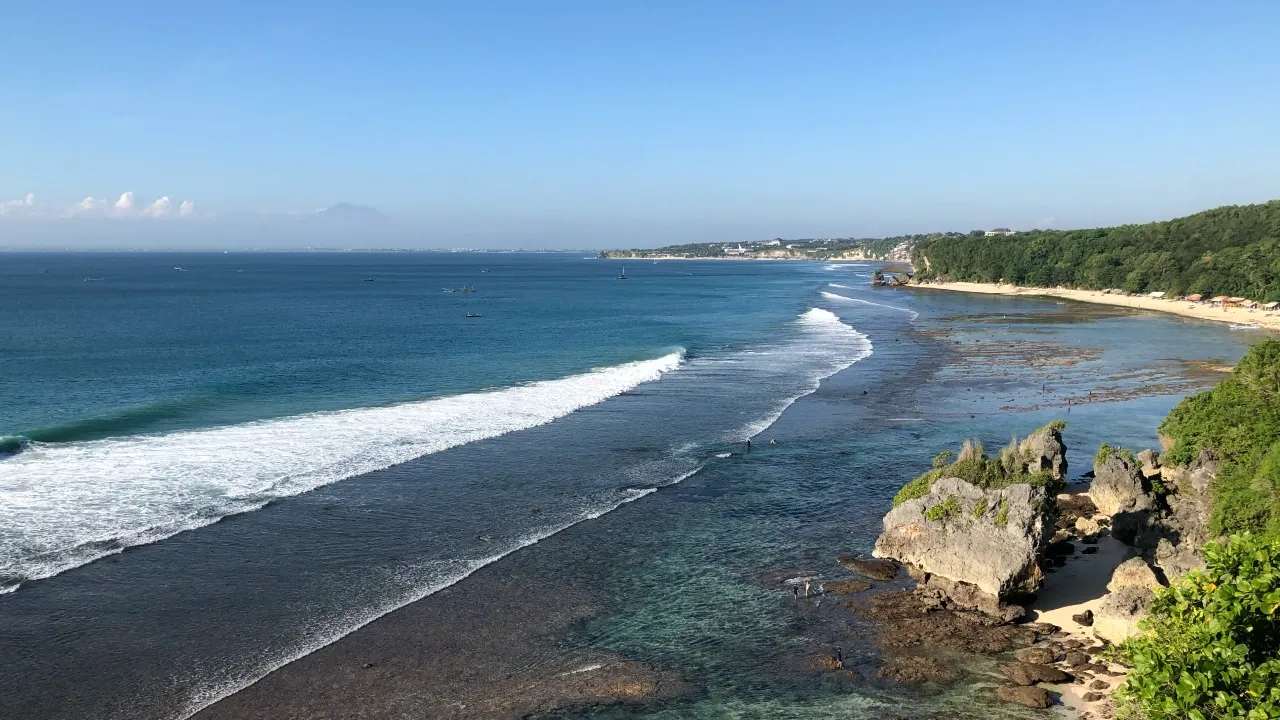
People who insist Bali is overrated usually spent their vacation between Canggu and Seminyak, sitting in traffic from one beach club to another before declaring they'd seen the island. If that's all you experience, the criticism is fair. Those neighborhoods have become polished tourism machines where almost every second storefront sells specialty coffee, boutique fitness or another brunch menu that could have been copied from Australia. Drive inland for less than an hour and that version of Bali starts to disappear. Rice terraces replace villa compounds, temple ceremonies interrupt the road, and nobody seems remotely bothered by it.
Most first visits still revolve around the Bukit Peninsula, Uluwatu and the southwest coast because the combination is hard to beat. Surfers paddle out at Uluwatu, Padang Padang and Bingin before sunrise, beginners get tossed around at Kuta, and everyone else settles into slow mornings beside a private villa pool before drifting between cafes and sunset bars. It sounds like an overused travel fantasy until you're living it for a week. The routine is ridiculously easy to fall into.
Come here picturing deserted sand and complete silence, and you will spend half the trip irritated. Construction starts early, scooters and cars clog roads that were never designed for this many vehicles, and some famous viewpoints have become lines of people waiting for exactly the same photograph. Lombok makes far more sense if you want empty stretches of sand and long quiet afternoons. Bali stopped being that island years ago.
One reason opinions about Bali vary so wildly is that people describe completely different places. Ubud attracts artists, yoga retreats and people happy to spend an afternoon watching rain fall over jungle valleys. Sanur moves at a gentler pace where mornings belong to cyclists and retirees instead of influencers. Amed barely resembles the south at all, with black volcanic beaches, fishing boats and divers heading offshore before breakfast. Even within the tourist belt, Seminyak and Canggu feel like different countries separated by a short drive and a long traffic jam.
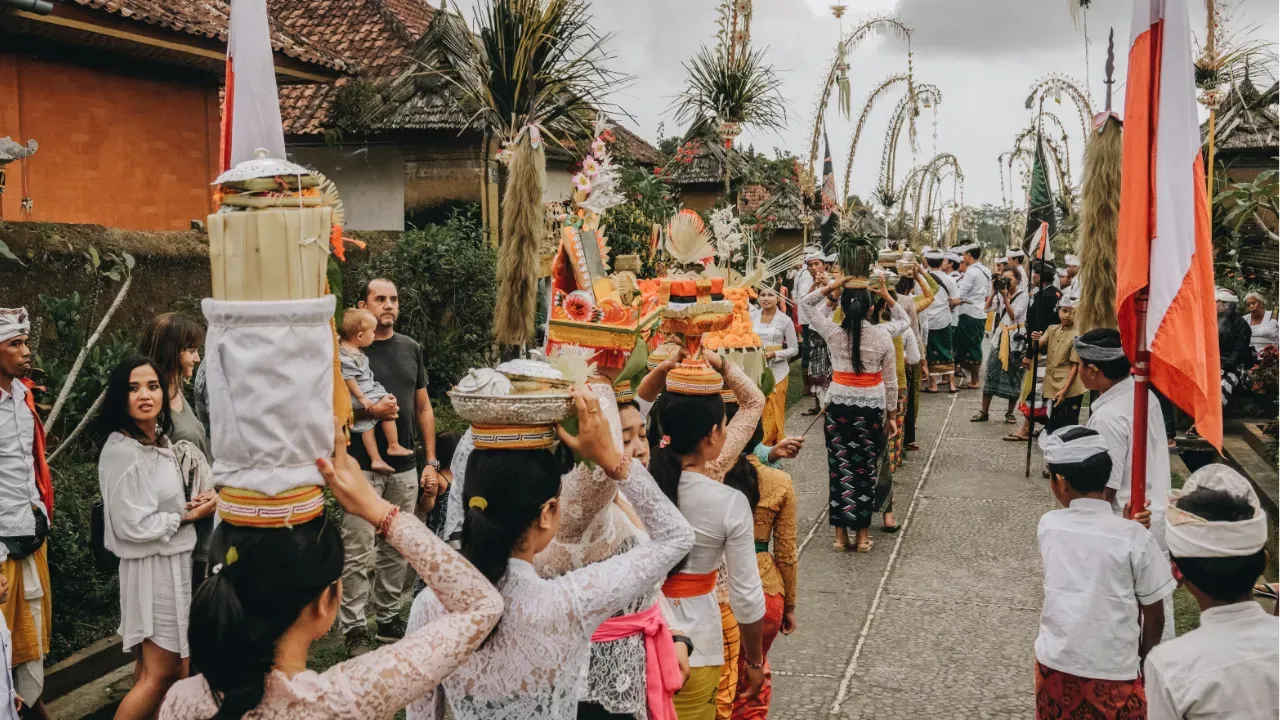
Spend a few mornings outside the tourist areas. Before shops open, women place small woven offerings filled with flowers and rice outside homes, scooters and restaurants while incense drifts through the street. Schoolchildren weave around processions without breaking stride because this is ordinary life, not a performance for visitors. A gamelan rehearsal echoes from a banjar hall, somebody sweeps yesterday's leaves into a neat pile, and the convenience store opens right beside a temple entrance.
The food deserves far more attention than it usually gets. Visitors happily spend weeks eating smoothie bowls and imported brunch while ignoring warungs (small family-run eateries) serving babi guling, ayam betutu or nasi campur that locals line up for at lunchtime. Some of the island's best meals come from family kitchens with plastic chairs, handwritten menus and absolutely no interest in becoming famous online. Pak Malen in Seminyak has a line out the door by noon, and a plate costs a few dollars.
Late afternoon tells you almost everything about the island. Scooters stream toward the coast carrying surfboards balanced between riders, families head to the beach fully dressed to watch the sunset, fishermen prepare boats along Jimbaran while beach clubs compete to turn the same orange sky into a private event. Walk a few hundred meters away and somebody is rehearsing for a temple ceremony that has nothing to do with tourism.
Airport Shutdown
Nyepi is one of the few public holidays anywhere in the world that closes an international airport. Flights stop, ferries stop, and even people already on the island stay where they are until the next morning. Hotels prepare days in advance by stocking kitchens, adjusting staff schedules and reminding guests that checking out for a walk is not an option. If your flight lands close to Nyepi, move it.
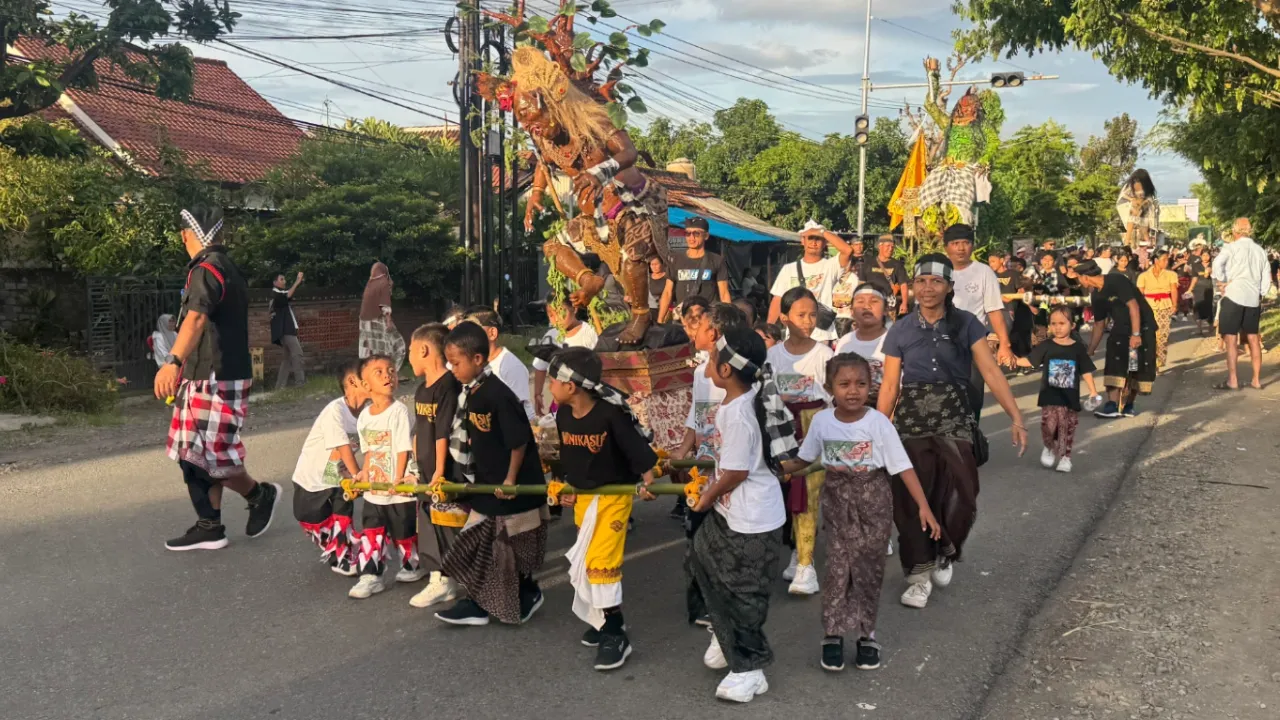
The evening before Nyepi is the complete opposite. After sunset, villages fill with ogoh ogoh parades where giant hand-built demons sway through the streets on bamboo platforms while gamelan drums, shouting and fireworks push the noise even higher. Months of work go into figures that often mock greed, corruption or other human failings rather than simply looking frightening. The parade is meant to draw negative forces out into the open before the island falls silent the next morning.
The interesting part is how seriously everyone takes it. Luxury resorts, roadside guesthouses and local families all follow the same rules, even though the experience is different for each of them. Staff still cook meals and keep essential services running, but curtains are often drawn after dark and outdoor lighting is turned off. Nobody is trying to turn the day into a tourist attraction.
For photographers and people who spend every vacation chasing activities, Nyepi can feel frustrating because there is almost nothing to do beyond reading, swimming, talking or sitting quietly on a balcony. That is why some travelers plan their entire trip around it. Hotels along the south coast book out months ahead for the night of the ogoh ogoh parades.
Where to Stay in Bali
- Mountains, waterfalls, cool weather
Munduk
Munduk is high in the mountains, surrounded by coffee plantations, waterfalls and winding roads instead of beaches. Mornings are often cool enough for a light jacket and afternoons are best spent hiking rather than sitting by a pool. It can rain at a moment's notice. The roads can be steep, so rent a scooter only if you are an experienced rider.
Good for: Waterfalls, hiking, mountain scenery.
Skip if: You are looking for a beach holiday. There is no beach.
- Surfing, sunsets, quiet
Kedungu
Past Tanah Lot, Kedungu has long beaches, rice fields and uncrowded surf breaks in place of the constant movement of Canggu. Development has accelerated, but the area still feels far more open than the west coast hotspots. Restaurants are scattered and evenings are quiet, so you will drive for dinner most nights.
Good for: Surfing, sunsets, peaceful stays.
Skip if: You want shopping, nightlife or easy walking.
- Surfing, cliffs, beach clubs
Uluwatu
Uluwatu stretches across the Bukit Peninsula rather than one compact town, with surf breaks, cliffside temples and beach clubs scattered between hotels, villas and building sites. Distances are longer than they look and walking is rarely practical. Surfers love having famous breaks close together. Everyone else needs to enjoy driving.
Good for: Advanced surfing, clifftop views, beach hopping.
Skip if: You want a walkable base without renting transport.
- Surfing, quiet, villas
Seseh
Seseh is one of the last stretches of coastline near Canggu where village life still outweighs tourism, although development is moving in quickly. The beach is popular with surfers and sunset walkers rather than beach clubs, and evenings stay remarkably quiet. Shops and restaurants are limited, so you'll drive almost everywhere.
Good for: Quiet villas, surfing, slower pace.
Skip if: You want nightlife and lots of dining within walking distance.
- Surfing, cafes, new villas
Pererenan
Immediately west of Canggu, Pererenan is calmer than Canggu once you leave the main roads, but it is not the village it was. Development has caught up: most of the rice fields have gone to villas and cafes, and the crowd on Pererenan Beach at sunrise is mostly foreign. Traffic is lighter than central Canggu, and the gap narrows every year.
Good for: Surfing, cafes, quieter long stays.
Skip if: You want to walk to busy nightlife every evening.
- Surfing, cafes, nightlife
Canggu
Canggu has become Bali's social center, where surf breaks, coworking spaces, fitness studios and late nights all compete for the same narrow roads. Walking only works within your immediate neighborhood because the area sprawls between Berawa, Batu Bolong and Pererenan. Traffic is part of daily life here. Expect to use a scooter or ride-hailing app constantly.
Good for: Surfing, cafes, nightlife, digital nomad stays.
Skip if: You dislike traffic, noise or heavily touristed areas.
- Dining, shopping, beach clubs
Seminyak
Seminyak is between Kuta's chaos and Canggu's constant hype, with restaurants, boutiques and beach clubs packed into a relatively compact area. Jalan Kayu Aya stays walkable until traffic builds later in the day, when even short taxi rides become slow. The beach is best for sunset rather than swimming. Stay a few streets inland if you value quiet nights.
Good for: Restaurants, shopping, sunset beach walks.
Skip if: You want a quiet village or traditional Balinese atmosphere.
- Seafood, beaches, families
Jimbaran
Jimbaran centers around a broad sheltered bay where mornings are quiet and evenings revolve around seafood restaurants on the sand. Swimming is easier here than along much of the west coast because the surf stays calmer. Outside the beachfront everything spreads out quickly, so you'll need transport most days.
Good for: Seafood dinners, swimming, relaxed beach stays.
Skip if: You want nightlife within walking distance.
- Beginner surfing, nightlife, cheap
Kuta
Kuta is still popular with first-time surfers and travelers who care more about value than atmosphere. The wide sandy beach is one of the easiest places on the island to learn, while Legian Street stays busy long after dark. Parts of the area feel tired and relentlessly commercial. That is unlikely to change.
Good for: Learning to surf, nightlife, cheap stays.
Skip if: You want boutique hotels or peaceful evenings.
- Resorts, beaches, families
Nusa Dua
Nusa Dua is Bali's purpose-built resort enclave, where gated hotels, wide sidewalks and well-kept beaches create a very different experience from the rest of the south. The reef takes the swell out, so the swimming is the calmest in the south, and it is quieter than Seminyak or Canggu. It can also feel sealed off from everyday Balinese life. Most people leave the resort zone only for day trips.
Good for: Resort stays, swimming, family trips.
Skip if: You want local restaurants and neighborhood atmosphere.
- Culture, wellness, rice terraces
Ubud
Ubud remains the island's cultural center, although the middle of town feels busy for much of the day. Around Monkey Forest Road you'll find yoga studios, galleries and restaurants, while villages only a few minutes away are noticeably quieter. Beach access is not part of the deal. Stay a few minutes outside the center and you get the same access without the main-road traffic.
Good for: Balinese culture, yoga, scenic walks.
Skip if: You want beach access or late-night nightlife.
- Beach, cycling, families
Sanur
Sanur faces the sunrise instead of the sunset and moves at a slower pace than the west coast. The beachfront path is excellent for walking and cycling, while the reef keeps the water calmer for swimming. Evenings stay quiet and restaurants wind down early.
Good for: Cycling, calm beaches, family stays.
Skip if: You want beach clubs and late nights.
- Rice terraces, hiking, quiet
Sidemen
Sidemen feels like the version of inland Bali that many people expect Ubud to be. Small valleys, rice terraces and village roads replace shopping streets, and evenings are remarkably quiet. There is very little nightlife or shopping.
Good for: Hiking, rice terraces, peaceful stays.
Skip if: You want restaurants and nightlife within walking distance.
- Island, snorkeling, diving
Nusa Lembongan
Nusa Lembongan offers a slower island atmosphere only a short boat ride from Bali, with clear water, reef breaks and easy access to snorkeling trips. Most people move around by scooter because the island is small. Roads are narrow but quiet.
Good for: Snorkeling, diving, island escape.
Skip if: You want shopping or nightlife.
- Cliffs, viewpoints, adventure
Nusa Penida
Nusa Penida attracts travelers willing to trade comfort for dramatic scenery, rough roads and some of the island's most photographed viewpoints. Day trippers crowd the famous spots during the middle of the day, but staying overnight changes the experience completely. Getting around takes longer than the map suggests, and the run out to Kelingking Beach is about an hour each way from the harbor.
Good for: Clifftop viewpoints, adventure, overnight island trips.
Skip if: You want easy transport or smooth roads.
- Diving, snorkeling, quiet
Amed
Amed strings together several fishing villages along Bali's northeast coast, where traditional jukung boats still line the black sand beaches each morning. Divers and freedivers base themselves here for the Liberty wreck and nearby reefs rather than nightlife. The drive from the airport takes about three hours.
Good for: Diving, snorkeling, relaxed coastal stays.
Skip if: You want nightlife or quick access to the south.
Living in Bali
Frequently Asked Questions
Planning & moving around
-
How many days do I need in Bali?
Seven days is the floor for a trip that splits between the coast and Ubud. Under five and you spend most of it in traffic and at the airport. Ten to fourteen buys you somewhere quiet like Sidemen or Amed on top.
-
Is the trash problem in Bali as bad as people say?
On the west coast beaches in wet season, yes. From November to March the currents dump plastic onto Kuta and Seminyak daily, resorts in Nusa Dua clean their own frontage every morning, and inland roadsides and waterways stay littered whatever the season.
-
What are the essential ride-hailing apps for getting around Bali?
Install both Gojek and Grab before you land. Gojek has more drivers in Canggu and Ubud, Grab is usually better for airport pickups, and running both keeps you out of the hands of the local taxi cartels.
-
Is Bali a good place for digital nomads to settle?
Excellent coworking facilities and laptop-friendly cafes make it a top spot for remote work, especially in Ubud and Canggu. Monthly villa rentals are available across all price brackets, though high demand has driven up costs in central zones. Infrastructure is reliable, though tropical downpours occasionally trigger short power outages.
-
Are Nusa Lembongan and Nusa Penida actually part of Bali?
Yes. Both are in Klungkung Regency, so they are administratively part of Bali, but you get there by fast boat from Sanur: about 30 minutes to Lembongan, 45 to Penida. Crossings get canceled when the swell is up, so treat them as separate trips with an overnight rather than a day out.
-
What are the best day trips in Bali?
Jatiluwih's rice terraces are UNESCO-listed and far less mobbed than Tegalalang, though the tour buses still arrive mid-morning. Nusa Penida is reachable by speedboat, but the viewpoints are jammed by midday, so go early or stay the night. Sidemen is the quiet one: farming valleys under Mount Agung, and almost nobody there.
-
Which markets in Bali are worth visiting?
The Ubud Art Market is useful for sourcing woven bags and handicrafts, though initial asking prices are highly inflated and require firm, polite bartering. For an authentic window into daily life, visit Badung Market in Denpasar, which runs continuously and focuses on fresh produce and spices. Canggu hosts smaller, curated design markets like Love Anchor for clothing and independent accessories.
-
Where can I store my luggage in Bali between checkout and my flight?
Almost every hotel and villa will hold your bags at reception for the day at no charge. If you have checked out of somewhere that won't, Bounce has partner drop-off points around Canggu, Seminyak and near the airport.
-
What is the most common mistake first-time visitors make in Bali?
Booking the whole stay in Canggu or Seminyak and calling it Bali. Both are gridlocked and heavily developed, and you lose hours a day to it, so split the trip with Ubud or Sidemen and you will actually see the island.
Safety & medical
-
Is it safe to swim at Bali's beaches?
West coast spots like Canggu and Uluwatu have powerful currents and sudden rip tides that pull swimmers out to sea. Stick to beaches monitored by active lifeguards, pay attention to the red flags, and do not assume calm-looking water is safe.
-
Are reports of violent crime against foreigners in Bali something to worry about?
High-profile headlines usually involve targeted disputes within foreign groups rather than random violence against tourists. Your day-to-day safety risks remain petty theft, opportunistic bag snatching from scooters, and transport-related incidents. Exercise standard situational awareness and keep your valuables out of sight when walking near roads.
-
What happens if I get sick in Bali?
BIMC Hospital in Kuta and Siloam in Denpasar are the two private hospitals most foreigners end up at, both with English-speaking staff. Guardian and Kimia Farma pharmacies handle everyday things over the counter. Complex surgery and serious trauma often mean a medical evacuation to Singapore, so good travel insurance matters here.
-
What is Bali Belly and how do you avoid it?
It's traveler's diarrhea, from food or water carrying bacteria your gut hasn't met. Never drink the tap water, and don't brush your teeth with it either. Skip ice at roadside stalls and eat where there's a line, because turnover matters more than how clean the place looks. Pack rehydration salts, and see a clinic if it runs past two days.
-
Is it true that travelers face lethal risks from drinking arak in Bali?
Accidental deaths occur due to methanol poisoning from home-brewed or illegally altered batches of arak, not the traditional spirit itself. The risk concentrates in cheap, unregulated cocktails or free-pour drinks offered at low-end nightlife venues looking to cut costs. Stick to commercial establishments, beer, or drinks poured from clearly sealed import bottles.
-
Is it safe to walk around Bali at night?
Main tourist strips are fine, though you should watch the broken sidewalks and open storm drains more than the people. The real risk after dark is phone snatching from scooters on unlit side streets.
-
Are stray dogs in Bali something to worry about?
Free-roaming dogs are a fixture across the island, with most being territorial but generally indifferent to passersby. Avoid petting or interacting with them, as rabies remains an active concern in Indonesia. If you receive a bite or scratch, wash the wound thoroughly and seek immediate medical care for a post-exposure vaccine series.
-
How bad is the air quality from burning trash in Bali?
Trash and field burning happens in rural areas and on village outskirts, so you get patches of smoke rather than a problem across the island. The coast clears on the sea breeze, while inland valleys hold it during dry spells.
Laws & local norms
-
What are the drug laws in Bali?
Indonesia hands down decades in prison for drug offenses, and the death penalty is on the books for trafficking. That includes cannabis and CBD products that are legal at home, and airport customs is thorough.
-
Can you legally ride a scooter without a license in Bali?
You need a motorcycle license from home plus an International Driving Permit. Rental shops will hand over the keys for cash without asking for either, but riding unlicensed gives your insurer grounds to refuse the claim, and a scooter injury here is not a cheap thing to self-fund. Police run license checkpoints in Canggu and Seminyak.
-
What is the dress code for temples in Bali?
Cover your shoulders and knees, and wear a sarong and sash at the temple itself. The major sites lend or rent both at the entrance, so you don't need to buy your own. Rural villages are more relaxed than the big temples, though dressing modestly there still goes down well.
Money & costs
-
Do I have to pay the Bali tourist levy?
Yes. Every foreign visitor pays 150,000 rupiah once per trip, children and infants included, on top of any visa fee. Pay it at lovebali.baliprov.go.id before you fly and save the QR code, because the airport counter is slower and the lookalike sites charge more. Holders of KITAS, KITAP, student and diplomatic visas are exempt. Officers spot-check the code at the big attractions.
-
How much money do you need for a week in Bali?
Budget travelers get by on about 30 USD a day, mid-range is closer to 100. A 200 USD day looks like a villa with a pool, a private driver for the afternoon, lunch at a warung and dinner at a beach club with a bar tab. Warungs and guesthouses stay genuinely cheap whatever your budget. It's the western cafes and the daily Grab rides that quietly add up.
-
What are the typical ATM fees and payment norms in Bali?
Cards work in hotels, beach clubs and anywhere with a real till. Warungs, markets, parking attendants and most drivers want cash. Use ATMs attached to a bank branch, BNI, BCA or Mandiri, and skip the standalone machines inside convenience stores, where skimmers turn up. When the screen offers to charge you in your home currency, decline it and take rupiah, because that conversion costs several percent. Some places add two to three percent for card payments, so ask before you hand the card over.
Culture & etiquette
-
Is Bali welcoming to LGBTQ+ travelers?
The island is highly tolerant, particularly within the hospitality sectors of Seminyak and Canggu, which feature several dedicated gay bars. However, Indonesia remains socially conservative, and public displays of affection are frowned upon regardless of sexual orientation. Discretion is expected when traveling through rural villages and religious sites.
-
What language do people speak in Bali?
Bahasa Indonesia everywhere, Balinese between locals. English is fluent across the tourism industry, so you won't struggle, but halo and terima kasih still land well.
Food & drink
-
Where do locals actually eat in Bali?
Warungs: small family-run places serving Indonesian staples for a few dollars. Look for the ones with the dishes out behind glass, where you point at what you want and they build a plate of nasi campur around it. Turnover is what to watch, not the decor.
-
What are the best local foods to try in Bali?
Babi guling, slow-roasted suckling pig, is the one worth planning a lunch around, and the dedicated warungs sell out by early afternoon. Sate lilit is the other: minced fish or chicken pressed onto lemongrass stalks. Order where there's a line.
-
Is Bali vegan-friendly?
Canggu and Ubud have the most vegan places on the island, and plenty of them are good rather than merely plant-based. Traditional Balinese cooking leans on tempeh and tofu anyway. Say no shrimp paste and no fish sauce when you order at a warung, or you will get both.
-
Where can I eat late at night in Bali?
Canggu, Seminyak and Kuta keep kitchens going past midnight along the main roads. Circle K is open 24 hours when the options run thin. Ubud and the quieter coasts wind down early, though a few places on Monkey Forest Road serve until about eleven.
Families & kids
-
Is Bali a good place to travel with kids?
Local culture places a high value on family, meaning children are warmly welcomed in almost every restaurant and public space. However, broken sidewalks, intense humidity, and chaotic traffic can make daily logistics stressful. You will rely on ride-hailing vehicles rather than walking, so build plenty of pool time into your schedule.
-
Is Bali manageable with a stroller?
Not really. High curbs, missing sidewalk slabs and scooters parked across the walkway make it hard work. Resorts and the modern malls like Beachwalk are fine, but bring a carrier for markets, temples and anywhere with a village road.
-
What type of accommodation works best for families in Bali?
Renting a private villa offers excellent value for families, providing multiple bedrooms, a private kitchen, and enclosed pool spaces. Alternatively, family resorts in Sanur and Nusa Dua offer supervised kids clubs, shallow pools, and direct beach access. Look for places slightly removed from main party strips to ensure quiet nights.
-
What actually works for a half-day with young kids in Bali?
Spending a morning at Waterbom Bali in Kuta offers a managed environment with water slides and splash pads built for all ages. Alternatively, the calm, reef-protected waters of Sanur beach are excellent for wading and building sandcastles before the midday heat sets in. Avoid scheduling long car trips or hot temple tours, as traffic delays cause easy meltdowns.
Staying longer
-
Which neighborhood in Bali should I stay in?
For a first trip, split it: three or four nights on the coast, then the same in Ubud. Canggu is the default recommendation and the one people most often regret, because the traffic on Batu Bolong eats the day. Sanur if you have kids, Uluwatu if you surf, Amed if you dive, Sidemen if you want none of it.
After dark
-
Are there formal red-light districts in Bali?
No designated zone, but the strip around Legian Street in Kuta has an obvious concentration of adult venues and street prostitution after midnight. Some bars there also market massage services that are not massage services.
-
Where do nights typically go wrong for travelers in Bali?
Problems usually stem from mixing heavy alcohol consumption with scooter rentals, leading to severe accidents that insurance will not cover. Petty criminals also target intoxicated tourists walking home from clubs by offering unofficial transport or crowding them to lift wallets. Stick to registered ride-hailing drivers and keep your group together when leaving venues.
-
What are the best areas for nightlife in Bali?
Canggu is the hub for casual bars and beachfront venues like Finns, while Seminyak offers multi-story clubs like ShiShi and sophisticated cocktail spots. Uluwatu hosts cliffside venues like Savaya that bring in international electronic music acts. Ubud stays quiet after dark, focusing instead on live acoustic music and early closing times.
-
Which dating apps are most popular in Bali?
Tinder and Bumble, concentrated in the southern tourist areas and among the resident expat crowd. Be aware that some profiles are soliciting paid services.