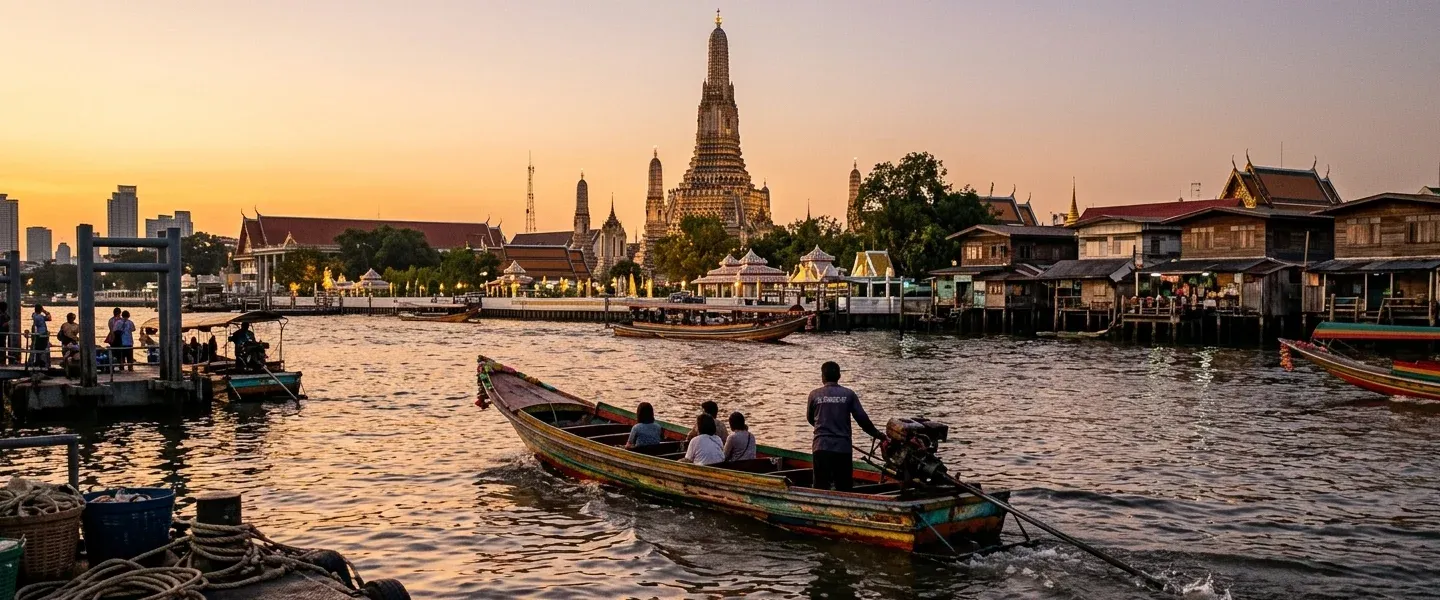
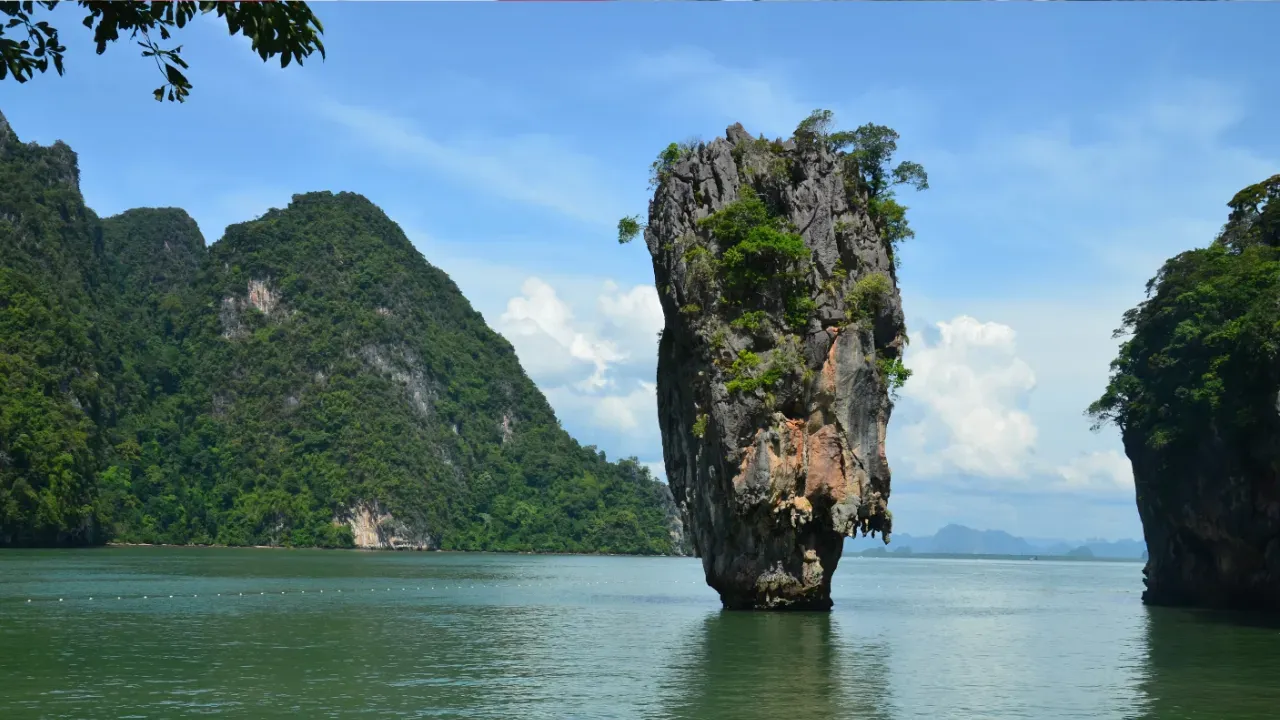
Thailand Right Now
Visa-free stay reduced to 30 days for eligible nationalities, down from the previous 60-day allowance.
Loy Krathong
Interest in travel to Thailand remained about the same as a year ago, suggesting demand is holding steady.
When to go to Thailand
November to February is the best time to visit most of Thailand: cool, dry and reliably sunny. The Gulf islands are the exception, because Koh Samui is wettest from October to December while the Andaman coast is at its best. September is the quietest and cheapest month of the year.
Best monthsAvoid
| Region | Jan | Feb | Mar | Apr | May | Jun | Jul | Aug | Sep | Oct | Nov | Dec |
|---|---|---|---|---|---|---|---|---|---|---|---|---|
| Bangkok | Best month32°1 rainy daysAir quality 85 | Best month33°2 rainy daysAir quality 95 | Fine34°3 rainy daysAir quality 80 | Avoid35°5 rainy daysAir quality 65 | Avoid34°11 rainy daysAir quality 55 | Fine33°11 rainy daysAir quality 45 | Fine33°12 rainy daysAir quality 40 | Fine33°13 rainy daysAir quality 40 | Avoid32°14 rainy daysAir quality 50 | Avoid32°10 rainy daysAir quality 60 | Best month31°4 rainy daysAir quality 75 | Best month31°1 rainy daysAir quality 85 |
| Phuket | Best month32°5 rainy daysAir quality 52 | Best month33°4 rainy daysAir quality 54 | Fine33°6 rainy daysAir quality 56 | Fine33°11 rainy daysAir quality 54 | Avoid32°19 rainy daysAir quality 44 | Avoid32°19 rainy daysAir quality 39 | Avoid31°19 rainy daysAir quality 36 | Avoid31°19 rainy daysAir quality 34 | Avoid31°22 rainy daysAir quality 35 | Fine31°22 rainy daysAir quality 38 | Best month31°15 rainy daysAir quality 44 | Best month31°9 rainy daysAir quality 49 |
| Krabi | Best month31°4 rainy daysAir quality 35 | Best month32°3 rainy daysAir quality 40 | Best month33°5 rainy daysAir quality 45 | Fine33°9 rainy daysAir quality 40 | Fine32°16 rainy daysAir quality 30 | Fine32°15 rainy daysAir quality 25 | Fine31°16 rainy daysAir quality 25 | Fine31°16 rainy daysAir quality 25 | Avoid31°18 rainy daysAir quality 25 | Avoid31°18 rainy daysAir quality 30 | Fine30°12 rainy daysAir quality 30 | Best month30°7 rainy daysAir quality 30 |
| Koh Samui | Fine29°12 rainy days | Best month30°6 rainy days | Best month31°7 rainy days | Best month32°8 rainy days | Fine32°11 rainy days | Best month32°10 rainy days | Best month31°10 rainy days | Best month31°10 rainy days | Fine31°11 rainy days | Avoid30°16 rainy days | Avoid29°19 rainy days | Avoid29°14 rainy days |
| Chiang Mai | Best month30°1 rainy daysAir quality 90 | Best month33°1 rainy daysAir quality 120 | Avoid36°2 rainy daysAir quality 160 | Avoid37°6 rainy daysAir quality 100 | Fine34°14 rainy daysAir quality 60 | Fine32°16 rainy daysAir quality 40 | Fine31°19 rainy daysAir quality 40 | Fine31°20 rainy daysAir quality 40 | Fine31°16 rainy daysAir quality 40 | Fine31°8 rainy daysAir quality 50 | Best month30°3 rainy daysAir quality 60 | Best month29°1 rainy daysAir quality 70 |
| Chiang Rai | Best month29°1 rainy daysAir quality 65 | Best month32°1 rainy daysAir quality 110 | Avoid35°3 rainy daysAir quality 170 | Avoid36°9 rainy daysAir quality 120 | Fine33°17 rainy daysAir quality 60 | Fine32°19 rainy daysAir quality 40 | Fine31°20 rainy daysAir quality 35 | Avoid31°21 rainy daysAir quality 35 | Avoid31°16 rainy daysAir quality 35 | Fine30°9 rainy daysAir quality 50 | Best month29°4 rainy daysAir quality 60 | Best month28°1 rainy daysAir quality 70 |
| Pattaya | Best month31°2 rainy daysAir quality 55 | Best month31°2 rainy daysAir quality 60 | Avoid32°4 rainy daysAir quality 70 | Best month33°6 rainy daysAir quality 65 | Avoid33°10 rainy daysAir quality 55 | Fine32°11 rainy daysAir quality 45 | Fine32°11 rainy daysAir quality 45 | Fine32°11 rainy daysAir quality 45 | Avoid31°14 rainy daysAir quality 45 | Avoid31°12 rainy daysAir quality 45 | Best month31°5 rainy daysAir quality 50 | Best month30°2 rainy daysAir quality 50 |
| Koh Chang | Best month31°3 rainy daysAir quality 32 | Best month31°4 rainy daysAir quality 36 | Best month32°6 rainy daysAir quality 43 | Best month33°9 rainy daysAir quality 44 | Fine32°16 rainy daysAir quality 37 | Avoid31°19 rainy daysAir quality 30 | Avoid30°20 rainy daysAir quality 29 | Avoid30°20 rainy daysAir quality 29 | Avoid30°19 rainy daysAir quality 29 | Fine31°15 rainy daysAir quality 30 | Best month31°7 rainy daysAir quality 30 | Best month31°4 rainy daysAir quality 30 |
Each month shows the average daily high, and a weather icon with the number of rainy days.
Air quality is the monthly average on the US AQI scale: 0 to 50 good51 to 100 moderate101 to 150 unhealthy for sensitive groupsover 150 unhealthy
Need to Know
- Population
- 65,951,210 DOPA · 2024 (registered)
- International visitors
- 32,974,321 (2025) -7.2% YoY MOTS · Last updated: 2026
- Annual visitors per resident
- 0.50× Annual international visitors divided by the population
Top visitor markets
- Malaysia 13.7%
- China 13.6%
- India 7.5%
- Russia 5.8%
- South Korea 4.7%

Source: MOTS · 2025
Annual visitor arrivals
- 2019 39,916,251
- 2020 6,702,396 COVID
- 2021 427,869 COVID
- 2022 11,153,026
- 2023 28,150,016 +152.4%
- 2024 35,546,000 +26.3%
- 2025 32,974,321 -7.2%
International visitor arrivals. COVID years (2020-2021) are included for completeness. Source: MOTS · Last updated: 2026
- Currency
- Thai baht (THB)
- Language
- Thai; English widely spoken in Bangkok and major tourist areas
- Tap water
- Bottled water recommended
- Time zone
- ICT (UTC+7)
- Power plug
- Type A / B / C / F / O, 220V
- Dialing code
- +66
- Driving side
- Left
- Tipping
- Not expected at local places, but upscale restaurants often add a 10% service charge. Rounding up or leaving 20-50 THB is common for good service.
- Internet
- Fast 4G and 5G in Bangkok, Chiang Mai, Phuket, and most tourist areas. Fibre and cafe Wi-Fi are usually reliable, but speeds drop on smaller islands and remote rural routes.
- Emergency
- 191 police emergency, 1155 Tourist Police, 1669 ambulance and rescue
When not to go
-
Skip Songkran if you hate chaos
Mid-Apr · shifts yearlyThailand more or less shuts into festival mode during Songkran. Roads clog with domestic travel, hotels spike in price, and entire tourist zones turn into all-day water fights whether you join or not. It's fun if you're there for the party, but terrible for a calm beach trip, cultural sightseeing, or moving around the country efficiently.
Upcoming Holidays
Public holidays & observances, next 12 months
Thailand Visa & Entry
Getting To Thailand
-
Bangkok Suvarnabhumi International Airport (BKK)
35 km east of Bangkok city center
The Airport Rail Link is the fastest and cheapest way into the city if your accommodation is near a BTS or MRT station. Taxis are readily available 24/7, but expect potential traffic delays and ensure the meter is used. Grab is a reliable alternative, with upfront pricing.
-
Don Mueang International Airport (DMK)
24 km north of Bangkok city center
DMK is primarily for domestic flights and some regional international routes. Taxis and Grab are convenient, but traffic can be heavy. The A1 bus connects to Mo Chit BTS, and the A4 bus goes to Khao San Road, offering budget-friendly options.
-
Phuket International Airport (HKT)
38 km north of Patong Beach
Taxis from HKT often have fixed prices to popular areas like Patong. Grab is widely used and offers competitive pricing. The Phuket Smart Bus is the cheapest option but makes multiple stops and may not drop you directly at your hotel.
-
Chiang Mai International Airport (CNX)
3-4 km southwest of Chiang Mai Old City
CNX is very close to the city, making transfers quick and easy. Airport taxis offer a flat rate, while Grab provides convenience with upfront pricing. Red songthaews are a local, budget-friendly option, but expect shared rides and potential detours.
-
Overland from Malaysia
Several crossings available, including Padang Besar and Sungai Kolok.
The Padang Besar crossing is easily accessible by train. Be aware of potential questioning if you have a history of frequent visits to Thailand when entering from Langkawi.
-
Overland from Laos
Multiple Friendship Bridges across the Mekong River, including Nong Khai-Vientiane and Chiang Khong-Huay Xai.
The Nong Khai-Vientiane Friendship Bridge is the busiest crossing. Not all land border crossings into Laos are open to foreign nationals, and a visa for Laos may be required in advance.
-
Overland from Cambodia
Major crossings at Aranyaprathet-Poipet and Hat Lek-Koh Kong.
The Aranyaprathet-Poipet crossing is notorious for scams and long lines; it's advisable to sort out your Cambodian visa beforehand. Land borders with Cambodia have experienced tensions and closures in the past, so check current conditions.
Safety Advice
Thailand is a safe country for most travelers, and the major governments rate the tourist areas at their lowest level of concern. The real dangers are everyday ones: motorbike and road accidents by a wide margin, then scams, petty theft and the sea. Two regions sit apart, the deep south and the Cambodian border, and a normal trip goes nowhere near either.
Emergency numbers
- Tourist Police (English)1155
- Police191
- Ambulance / medical1669
- Fire199
Travel Advisories
Natural disasters
- Monsoon rains between May and October cause flash floods and landslides, particularly in northern and mountainous areas.
- Earthquakes and tremors present risks in northern Thailand.
Health & vaccinations
- Drink spiking occurs in tourist areas, so keep drinks attended and avoid accepting open drinks from strangers.
- Methanol poisoning from tainted alcohol has caused fatalities, and it cannot be detected by taste or smell.
- Dangerous riptides and fatal jellyfish stings present risks along coastal areas during the rainy season.
Unrest & security
- Avoid the Yala, Pattani, and Narathiwat provinces due to active insurgency and martial law.
- Avoid the Thai-Cambodian border due to the risk of armed conflict.
- Avoid all political protests and demonstrations due to unpredictable civil unrest.
Transport & infrastructure
- Motorcycle accidents cause high fatality rates, and driving requires both a home country license and a 1968 international driving permit.
- Rental boat accidents happen due to overcrowding and poor maintenance on routes between the mainland and islands.
Other notes
- Criticizing the Thai monarchy is illegal and carries a long prison sentence.
- Possessing or using any vape or e-electronic cigarette is illegal and leads to heavy fines or detention.
- Recreational cannabis is illegal, and exporting it carries severe penalties including fines and imprisonment.
- Operating an unregistered drone carries fines up to 100,000 baht and potential prison time.
- Carrying over one hundred playing cards violates gambling laws and risks prosecution.
Always check your own government's official travel advice before traveling.
Seismically active region
Earthquakes
Parts of Thailand sit in an active seismic zone. The strongest earthquake near one of its destinations in the last 20 years was a magnitude 6.9 in 2011, near Chiang Rai. Most are minor and pass unnoticed, but strong ones do occur from time to time.
Source: U.S. Geological Survey · Updated August 2026
Money & Payments
Thailand is going cashless fast, but two things still quietly cost travelers money: the flat fee Thai banks add to every foreign-card ATM withdrawal, and the gap between a good money changer and the airport counter. Get those two right and paying here is easy.
-
Cards, cash and PromptPay
Visa and Mastercard are widely accepted at hotels, malls, chains and city restaurants, but street food, markets, songthaews and many smaller islands still run on cash. PromptPay QR is everywhere locals pay, but it needs a Thai bank account, so it rarely helps a visitor directly.
-
Beat the ฿220 ATM fee and bad exchange rates
Nearly every Thai bank adds a flat fee of about ฿220 to a foreign-card withdrawal, on top of your own bank's charge. Withdrawing the maximum in one go and changing cash at SuperRich rather than the airport both save more than most people expect, and our guide compares the current ATM fees bank by bank.
Costs in Thailand
Thailand is cheap for street food and for rent outside the islands. A plate at a street stall costs about THB 70 and a scooter a few hundred baht a day. Prices climb on Koh Samui and Phuket, and in central Bangkok.
Send money to Thailand

Compare Providers









Save money?
Sign up for our guide on how to save money on your next trip.
SIM Cards & Data
Best option for most travelers: an eSIM you set up before you arrive. You'll be online the moment you land, with no airport line and no tourist pricing.
Travel eSIMs Connect the second you land. Zero hassle. Skip the airport line and paperwork. Activate before you fly and land connected. Find the best eSIM →Prefer a local SIM?
Thailand has extensive 4G LTE coverage across most tourist areas, with 5G readily available in major cities like Bangkok, Chiang Mai, and Phuket. While rural and mountainous regions may occasionally experience weaker signals or 3G-only zones, speeds are generally reliable for navigation, ride-hailing, messaging, and video streaming.
-
AIS
AIS is Thailand's largest network and offers strong nationwide coverage, including remote areas and islands. A 15-day unlimited data plan costs around 699 THB.
-
TrueMove H
TrueMove H provides excellent 4G and 5G coverage in cities and popular beach destinations, having merged with dtac in 2023. An 8-day unlimited 5G internet plan costs about 499 THB.
-
dtac
dtac, now part of True Corporation, offers good coverage in major tourist centers and competitive pricing for shorter trips. An 8-day plan with 15GB at max speed costs about 299 THB.
What Thailand is Like
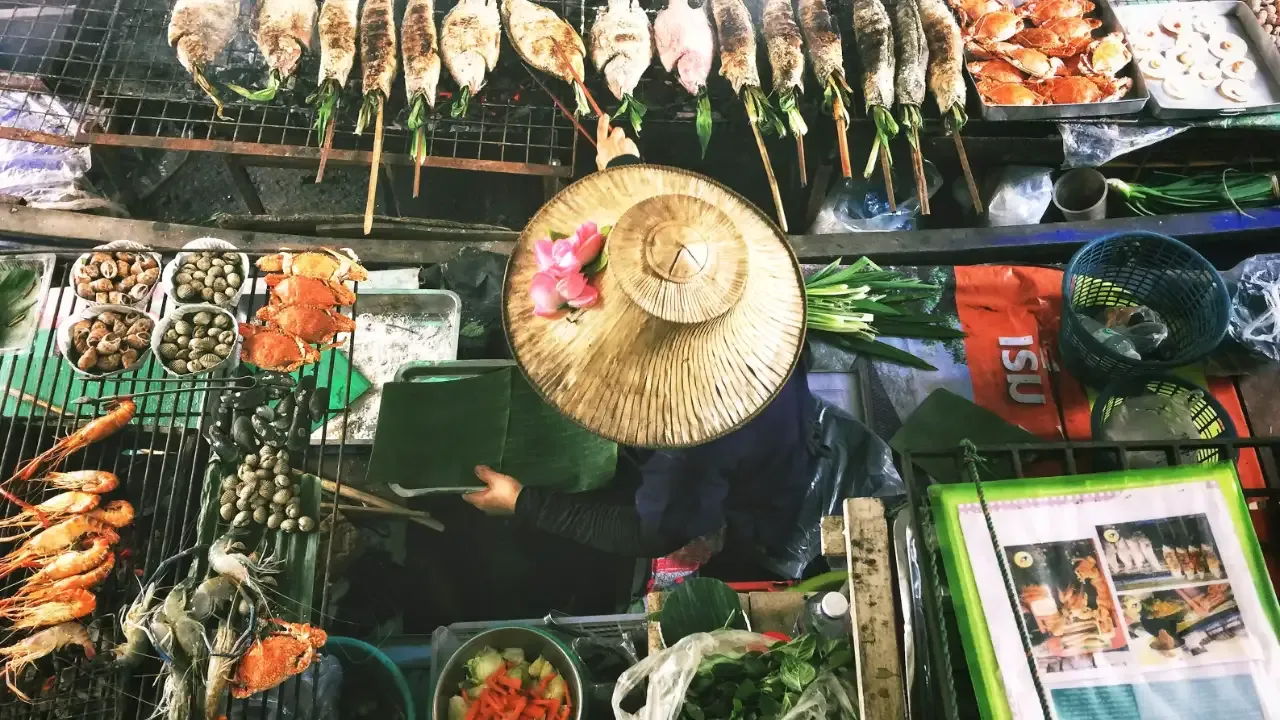
Thailand these days often feels like a country caught between its easygoing past and a future trying to balance mass tourism with local well-being. The famous Thai smile is still there, but in the heaviest tourist zones it can feel more transactional than warm. The government keeps pushing high-value tourism and year-round travel, trying to spread visitors beyond the dry season rush, but on the ground you still run into beach towns straining under the numbers. Some places are genuinely trying to shift toward slower, more sustainable tourism. Others are just trying to survive another busload arriving at sunset.
Thailand changes completely depending on where you land. The north around Chiang Mai and Chiang Rai moves at a slower pace, with cooler evenings, mountain roads, and food that leans earthy and mild compared to the south. Bowls of khao soi still justify the trip on their own, especially in small family-run spots where the curry stains the plastic tablecloth orange by lunchtime. Burning season is the catch. From March into April, smoke from agricultural fires can get bad enough that mountain views disappear entirely and people cut hikes short after a few hours outside.
Head south and the postcard version of Thailand takes over fast. Phuket, Krabi, Koh Phi Phi, and parts of Samui are built around beach traffic, boat tours, and nightlife that starts before sunset and keeps going long after the last ferry docks. The scenery still holds up when you catch it at the right hour, especially once the day-trippers clear out, but the overtourism is impossible to ignore in places where longtail boats idle bumper-to-bumper offshore. Even quieter islands like Koh Lanta feel split in two now, with laid-back beaches on one side and busy tourist strips charging European prices on the other.
Bangkok is loud, humid, messy, and far more addictive than people expect. The city works best when you stop trying to conquer it and let the day unfold around whatever alley, market, or food stall you drift into next. One hour you are wedged between office workers eating noodles under a BTS station, the next you are stuck in gridlock watching a monk scroll through his phone beside a luxury mall billboard. Street food still delivers some of the best meals in the country, even as parts of the old vendor scene keep getting squeezed by redevelopment and regulations. Digital nomads love Bangkok because the internet is fast, apartments are easy to rent short term, and daily life stays convenient even when the city feels completely unhinged.
Beyond the beach circuit and Bangkok, Isaan in the northeast feels like a different country entirely. Rice fields replace resorts, Khmer ruins sit half-empty in the afternoon heat, and dinners stretch over grilled meat, sticky rice, and enough chili to wreck anyone pretending they can handle spicy food. Foreign tourists barely scratch the surface here, which means interactions feel less polished and less pushy than in the south. Trains crawling through small provincial towns are part of the appeal. You are not racing between highlights in Isaan. You are watching farmers load sacks onto station platforms while someone hands you a plastic bag of iced coffee through the train window.
Thailand's brief cannabis free-for-all has mostly ended. Shops still exist, especially in tourist areas, but the rules tightened quickly and the legal situation keeps shifting. Public consumption can still land you in trouble, and anyone arriving expecting the anything-goes atmosphere from a couple of years ago is late to the party. The same uncertainty applies to visas. Thailand changes entry rules more often than most countries in the region, and long stays that looked straightforward a year ago can suddenly involve extra paperwork or tighter scrutiny.
Liveability
Thailand offers an affordable cost of living and a high quality of life, particularly appealing to expats and retirees. However, infrastructure can be a challenge, with traffic congestion and pollution being notable issues in urban areas.
Living in Thailand
Sustainability
Thailand struggles significantly with plastic pollution, which clogs its beaches and oceans, harming marine life and the tourism industry. Air quality, particularly in northern cities like Chiang Mai, is a major concern due to seasonal agricultural burning and vehicle emissions, often reaching hazardous levels.
Frequently Asked Questions
Planning & moving around
-
How do you travel between cities in Thailand?
Domestic flights are efficient and widely used for intercity travel, especially for longer distances like Bangkok to Chiang Mai or the southern islands. Thai Airways and Bangkok Airways are known for reliability, while AirAsia and Nok Air offer budget-friendly options. Long-distance buses and trains are also available, particularly for routes within regions or for those on a tighter budget, though they take considerably longer. Driving yourself is generally not recommended due to chaotic traffic and varying road quality, plus you need a specific license.
-
How reliable are domestic flights in Thailand, and which airline should I use?
Domestic flights in Thailand are generally reliable and punctual, with good amenities at airports. For full-service and comfort, Thai Airways and Bangkok Airways are solid choices, often operating from Bangkok's Suvarnabhumi Airport. If you are looking for lower fares, Thai AirAsia, Nok Air, and Thai Vietjet Air are good budget options, though they might have less legroom and occasionally glitchy websites. Booking in advance and using comparison sites helps secure the best deals.
-
Do I need an International Driving Permit for Thailand?
Yes, you absolutely need an International Driving Permit (IDP) to legally drive any vehicle in Thailand, including scooters and motorbikes. Your national driving license alone is not sufficient; the IDP acts as a translation and must be accompanied by your original license. For motorbikes or scooters, your IDP must specifically have the 'A' category endorsement, regardless of the engine size.
-
How much does Thailand change between regions?
Thailand is a country of significant contrasts, with distinct differences between its northern, central, and southern regions. Northern Thailand, centered around Chiang Mai, offers a cooler climate, mountainous landscapes, ancient temples, and a focus on culture and trekking. The central region, dominated by Bangkok, is dense and fast, with skyscrapers next to old temples. Southern Thailand is all about tropical beaches, island hopping, and marine activities, with variations in rainfall patterns between the Andaman Sea and Gulf coasts.
-
Do you need a license to rent a scooter in Thailand?
Yes, you need a full motorcycle license from your home country, plus an International Driving Permit (IDP) with the 'A' endorsement, to legally rent and ride a scooter or motorbike of any engine size in Thailand. While some rental shops may not strictly check for the correct license, riding without one means you're uninsured and liable for fines and serious legal consequences in case of an accident.
-
Is English widely spoken in Thailand?
English is widely spoken in major tourist areas like Bangkok, Chiang Mai, Phuket, and popular islands, especially within hotels, restaurants, and tour operations. However, outside these areas and in more rural settings, English proficiency drops significantly. Translation apps are helpful for navigating local markets or communicating with non-English speakers.
-
Do I need to fill out Thailand's digital arrival card?
Thailand has been moving toward digital arrival systems, and the rules have changed more than once recently. Depending on when you travel, you may need to complete an online arrival form before boarding or before immigration. Airlines are inconsistent about checking, so do not assume you can sort it out after landing. Check the latest immigration requirements a few days before departure rather than relying on old blog posts or YouTube videos.
-
How bad is air pollution in Thailand during burning season?
In northern Thailand it can get genuinely awful. Chiang Mai and surrounding provinces regularly hit hazardous air quality levels during burning season, with smoke hanging in the mountains for weeks at a time. Some travelers cut their trips short because hiking, scooter rides, and even sitting outside become unpleasant after a few hours. Southern islands are usually a much safer bet during that period.
Safety & medical
-
What natural hazards should I plan around in Thailand?
Thailand experiences a tropical monsoon climate, which means a distinct rainy season from roughly June to October, bringing heavy downpours and potential localized flooding, especially in the North and along the Andaman coast. The southern coasts can also experience cyclones, though less frequently. Always check regional weather forecasts if you plan to travel during these months, as persistent rain can impact island travel and outdoor activities.
-
Are there any regions or areas of Thailand I should avoid entirely?
Generally, Thailand is safe for tourists, but exercise caution in the far southern provinces of Yala, Pattani, Narathiwat, and parts of Songkhla due to ongoing civil unrest and occasional violence. These areas are not typical tourist destinations and travel advisories often recommend against non-essential travel there. Stick to established tourist routes and areas for a trouble-free trip.
-
What vaccinations do I need for Thailand?
Before traveling to Thailand, ensure your routine vaccinations like MMR, polio, and tetanus-diphtheria-pertussis are up to date. Travel-specific vaccines to consider include Hepatitis A and Typhoid, both transmitted through contaminated food and water, especially if you plan on eating street food or visiting rural areas. Depending on your itinerary, Hepatitis B, Japanese Encephalitis (for longer stays or rural exposure), and Rabies (if around animals) may also be recommended. Consult a travel medicine clinic 4 to 6 weeks before your trip for personalized advice.
-
Are Thai islands safe for swimming year-round?
No, and people underestimate this constantly. During monsoon periods, beaches on the Andaman side like Phuket, Khao Lak, and Koh Lanta can get dangerous rip currents even when the water looks swimmable from shore. Red flags are there for a reason. Every year tourists ignore them and drown within sight of the beach bars.
Laws & local norms
-
What are the drug laws in Thailand?
Thailand has strict drug laws, despite some recent changes regarding cannabis. Cannabis was decriminalized in 2022 but sharply restricted again in 2025: it is now legal only for medical use with a Thai prescription, and recreational use is prohibited. The rules keep changing, so check the current situation before you travel. Possessing or trafficking other recreational drugs like ecstasy, cocaine, or heroin carries severe penalties, including lengthy prison sentences and even the death penalty. Do not assume your home country's rules apply, and avoid any involvement with illegal substances.
-
Can I vape in Thailand?
No, vaping and e-cigarettes are illegal in Thailand. This includes importing, selling, and using them. If caught, you can face significant fines and even imprisonment. It is best to leave all vaping devices and e-liquids at home to avoid any legal issues.
-
What is the dress code for temples in Thailand?
When visiting temples and other religious sites in Thailand, you must dress respectfully. This means covering your shoulders and knees, for both men and women. Avoid tank tops, shorts, mini-skirts, and revealing clothing. Many popular temples, like the Grand Palace, will deny entry if you are not appropriately dressed, though some may offer sarongs for rent. It is also customary to remove your shoes before entering the main prayer hall.
-
What is the LGBTQ+ friendliness like in Thailand?
Thailand is generally considered one of the most LGBTQ+-friendly countries in Asia, with a visible and largely accepted LGBTQ+ community, particularly in major cities and tourist areas like Bangkok, Phuket, and Pattaya. Same-sex marriage has been legal since January 2025, and there is strong social tolerance and a lively gay scene in many destinations. Public displays of affection might still draw stares in more conservative or rural areas, but outright hostility or harassment is rare.
-
What are common local etiquette mistakes tourists make in Thailand?
Tourists often forget to remove their shoes before entering homes or temples, which is a significant sign of disrespect. Pointing your feet at people or a Buddha image, or touching someone's head (considered sacred), are also major faux pas. Keep your emotions in check, as public displays of anger or loud behavior are frowned upon. When greeting, use the 'wai' (hands pressed together with a slight bow) and a polite 'sawasdee kha' (female) or 'sawasdee krap' (male).
-
Is it true that bringing playing cards into Thailand can cause problems?
Technically yes, though tourists almost never get stopped over it. Thailand has old gambling laws that historically restricted large quantities of playing cards because cards were tied to illegal gambling operations. Carrying a normal travel deck is not something most visitors need to worry about, but importing large amounts commercially without permission is where the law originally applied.
-
Why are there cannabis shops everywhere in Thailand now?
Thailand decriminalized cannabis, and thousands of dispensaries opened almost overnight, especially in Bangkok, Chiang Mai, Phuket, and tourist islands. A lot of them feel more like Amsterdam-style weed cafes than medical dispensaries, despite the official framing. The rules keep shifting, though, and enforcement changes fast. Public smoking still causes problems, and some shops are far more legitimate than others.
Money & costs
-
Is Thailand expensive?
It costs more than its neighbors for most of what we price. Compared with Vietnam, a taxi ride and a hostel bed cost about two thirds more and a 3-star hotel about a quarter more, while a local meal costs only a little more. The Costs in Thailand section on this page lists each price with its source.
-
Do you tip in Thailand?
Tipping is not expected, but leaving small change at a restaurant or rounding up a taxi fare is common. Upscale restaurants and hotels add a 10% service charge and 7% VAT, shown as ++ next to menu prices, so there is no need to tip on top.
Families & kids
-
Is Thailand a good place to travel with kids?
Thailand is an excellent destination for families, offering a welcoming culture where children are often treated like VIPs. The country provides a diverse mix of activities from calm beaches and ethical elephant encounters to exciting city tours and interactive cultural experiences. While the heat and occasional long journeys can be challenging, friendly locals and a well-developed tourist infrastructure make it a joyful and memorable trip for all ages.
Staying longer
-
Which Thai islands are better for a quieter trip?
A lot of first-time visitors accidentally book party islands and end up hating them. Phuket, Koh Phi Phi, and Koh Phangan can be exhausting if you want calm evenings and empty beaches. Koh Lanta, parts of Koh Yao Yai, and quieter stretches of Koh Samui suit slower trips much better, especially for couples or families who are not interested in beach clubs every night.
Pets
-
What are the requirements for bringing pets to Thailand?
Bringing a pet to Thailand requires careful planning and adherence to specific regulations. You'll need an import permit, applied for at least 7 days and no more than 60 days before departure, from the Animal Quarantine Station at your port of entry. Pets must be at least four months old, have up-to-date vaccinations (including rabies), and possess an official health certificate endorsed by your government's veterinary authority within 10 days of travel. While quarantine is generally not required if all documents are in order, authorities can impose it for health concerns or incomplete paperwork.