
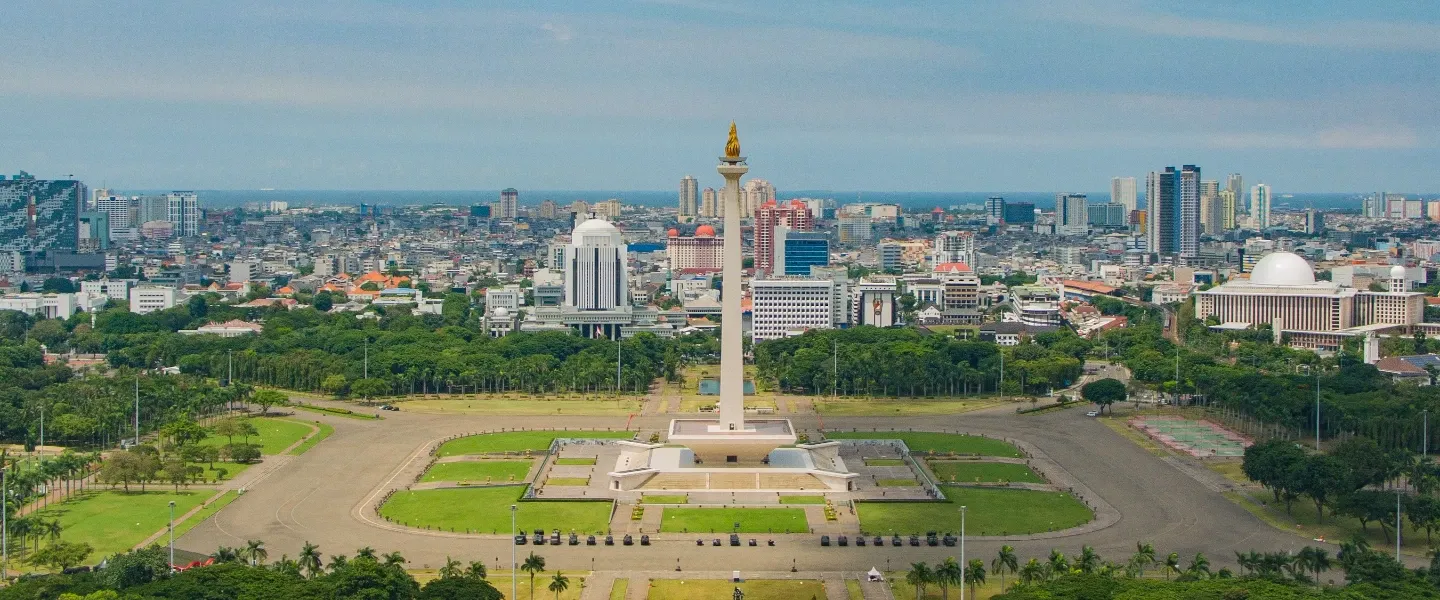
Jakarta Right Now
Air quality is unhealthy due to a combination of traffic, industrial emissions, and regional haze from forest fires. Sensitive groups will feel immediate effects.
Indonesia Sports Summit 2026 · Jakarta International Convention Center, Senayan
Jakarta Triathlon 2026 · Ancol Carnival Beach, North Jakarta
Interest in travel to Jakarta rose 5% from a year ago, suggesting demand is growing.
Best time to visit Jakarta
Good time to visitDry season smog
September offers pleasant weather with fewer rainy days, making it a good time to visit. Expect moderate crowds as it's outside the peak holiday season.
SCORE BY MONTH
Visit Jakarta between June and September for the driest weather. You'll get fewer rainy days, which makes it easier to explore the city. Avoid December through February, when it rains much more.
Visitor data: BPS-Statistics Indonesia, Jakarta hotel occupancy (2024)
Ramadan moves about eleven days earlier each year, so the quiet stretch it creates will not always fall in the months shown here.
Day-to-day in Jakarta
Walkability
39/100
Walking in Jakarta's visitor zones means navigating a patchwork of broken, occupied sidewalks. Motorbikes dominate the streets, often encroaching on pedestrian space, making crossing roads a risky endeavor.
Sidewalks are often narrow, discontinuous, and frequently obstructed by vendors, parked motorbikes, and uneven surfaces.
Major commercial and tourist hubs offer reasonable access to amenities within a 15-minute walk, but this varies greatly.
Motorbike density is extremely high, and drivers often disregard pedestrian crossings, making street navigation hazardous.
Heat and humidity make midday walks uncomfortable for most of the year. Mornings and evenings are workable.
-
Monthly cost
$1,390 / month
AFFORDABLESolo mid-range stay including rent, daily eating out, groceries, and routine costs.
-
STREET FOOD
The street food scene is massive, especially at night. Go to Sabang Street, Pecenongan, or Glodok Chinatown for the best variety.
-
Coworking
$145 / month
AFFORDABLEJakarta has a huge coworking scene with dozens of spaces to choose from. Most options cluster in South Jakarta, particularly SCBD, Kuningan, and Kemang.
-
Gym
$39 / month
AFFORDABLEGym memberships cost about $50 a month. Big commercial chains like Fitness First and Celebrity Fitness dominate, with many locations in South Jakarta.
Need to Know
- Population
- 10,560,000 BPS · 2020 Census
- International visitors
- 2,760,838 (2025) +8.9% YoY BPS DKI Jakarta · Last updated: 2026
- Annual visitors per resident
- 0.26× Annual international visitors divided by the population
Top visitor markets
- China 18.3%
- Malaysia 17.0%
- Singapore 8.0%
- Japan 5.1%
- Saudi Arabia 4.6%





Show fewer Show 5 more
- South Korea 4.0%
- United States 3.2%
- Australia 2.8%
- India 2.7%
- Netherlands 2.6%





Source: BPS (Soekarno-Hatta) · 2025
Annual visitor arrivals
- 2025 2,760,838 +8.9%
- 2024 2,535,569 +29.2%
- 2023 1,963,059 +109.9%
- 2022 935,182
- 2021 119,362 COVID
Show fewer Show 2 more
- 2020 435,888 COVID
- 2019 2,421,124
International visitor arrivals. COVID years (2020-2021) are included for completeness. Source: BPS DKI Jakarta · Last updated: 2026
- Currency
- Indonesian Rupiah (IDR)
- Language
- Indonesian, English is common in Jakarta and tourist hubs
- Tap water
- Not safe to drink
- Time zone
- GMT+7 (WIB)
- Power plug
- Type C / F, 230V
- Dialing code
- +62
- Driving side
- left
- Tipping
- Tipping is not customary but appreciated for good service. Many restaurants include a service charge. For taxis, rounding up the fare is common.
- Internet
- Jakarta has strong 4G and 5G coverage. 4G is widely available across Indonesia, with 5G expanding in major cities.
- Emergency
- 112 (all services), 110 (police), 118 (ambulance), 113 (fire)
When not to go
-
Skip Jakarta during the Lebaran exodus
Late Mar – early Apr · shifts yearlyJakarta empties out during the Eid holiday period, but so do many restaurants, bars, independent shops, and smaller attractions. Transport hubs become chaotic before and after the holiday as millions leave or return at once, and domestic flights and trains get much more expensive. If you wanted Jakarta's food scene and nightlife, this is one of the few times the city can actually feel flat. Go a few weeks before the holiday starts, or wait until the week after Eid ends.
Go here instead:
- Yogyakarta Better base for cultural travel during the Eid holiday period.
-
Avoid monsoon weekends for sightseeing
Dec – FebJakarta's rainy season is not gentle drizzle. Afternoon downpours regularly flood roads, bring traffic to a standstill, and turn short cross-city trips into multi-hour journeys. Outdoor areas like Kota Tua become unpleasant fast, and even Grab rides can surge or disappear during storms. If your trip is built around walking neighborhoods and food hopping, go in the drier months instead.
Upcoming Events & Holidays in Jakarta
Upcoming events, next 30 days
On the horizon
Public holidays & observances, next 12 months
Dates are researched and checked, but events move. Always confirm with the official source before you book anything around them.
Getting To Jakarta
-
Soekarno-Hatta International Airport (CGK)
35 km west of city center
CGK is Jakarta's main international gateway. The Airport Train is the fastest option, especially during rush hour, but it doesn't go to Gambir Station, a common hub. Grab is reliable and offers upfront pricing, but be sure to use the designated pick-up points. Blue Bird taxis are metered and trustworthy; avoid unofficial taxis.
Direct flights from Soekarno-Hatta
Serves 90 direct destinations, 48 international and 42 domestic, about 499 flights a day.
International 48- Singapore SIN SingaporeB Baseops International
 Batik Air
  Citilink
 F FedEx - Federal Express
 Garuda Indonesia
  Indonesia AirAsia
  Pelita Air
  Scoot S SilkAir
  Singapore Airlines
  TransNusa 35/day
 - Kuala Lumpur KUL Malaysia AirAsia Batik Air Citilink Garuda Indonesia Indonesia AirAsia
 KLM
KLM  Malaysia Airlines Malindo Air TransNusa 26/day
 - Jeddah JED Saudi Arabia Garuda Indonesia
 Lion Air
  Saudi Arabian Airlines 6/day
 - Penang PEN Malaysia AirAsia B Baseops International
 Cathay Pacific Indonesia AirAsia
  Korean Air Malindo Air TransNusa 6/day
- Hong Kong HKG Hong KongA AHK Air Hong Kong Limited B Baseops International C Cargolux Cathay Pacific Garuda Indonesia 5/day
- Guangzhou CAN China
 China Southern Airlines Garuda Indonesia
  Spring Airlines TransNusa 5/day
 - Bangkok BKK Thailand
 China Airlines
  Ethiopian Airlines Garuda Indonesia
 K K-Mile Air
 Thai Airways International 4/day
 - Seoul ICN South Korea
 Asiana Airlines Garuda Indonesia Korean Air
  T'Way Air 4/day
 - Bangkok DMK Thailand Batik Air Citilink Indonesia AirAsia Thai AirAsia X Thai Lion Air 4/day
- Taipei TPE Taiwan China Airlines
 EVA Air
  Starlux Airlines 4/day
 - Doha DOH Qatar
 Qatar Airways 3/day
 - Xiamen XMN China
 Shandong Airlines
  Xiamen Airlines 3/day
 - Tokyo NRT Japan
 ANA
ANA  Japan Airlines 3/day
 - Abu Dhabi AUH United Arab Emirates
 Etihad Airways 1-2/day
 - Hanoi HAN Vietnam Cathay Pacific China Airlines
 VietJetAir
  Vietnam Airlines 1-2/day
 - Ho Chi Minh City SGN Vietnam VietJetAir Vietnam Airlines 1-2/day
- Medina MED Saudi Arabia Garuda Indonesia Saudi Arabian Airlines 1-2/day
- Subang SZB Malaysia Malindo Air TransNusa 1-2/day
- Dubai DXB United Arab Emirates
 Emirates 1-2/day
 - Shanghai PVG China
 China Eastern Airlines Garuda Indonesia 1-2/day
 - Sydney SYD Australia Garuda Indonesia
 Qantas 1-2/day
 - Senai JHB Malaysia Indonesia AirAsia 1-2/day
- Bandar Seri Begawan BWN Brunei Indonesia AirAsia R Royal Brunei Airlines ~1/day
- Manila MNL Philippines
 Cebu Pacific Air
  Philippine Airlines ~1/day
 - Colombo CMB Sri Lanka Citilink S SriLankan Airlines ~1/day
- Istanbul IST Türkiye
 Turkish Airlines ~1/day
 - Lalmonirhat LLJ Bangladesh Batik Air ~1/day
- Mumbai BOM India
 IndiGo ~1/day
 - Muscat MCT OmanO Oman Air~1/day
- Perth PER Australia Batik Air ~1/day
- Fuzhou FOC China Xiamen Airlines ~1/day
- Haikou HAK China
 Hainan Airlines ~1/day
 - Shenzhen SZX China China Southern Airlines Shandong Airlines ~1/day
- Chongqing CKG China Xiamen Airlines ~1/day
- Kuching KCH Malaysia Indonesia AirAsia ~1/day
- Melbourne MEL Australia Garuda Indonesia Qantas ~1/day
- Tokyo HND Japan Garuda Indonesia ~1/day
- Chengdu TFU China
 Air China 5/week
 - Phnom Penh KTI Cambodia Indonesia AirAsia 5/week
- Wuhan WUH China Xiamen Airlines 5/week
- Amsterdam AMS Netherlands Garuda Indonesia 4/week
- Beijing PEK China Air China 4/week
- Kota Baharu KBR Malaysia AirAsia 4/week
- Kota Kinabalu BKI Malaysia Indonesia AirAsia 3/week
- Kunming KMG ChinaL Lucky Air3/week
- Nanjing NKG China Xiamen Airlines 2/week
- Cairo CAI EgyptE EgyptAir1/week
- Nanning NNG China Batik Air 1/week
Within Indonesia 42
- Bali DPS Batik Air Citilink F Fly Arystan Garuda Indonesia Indonesia AirAsia Lion Air
 Nam Air Pelita Air Sriwijaya Air TransNusa 41/day
 - Surabaya SUB Batik Air Citilink Garuda Indonesia Lion Air Pelita Air 29/day
- Makassar UPG Batik Air Citilink Garuda Indonesia Lion Air Nam Air Pelita Air P Pt Rimbun Abadi Aviasi S SilkAir Sriwijaya Air 26/day
- Palembang PLM Batik Air Citilink Garuda Indonesia Lion Air Pelita Air
 Super Air Jet 18/day
 - Pekanbaru PKU Batik Air Citilink Garuda Indonesia Lion Air Pelita Air Super Air Jet 17/day
- Pontianak PNK Batik Air Citilink Garuda Indonesia Lion Air Pelita Air Sriwijaya Air Super Air Jet 16/day
- Batam BTH Batik Air Citilink Garuda Indonesia Lion Air Nam Air P Pt Rimbun Abadi Aviasi Super Air Jet 15/day
- Balikpapan BPN Batik Air Citilink Garuda Indonesia Pelita Air P Pt Rimbun Abadi Aviasi Super Air Jet 15/day
- Yogyakarta YIA Batik Air Citilink F Fly Arystan Garuda Indonesia Sriwijaya Air Super Air Jet TransNusa 14/day
- Banjarmasin BDJ Batik Air Citilink Garuda Indonesia Pelita Air P Pt Rimbun Abadi Aviasi Super Air Jet 14/day
- Padang PDG Batik Air Citilink Garuda Indonesia Lion Air Pelita Air Super Air Jet 14/day
- Bandar Lampung TKG Batik Air Citilink Garuda Indonesia Indonesia AirAsia Lion Air Super Air Jet 12/day
- Semarang SRG Batik Air Citilink Garuda Indonesia 12/day
- Lombok LOP Batik Air Citilink F Fly Arystan Garuda Indonesia Lion Air Pelita Air Super Air Jet TransNusa 10/day
- Pangkal Pinang PGK Citilink Garuda Indonesia Nam Air Sriwijaya Air Super Air Jet 9/day
- Jambi DJB Batik Air Citilink Garuda Indonesia Super Air Jet 9/day
- Solo SOC Batik Air Citilink Garuda Indonesia 9/day
- Manado MDCB Baseops International Batik Air Citilink Garuda Indonesia 6/day
- Bengkulu BKS Batik Air Citilink Super Air Jet 6/day
- Banda Aceh BTJ Batik Air Garuda Indonesia Pelita Air Super Air Jet 5/day
- Palangkaraya PKY Batik Air Citilink Garuda Indonesia Super Air Jet 4/day
- Samarinda AAP Batik Air Citilink Garuda Indonesia 4/day
- Kendari KDI Batik Air Citilink Pelita Air Super Air Jet 4/day
- Tanjung Pandan TJQ Citilink Sriwijaya Air Super Air Jet 4/day
- Ambon City AMQ Batik Air Citilink Garuda Indonesia Lion Air 4/day
- Labuan Bajo LBJ Batik Air Citilink Garuda Indonesia Indonesia AirAsia Super Air Jet 4/day
- Palu PLW Batik Air Garuda Indonesia P Pt Rimbun Abadi Aviasi Super Air Jet 4/day
- Kupang KOE Batik Air Citilink Garuda Indonesia Super Air Jet 3/day
- Malang MLG Batik Air Citilink 3/day
- Pangkalanbun PKN Batik Air Nam Air 3/day
- Gorontalo GTO Batik Air Garuda Indonesia P Pt Rimbun Abadi Aviasi 1-2/day
- Jayapura DJJ Batik Air Garuda Indonesia 1-2/day
- Sampit SMQ Nam Air Super Air Jet 1-2/day
- Tanjung Pinang TNJ Batik Air Citilink 1-2/day
- Bengkayang SKJ Super Air Jet TransNusa 1-2/day
- Ternate TTE Batik Air Garuda Indonesia 1-2/day
- Sorong SOQ Batik Air Garuda Indonesia 1-2/day
- Banyuwangi BWX Super Air Jet ~1/day
- Tanjung Redep BEJ Batik Air ~1/day
- Tarakan TRK Batik Air ~1/day
- Timika TIMF Fly Arystan Garuda Indonesia ~1/day
- Jakarta (Halim) HLP Garuda Indonesia 1/week
Nonstop routes only. Flights per day are an average, each way. Data: AeroDataBox, updated July 2026.
Visa rules apply at the country level. See the full Indonesia visa guide, with every visa and its official do-it-yourself cost. -
-
Halim Perdanakusuma International Airport (HLP)
10 km southeast of city center
HLP is closer to the city center and mostly serves domestic flights, though some international budget airlines use it. Taxis and ride-hailing apps like Grab and Gojek are the quickest way to reach the city. Public transport options exist but often involve transfers and can be as expensive as a taxi.
Direct flights from Halim
Serves 6 direct destinations, all domestic, about 20 flights a day.
Within Indonesia 6- Surabaya SUB Batik Air Citilink 10/day
- Bali DPS Batik Air Citilink 3/day
- Palembang PLM Batik Air 3/day
- Malang MLG Batik Air 1-2/day
- Padang PDG Citilink ~1/day
- Pekanbaru PKU Citilink ~1/day
Nonstop routes only. Flights per day are an average, each way. Data: AeroDataBox, updated July 2026.
-
Safety Advice
Jakarta is safe enough for tourists, with petty theft and scams the usual problems in crowded areas. The traffic is the real danger here: the roads are chaotic and accidents are common.
Seismically active region
Earthquakes
Jakarta sits in a seismically active region. Most days you'll never notice it, but strong earthquakes do occur from time to time. It's worth knowing your accommodation's emergency exits and following local instructions if an earthquake occurs.
See the 5 strongest nearby earthquakes
- M7.52007 · 74 km · Rengasdengklok
- M72009 · 186 km · Banjar
- M6.62022 · 186 km · Labuan
- M6.12009 · 182 km · Labuan
- M5.92012 · 176 km · Pelabuhanratu
Source: U.S. Geological Survey · Updated August 2026
Common Scams in Jakarta
-
Drink spiking and theft
HIGH RISKTrigger:A stranger insists on buying you another drink
Victims are targeted in nightlife areas around SCBD, Kemang, and South Jakarta bars. Phones, cards, cash, and sometimes hotel room access are taken after the victim loses consciousness.
How to avoid: Do not accept opened drinks from strangers and never leave your drink unattended. If you suddenly feel disoriented, get help from venue staff or trusted friends immediately.
-
Pickpocketing in crowds
HIGH RISKTrigger:Someone bumps into you in a packed station or market
Pickpocket teams operate around Tanah Abang, commuter rail stations, TransJakarta stops, and crowded malls. Motorcycle snatch thefts also happen near busy roads when travelers hold phones near the curb.
How to avoid: Keep phones and wallets out of back pockets and avoid carrying bags loosely on the roadside. Stay alert during rush hour and while using your phone near traffic.
-
Fake Blue Bird taxi
MEDIUM RISKTrigger:A driver approaches before you reach the official taxi line
Unlicensed drivers at Soekarno-Hatta Airport copy Blue Bird branding or claim the meter is broken. Some quote IDR 700000 to 1000000 [USD 43-62] for rides that normally cost around IDR 150000-250000 [USD 9-15].
How to avoid: Use the official Blue Bird line inside the terminal or book through Grab or Gojek. Ignore anyone approaching you directly in the arrivals area.
-
Money changer short-changing
MEDIUM RISKTrigger:A money changer offers a rate far above nearby exchanges
Some unlicensed exchangers distract customers during counting or quietly remove notes before handing over the cash. Others slip damaged rupiah notes into the stack and pressure travelers to leave quickly.
How to avoid: Use bank ATMs or established chains like PT Dirgahayu. Count every note yourself before leaving the counter.
-
Overpriced street vendors
LOW RISKTrigger:A vendor quotes a much higher price after hearing English
Foreign visitors around Kota Tua and Monas are often given inflated starting prices for snacks, souvenirs, or small goods. Some sellers rely on tourists not knowing local prices and pressure them into quick purchases.
How to avoid: Ask locals or ride-hailing drivers roughly what items should cost before buying. Convenience stores and malls usually have fixed pricing.
Mistakes to Avoid
-
Eating unhygienic street food
SERIOUS CONSEQUENCESome roadside stalls reuse dirty dishwater, leave food unrefrigerated in the heat, or handle cash and food without washing hands. Food poisoning can easily wipe out several days of your trip.
Fix: Choose stalls with high turnover where food is cooked fresh in front of you. Avoid raw garnishes, uncovered seafood, and drinks with questionable ice.
-
Using phone near traffic
SERIOUS CONSEQUENCEPhone snatch thefts from motorcycles happen on busy roads and outside stations. Holding your phone loosely near the curb makes you an easy target.
Fix: Step inside a shop or away from the roadside before checking directions or messages. Keep a firm grip on your phone near traffic.
-
Underestimating Jakarta traffic
SERIOUS CONSEQUENCEJakarta traffic regularly turns short journeys into multi-hour delays, especially during weekday rush hour and heavy rain. Travelers miss flights, trains, and reservations because they trust map distances.
Fix: Leave far earlier than you think necessary and avoid cross-city travel during peak hours. Use MRT lines where possible instead of relying entirely on cars.
-
Not using e-money cards
MINOR CONSEQUENCEJakarta's MRT, LRT, KRL, and most TransJakarta services rely on stored-value cards or app payments. Turning up with only cash slows you down and can leave you stuck at station gates.
Fix: Buy a JakLingko, Flazz, e-Money, or Brizzi card at convenience stores or stations. Keep extra balance on it because top-up machines are not always nearby.
-
Littering on public transport
MINOR CONSEQUENCEJakarta MRT stations and trains have strict anti-litter rules and very few public bins inside paid areas. Leaving rubbish behind can still lead to warnings or fines from station staff.
Fix: Carry your rubbish until you find a disposal area outside the station. Do not leave cups, tissues, or food containers on trains or platforms.
-
Ignoring public transport apps
MINOR CONSEQUENCEJakarta's bus and commuter rail network changes frequently because of traffic, diversions, and platform changes. Relying only on station signs can easily send you the wrong direction.
Fix: Use Google Maps, Moovit, or the MRT Jakarta app for live routing. Double-check the final destination shown on trains and buses before boarding.
-
Being loud on public transport
Jakarta commuters on the MRT and KRL generally keep conversations quiet, especially during rush hour. Playing videos aloud or taking loud calls attracts negative attention fast.
Fix: Use headphones and keep calls brief and quiet. If you need to talk, lower your voice well below restaurant volume.
Money & Payments
-
Cash Still Essential
Digital payments are growing, but street food vendors, traditional markets and smaller shops still want cash. Carry IDR 300,000 to 500,000 (about $18 to $30) in small notes for daily spending.
-
Cards Widely Accepted Centrally
Visa and Mastercard are widely accepted in Jakarta's major hotels, larger restaurants, and shopping centers. Smaller places and local markets still prefer cash. American Express has more limited acceptance.
-
ATMs are Easy to Find
ATMs are easy to find in malls, convenience stores, and bank branches. Look for ATMs from major local banks like Bank Mandiri, BCA, BNI, and BRI.
-
ATM Fees and Limits Vary
Many Indonesian ATMs charge no fee, but Bank Mandiri, CIMB Niaga and BRI have introduced fees for foreign card withdrawals, IDR 25,000 to IDR 75,000. Withdrawal limits are usually IDR 1,250,000 to 3,000,000 (about $80 to $190) per transaction, depending on the bank.
-
GoPay and QRIS for Local Payments
Digital wallets like GoPay (within the Gojek app) are widely used by locals and increasingly accepted via the QRIS (Quick Response Code Indonesian Standard) system. You can link foreign credit cards to Gojek for ride-hailing and food delivery, and top up GoPay with cash at convenience stores.
-
Avoid Card Currency Conversion
When using an ATM or paying with a card, always choose to be charged in Indonesian Rupiah (IDR), not your home currency. Selecting your home currency triggers Dynamic Currency Conversion (DCC), which gives you a worse exchange rate and extra fees.
-
VAT Refund for Tourists
Foreign tourists can claim a refund on the 11% Value-Added Tax (VAT) paid on eligible purchases. Look for stores displaying the 'VAT Refund for Tourists' logo and make sure each purchase is at least IDR 500,000 (including VAT) from a single retailer on the same day.
-
International Transfers
To send money to a bank account in Indonesia, for things like rent or day-to-day expenses, services like Wise or Remitly usually offer better rates than traditional banks and faster delivery.
You'll typically need the recipient's full name, account number, and SWIFT/BIC code. Some banks may also require a local address.
Costs in Jakarta
Jakarta is cheap if you stick to local eateries and public transport. Imported goods and Western-style places add up fast, and a week spent mostly in malls and hotel restaurants costs about what it would at home.
Save money?
Sign up for our guide on how to save money on your next trip.
SIM Cards & Data
Best option for most travelers: an eSIM you set up before you arrive. You'll be online the moment you land, with no airport line and no tourist pricing.
Travel eSIMs Connect the second you land. Zero hassle. Skip the airport line and paperwork. Activate before you fly and land connected. Find the best eSIM →Prefer a local SIM?
Jakarta offers strong 4G coverage across its central areas and tourist neighborhoods like Menteng and Kemang, with 5G access expanding in key urban zones. Speeds are generally reliable for essential tourist needs such as maps, ride-hailing, messaging, and streaming video.
What Jakarta is Like
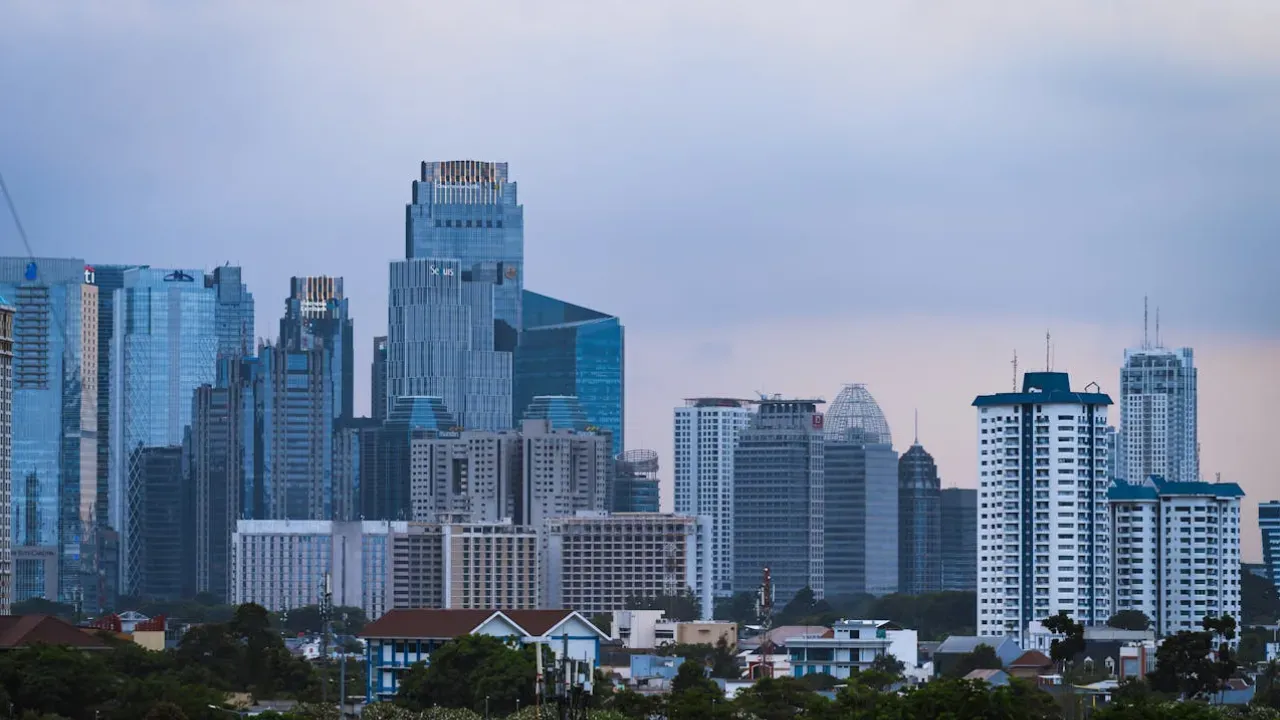
The noise registers first, then the heat, then the size of the place. Jakarta rarely feels finished, with construction cranes, fresh towers, and roads that seem to change every time you use them. Forget the slower rhythm of Bali. Here the soundtrack is motorbikes slipping through gaps, horns fired out of habit, and millions of conversations happening at once. Even the air has moods. Some mornings the skyline disappears behind haze. Then Eid al-Fitr arrives, the city empties almost overnight, and mountains appear that were hidden a week before.
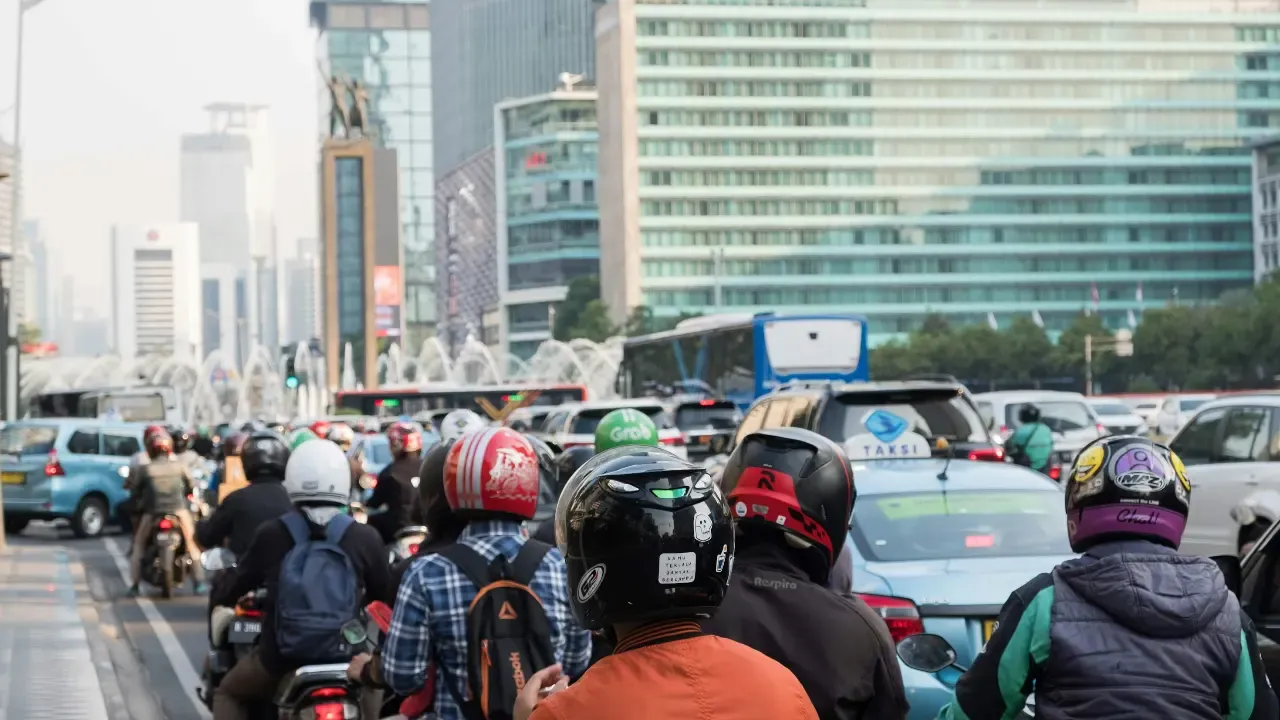
Moving around used to demand endless patience. It still does sometimes, although the MRT and LRT have taken a lot of pain out of daily travel if your plans stay close to the main corridors. Getting from SCBD to Blok M is no longer the commitment it once was. Step away from those lines and the map starts lying to you again. A journey that looks trivial can take well over an hour once heavy rain starts or evening traffic locks up. That's when Gojek and Grab take over, and most people stop trying to predict it.
Food is the thing Jakarta does better than anywhere else in Indonesia. People here care about eating well every day of the week, and the ordinary places are where you see it. You can eat a tasting menu in SCBD and still have the better meal a few hours later on a plastic stool behind Plaza Indonesia, with smoke from a satay grill drifting across the sidewalk. Pujasera Blok S has survived because locals still show up hungry. Watch where the lines form and join one.
After dark the mood depends almost entirely on where you are. SCBD fills with rooftop bars and people closing business deals over cocktails, while Kemang still hangs onto live music venues where the stage matters more than the bottle menu. Senopati has become slicker, drawing a crowd that lives nearby rather than passing backpackers. Ramadan changes the rhythm again. Outside the larger hotels, whole stretches of the nightlife scene go quiet once the sun goes down.
Ask enough Indonesians and somebody will tell you to skip Jakarta altogether and fly straight to Yogyakarta or Bali. They usually mean there are prettier places to spend a vacation, and they are right. Jakarta is a different proposition. Glass towers rise beside kampungs (the dense old neighborhoods the city grew out of), food carts line the sidewalk outside luxury malls at lunchtime, and streets that seem ordinary during the day get busy again close to midnight.
Blok M
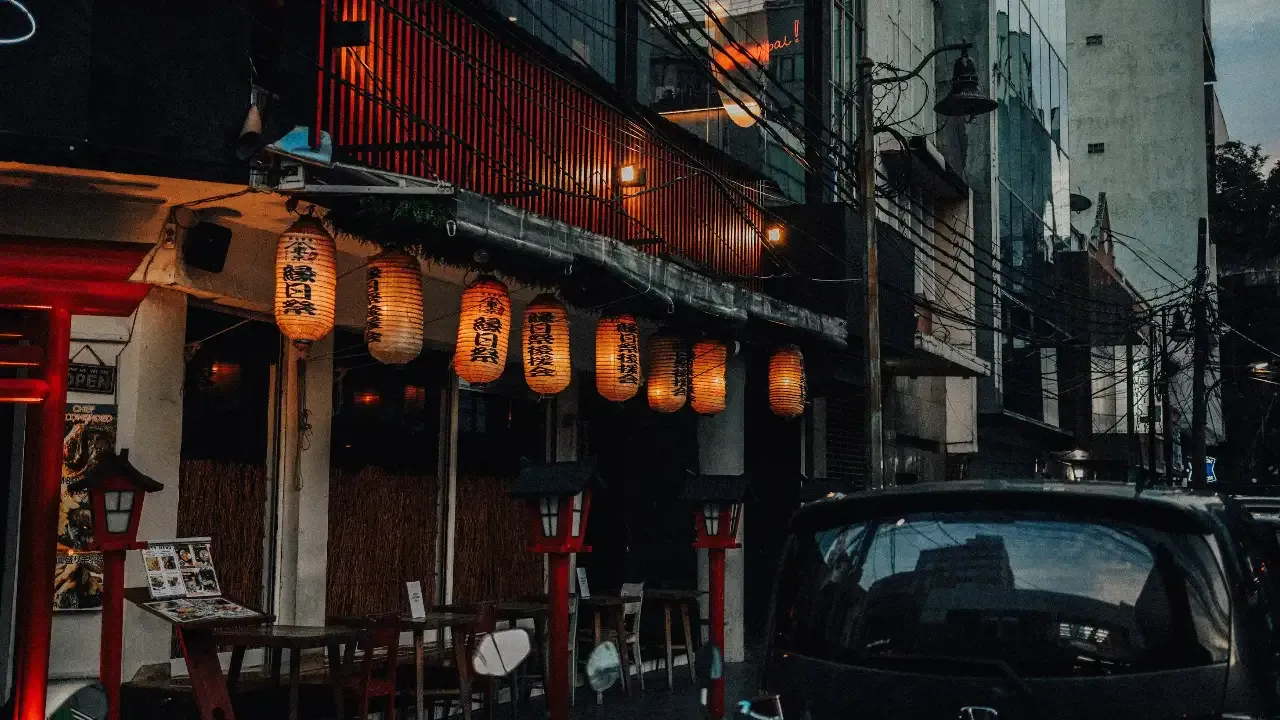
Blok M feels lived in, which is rarer than it should be in a city this size. SCBD does polished rooftops. Senopati keeps producing bars with impossible waiting lists. Blok M has office workers lingering over highballs beneath fluorescent lights, students drifting between tiny record bars, and couples finishing ramen before jogging for the last train. Many of the best places barely announce themselves beyond a hand-painted sign or an Instagram account that looks abandoned. Forget skyline views. The bars here are at street level and most of them fill up after ten.
Most first-time visitors make a beeline for Little Tokyo around Melawai, then stop there. Walk another block. The Japanese influence here comes from decades of business ties and expat life in South Jakarta, not from somebody deciding the neighborhood needed a theme. One staircase disappears above a pharmacy into a cocktail bar. Another leads to a tiny jazz room. Old karaoke joints stand beside coffee counters that only have room for half a dozen people. Even the chain restaurants feel oddly unhurried. Nobody seems desperate to get you out of your seat.
The biggest mistake is planning the evening too tightly. At seven o'clock, especially on weekdays, parts of Blok M still feel as though everyone is stuck in traffic. Give it another few hours. After ten the sidewalks fill, cigarette smoke hangs over the side streets, and the food stalls are finally busy enough to trust. The fashionable places that dominate social media rarely stay fashionable for long. Follow the noise instead. You will probably end up somewhere with scratched tables, bad city pop leaking from old speakers, and rain bouncing off the sidewalk outside.
Where to Stay in Jakarta
- Food, nightlife, airport
PIK
PIK, short for Pantai Indah Kapuk, barely feels like the same city. Wide boulevards, waterfront promenades, apartment towers, huge restaurants, and coffee shops keep the area busy from late afternoon onwards, especially at weekends. It is one of the easiest parts of Jakarta to reach from the airport. Stay here if you are coming for the food or flying out early.
Good for: Restaurants, cafes, nightlife, airport access.
Skip if: You want to stay close to Jakarta's historic center or business district.
- Nightlife, food, MRT
Blok M
Blok M comes into its own after sunset. Japanese bars, ramen shops, record stores, old shopping arcades, and busy sidewalks give it an energy that feels very different from Jakarta's polished business districts, while the MRT keeps the rest of the city within easy reach during the day. Stay close to the station if you plan to explore on foot.
Good for: Nightlife, food, exploring local neighborhoods.
Skip if: You want luxury hotels and quiet surroundings.
- Business, nightlife, luxury
Sudirman & SCBD
Sudirman and SCBD are where Jakarta shows off its modern side. Glass office towers, luxury hotels, shopping malls, rooftop bars, and some of the city's strongest restaurant openings are all within easy reach of the MRT, so getting around is easier than almost anywhere else in the capital. Weekdays revolve around office workers, and the restaurants and cocktail bars fill up from about seven.
Good for: Business trips, upscale dining, shopping, nightlife.
Skip if: You want historic neighborhoods or a more local atmosphere.
- Chinatown, street food, markets
Glodok
Glodok is Jakarta's Chinatown, where temples stand beside traditional medicine shops, old markets, and noodle houses that have been feeding locals for decades. The streets feel busiest once the food stalls begin opening for the evening. Accommodation exists, but it is secondary to everything happening at street level.
Good for: Chinese Indonesian food, temples, local markets.
Skip if: You want modern hotels or easy nightlife nearby.
- History, museums, sightseeing
Kota Tua
Kota Tua is Jakarta's old colonial quarter, built around Fatahillah Square and a cluster of museums, restored Dutch buildings, and old warehouses. Almost nobody books a room in the old town itself. Mornings are the best time to wander, before the square fills up.
Good for: Colonial architecture, museums, photography, walking.
Skip if: You need somewhere to sleep, because almost nobody stays here.
- Dining, nightlife, expat scene
Kemang
Kemang has long attracted Jakarta's expat community, while nearby Senopati has turned into one of the city's restaurant and cocktail bar capitals. Together they offer a very different pace from Sudirman, with independent cafes, bars, and quieter residential streets replacing office towers. Traffic is worse than in Sudirman, and neither neighborhood matches the MRT access of Blok M.
Good for: Restaurants, bars, longer stays, local neighborhoods.
Skip if: You want fast MRT access across the city.
- Street food, evening dining, local
Pecenongan
Pecenongan is one of Jakarta's classic late-night food streets, known for seafood restaurants, martabak stalls, and long-established Chinese Indonesian eateries. You come here for dinner, not to sleep, because very few travelers use the neighborhood as a base. The crowds build after dark and most stalls run past midnight.
Good for: Street food, evening food crawls, local dining.
Skip if: You want your hotel nearby, because this is a dinner stop.
- Central, heritage, quiet
Menteng
Menteng is right in the middle of Jakarta, but it rarely feels frantic. Embassy compounds, broad tree-lined streets, and old colonial houses give the neighborhood a slower rhythm than the business districts nearby. Hotels here suit travelers who want easy access to Monas, museums, and central Jakarta without sleeping among office towers. After about ten at night there is very little open.
Good for: Museums, central sightseeing, quieter evenings.
Skip if: You want bars and nightlife within walking distance.
- Beach, seafood, waterfront
Ancol
Ancol stretches along Jakarta Bay with large hotels, seafood restaurants, amusement parks, and the main ferry departure point for the Thousand Islands. It feels detached from the rest of the city and draws plenty of domestic holidaymakers on weekends. The waterfront and the ferry terminal are the draw. The beach itself is nothing special.
Good for: Waterfront stays, family trips, Thousand Islands ferries.
Skip if: You want to spend most of your time in central Jakarta.
Frequently Asked Questions
Planning & moving around
-
How many days do I need in Jakarta?
Two full days cover the old town around Kota Tua and Glodok plus the modern business districts. Stretch to three or four if you want to work through South Jakarta's food scene without rushing between neighborhoods. Beyond that the traffic and humidity start to wear you down, and most travelers use Jakarta as a gateway rather than a long stay.
-
What are the must-have ride-hailing apps in Jakarta?
Gojek and Grab run the city. Both cover motorbike taxis that slip through gridlock, standard cars, and food delivery, and fares are fixed in the app so there is no haggling. Install both and add a card before you arrive, since prices swing with demand and having two apps lets you compare during heavy rain.
-
What are the best day trips from Jakarta?
Bogor is just over an hour south by train and is cooler, built around its old botanical gardens. Puncak draws crowds for its tea plantations and hill air, but weekend traffic can turn a two-hour drive into six, so go on a weekday or not at all. Skip Krakatau as a day trip; the road transfer plus boat crossing really needs an overnight to be worth it.
-
Which markets in Jakarta are worth visiting?
Pasar Baru is an old pedestrian shopping street with textile shops and street food that runs through the day. Tanah Abang is the largest textile market in Southeast Asia, huge and heaving, so go early to beat the crowds and heat. Pasar Mayestik is the calmer option for fabrics and traditional snacks if the scale of Tanah Abang sounds like too much.
-
Is Jakarta a good place for digital nomads to settle?
Jakarta has good cafes and solid coworking chains like GoWork, but the remote-work community is scattered compared with Bali. Budget IDR 6 to 15 million a month for a decent apartment in a central high-rise. It suits people who like a dense, working city rather than anyone after a ready-made expat scene.
-
Where can I store my luggage in Jakarta between checkout and my flight?
Most mid-range and upper-end hotels will hold your bags free after checkout while you go out. Gambir station has basic left-luggage, though space comes and goes. App-based luggage networks barely exist here, so a large mall like Grand Indonesia and its concierge is the more dependable fallback.
Safety & medical
-
Is it safe to walk around Jakarta at night?
Violent crime against tourists is rare, but dark, poorly lit side streets invite phone snatching by passing motorcyclists. Stick to well-lit commercial strips in SCBD or South Jakarta, and use Gojek or Grab to move between venues rather than walking. The bigger everyday hazard is the broken sidewalk, open drains, and missing curbs, so watch your step.
-
What should I watch out for on a night out in Jakarta?
Drink spiking turns up occasionally at loosely run venues away from the main business districts, usually as a setup to lift your phone and cards. Unlicensed drivers waiting outside bars will happily overcharge you, so order a Gojek or Grab instead of taking a street offer. Keep your phone in your pocket near the roadside, where drive-by snatching is the most common problem.
-
Do I need travel insurance for Jakarta?
A policy that covers medical evacuation is worth having, given the traffic-accident risk and uneven public healthcare. Private clinics handle routine problems well, but serious emergencies sometimes mean an airlift to Singapore. If you plan to ride the motorbike taxis, confirm your policy covers two-wheeler accidents, which many exclude by default.
-
What happens if I get sick in Jakarta?
Skip the public clinics and go straight to a reputable private hospital like Siloam Semanggi or Pondok Indah, where English-speaking staff are standard. For minor issues, mall pharmacies such as Guardian and Watsons are everywhere. In a real emergency, a Gojek or Grab often reaches the hospital faster than an ambulance can cut through Jakarta traffic.
Laws & local norms
-
What are the drug laws in Jakarta?
Indonesia enforces some of the strictest narcotics laws anywhere in the world, with long mandatory sentences and the death penalty for trafficking. The law makes no useful distinction between cannabis, CBD products, and prescription medicines containing controlled substances, so check anything you carry. Foreigners get no leniency, and police do run occasional raids on nightlife venues.
Food & drink
-
Where do locals actually eat in Jakarta?
At lunch, office workers pack informal stall clusters, called tenda or warung, tucked behind the commercial towers. Glodok is the benchmark for Chinese-Indonesian food, while Pecenongan draws late-night crowds for seafood and martabak. Look for the stalls with the longest local lines, the most reliable signal of fresh food and fast turnover.
Families & kids
-
Is Jakarta a good place to travel with kids?
It is hard work with young children. Air pollution, relentless traffic, and almost no walkable green space make street-level exploring a slog, and the good infrastructure is mostly inside air-conditioned malls. Indonesians are warm with kids and the malls are genuinely well set up for families, so a mall-based trip works far better than trying to sightsee on foot. Bring a carrier rather than a stroller.
-
What type of accommodation works best for families in Jakarta?
Serviced apartments beat standard hotel rooms for families, with laundry and a small kitchen that make a difference over a few days. Look for towers attached to a major mall in South or Central Jakarta, which puts clean food and indoor play areas a lift ride away instead of a traffic slog. Connecting rooms are hard to guarantee, so book them directly and confirm ahead.
-
What can I do with young kids in Jakarta on a hot afternoon?
The reliable options are indoors and air-conditioned: KidZania in Pacific Place or the Jakarta Aquarium at Neo Soho. Taman Mini Indonesia Indah is more interesting but sprawling, with long walks in full sun, so it suits older kids more than toddlers. When the heat and humidity peak, the mall entertainment centers are the safer bet.
Staying longer
-
Which neighborhood in Jakarta should I stay in?
For polished hotels and rooftop bars, the SCBD and Sudirman business corridor is the easiest base, with MRT access across the city. If you want independent cafes and a more local pace, look at Kemang, Senopati, or Blok M, though only Blok M has an MRT station nearby. Skip booking in Kota Tua or Glodok; both are worth a daytime walk but have thin accommodation and empty out after dark.
After dark
-
What are the best areas for nightlife in Jakarta?
SCBD holds the high-end scene, with cocktail lounges and large clubs built into the office towers. Senopati pulls a trendier local crowd into small bars and speakeasies, while Blok M runs to izakayas and basement music venues. Standalone bars quieten down or close during Ramadan, so check ahead if you are visiting during the fasting month.
-
Are there red light districts in Jakarta?
There is no official tourist red-light district, but adult nightlife concentrates around Mangga Besar in West Jakarta. The area runs to karaoke lounges, massage parlours, and late bars, busiest well after midnight. It is easy to avoid entirely by staying in the Central and South Jakarta commercial areas.